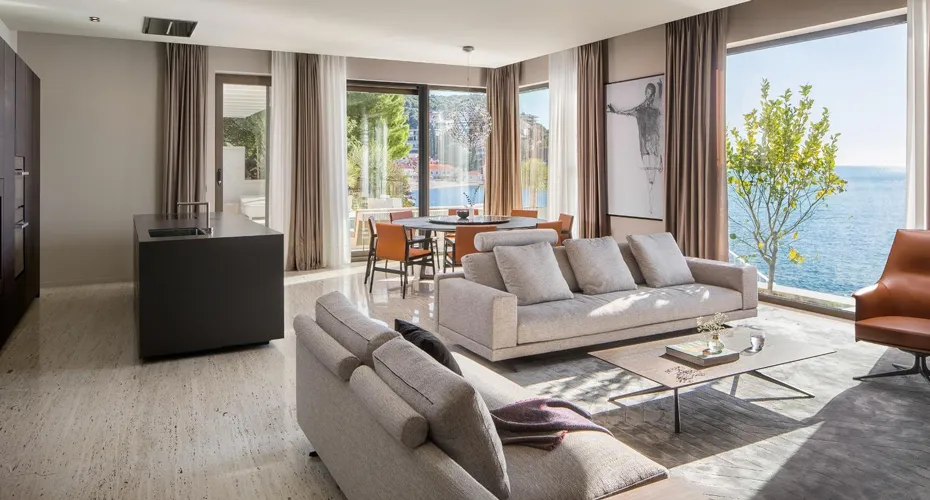
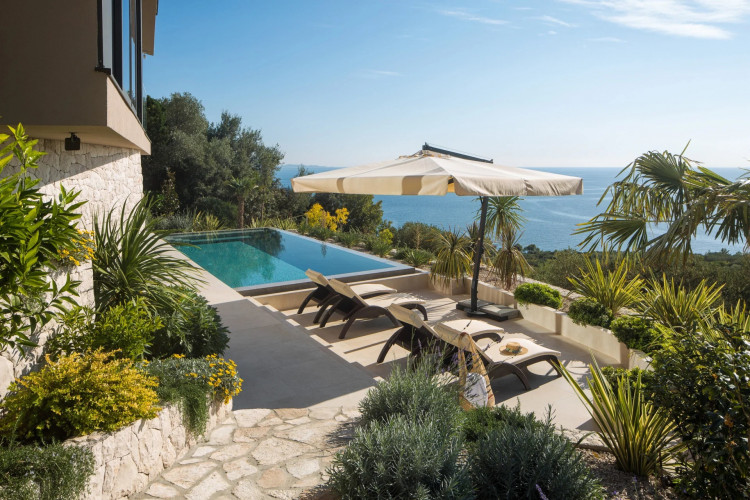
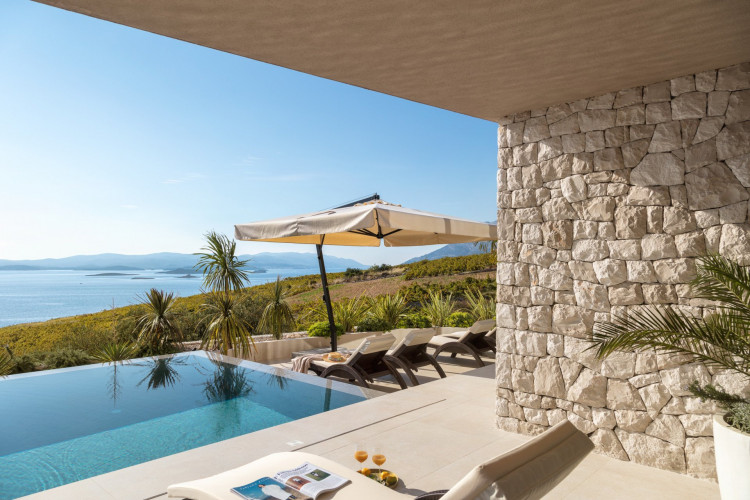
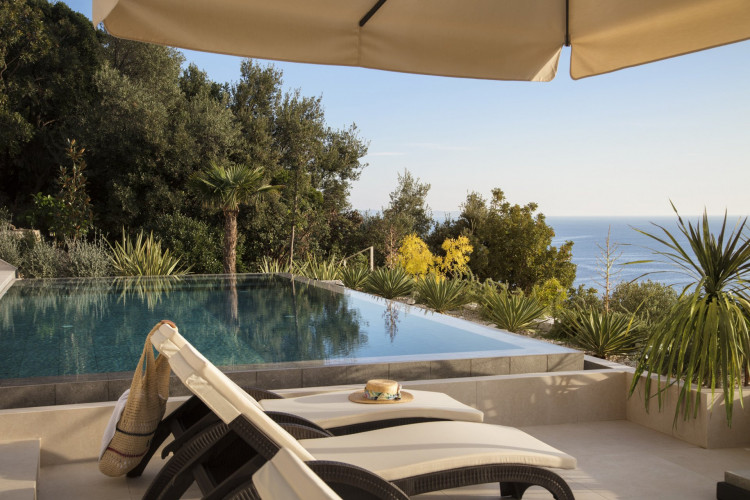
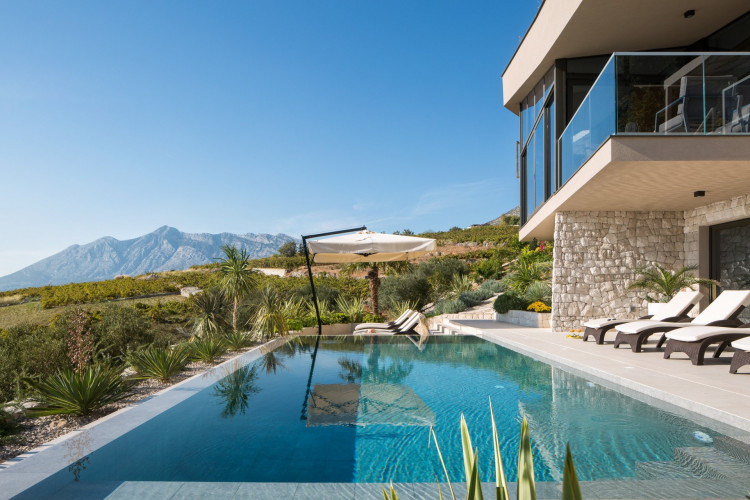
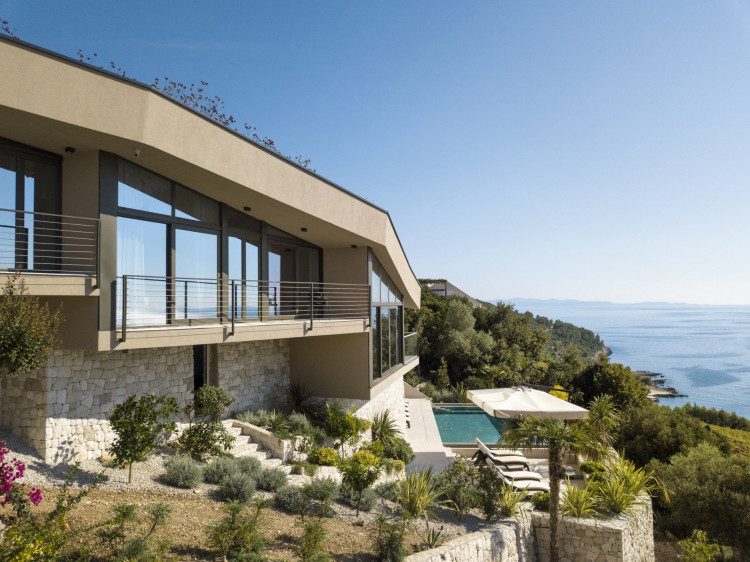
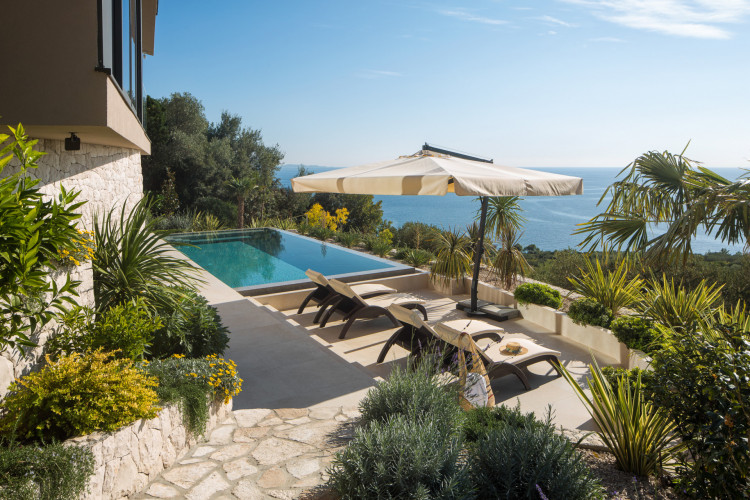
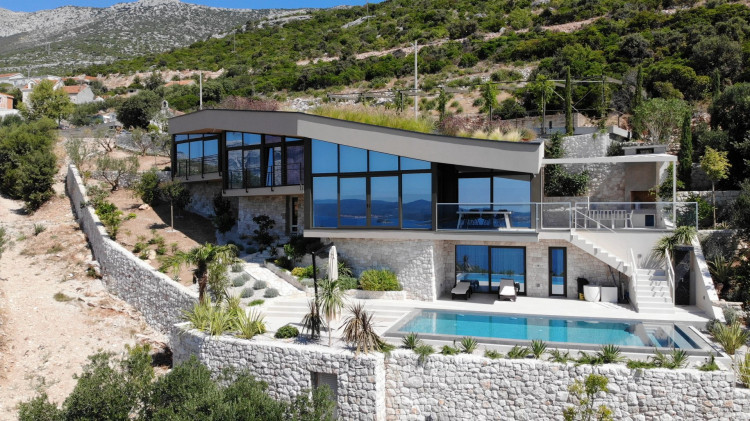
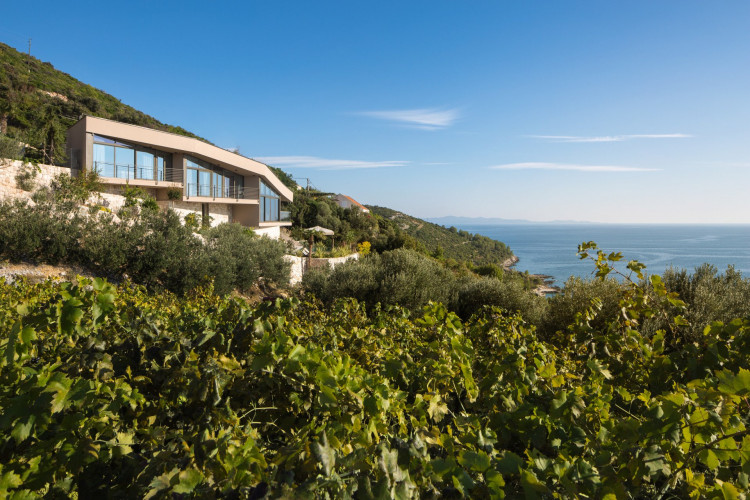
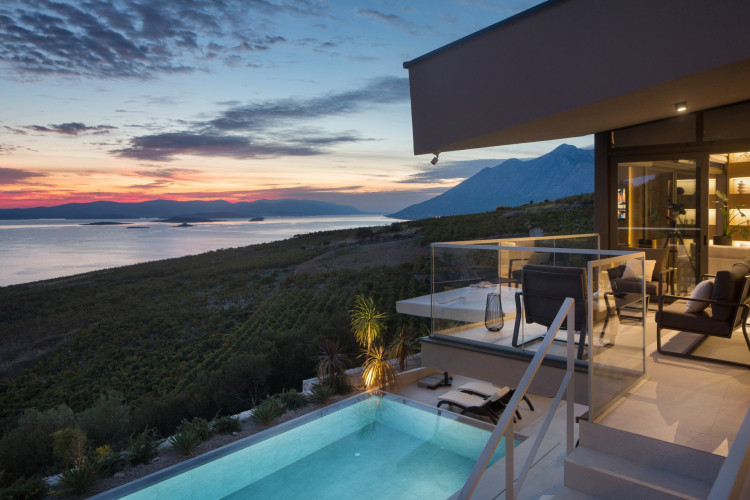
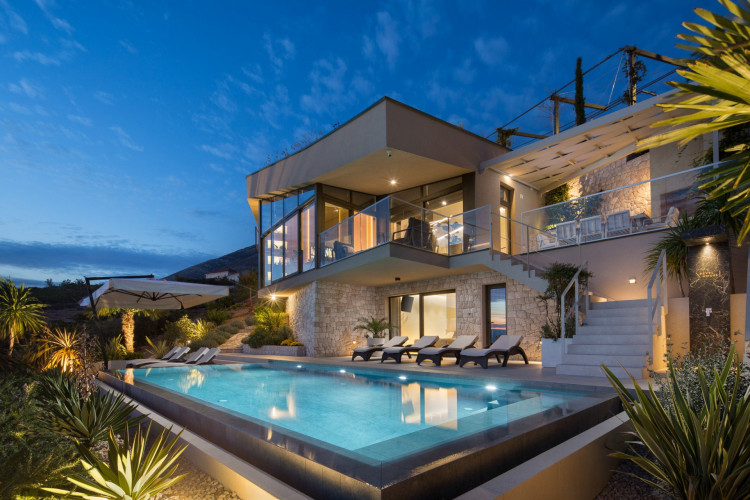
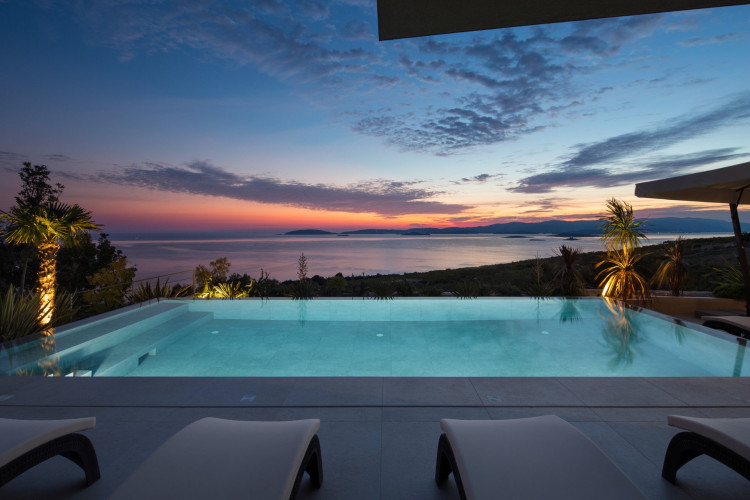

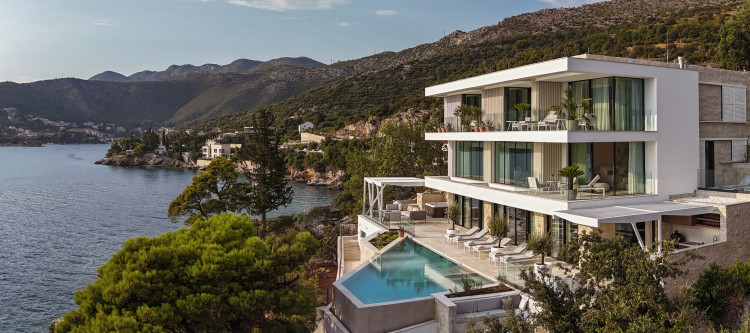
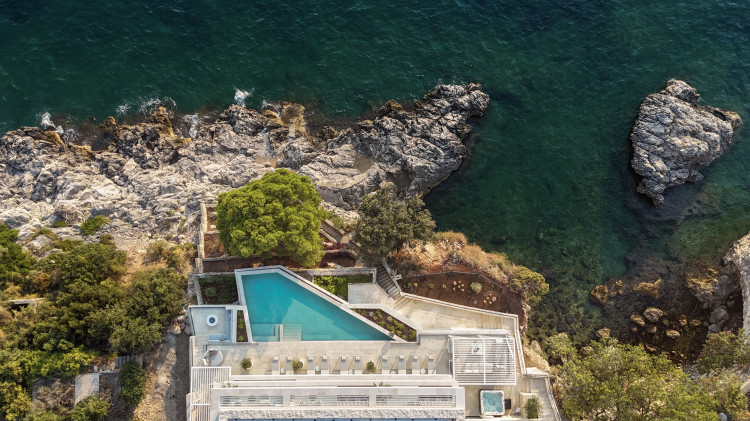
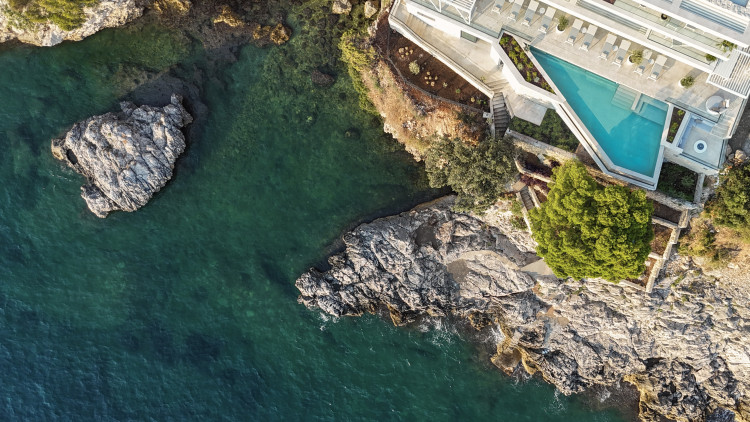
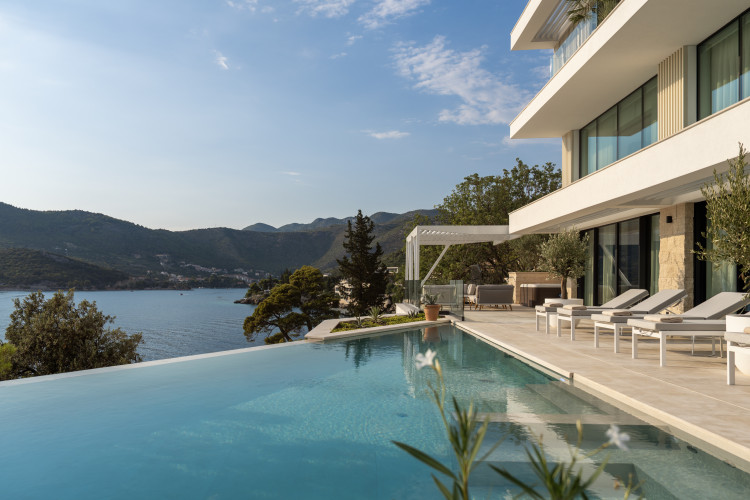
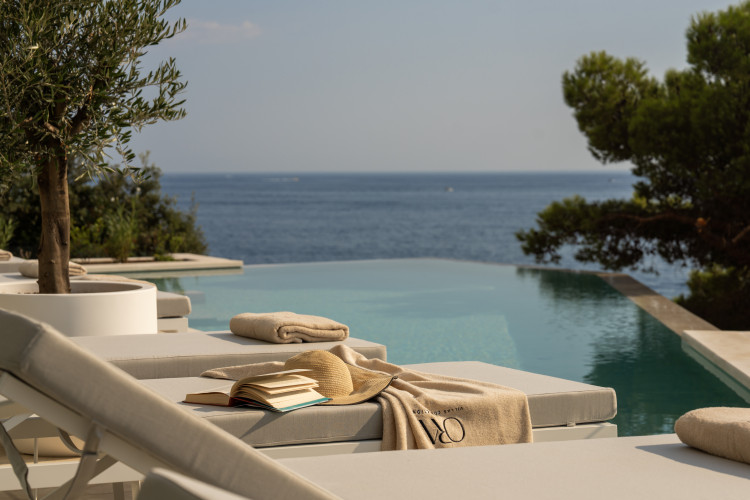
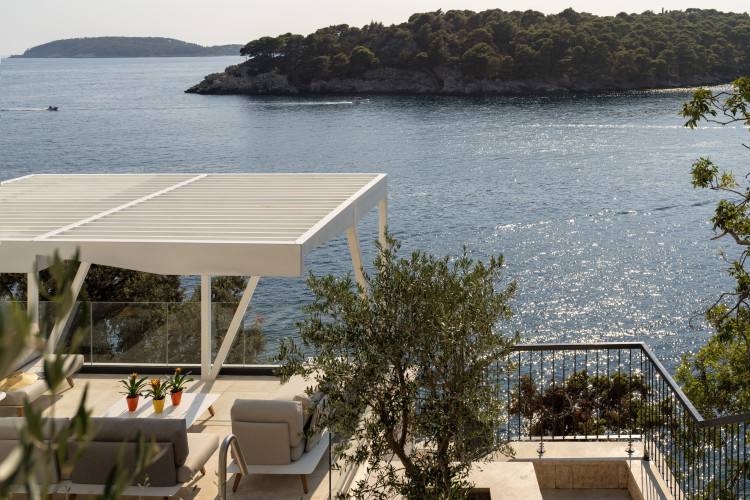
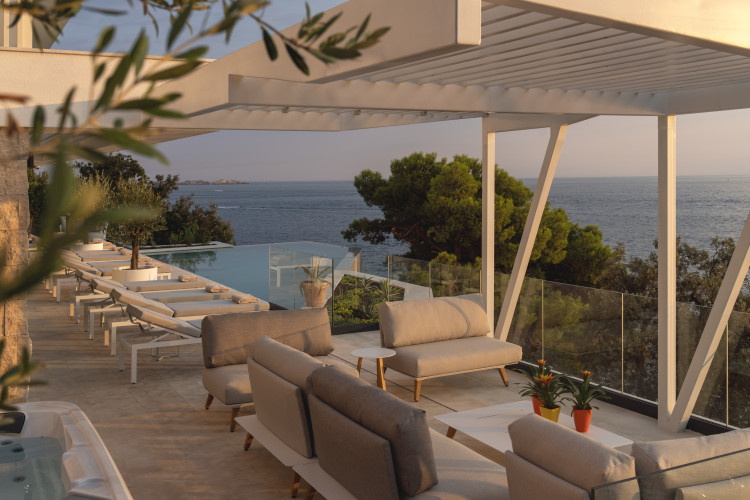
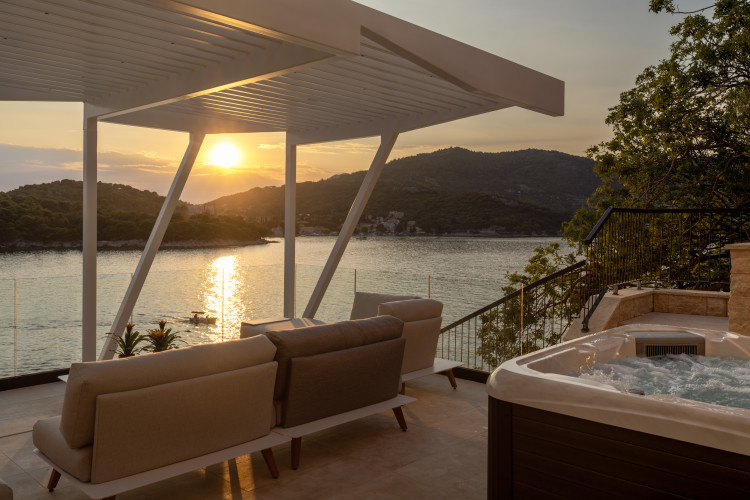
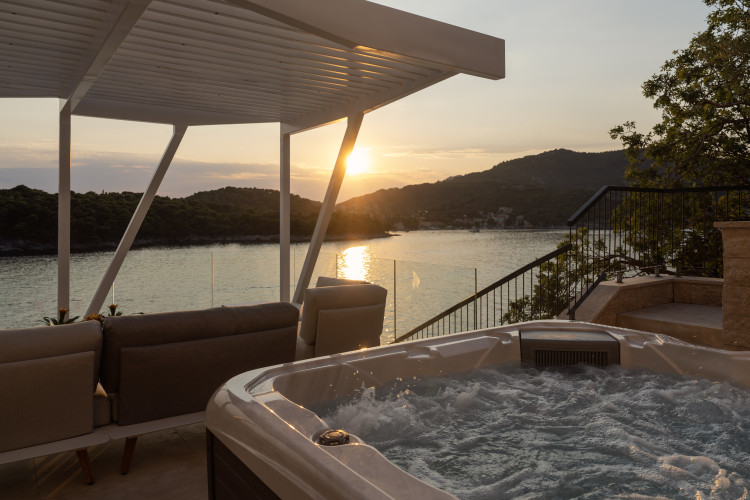
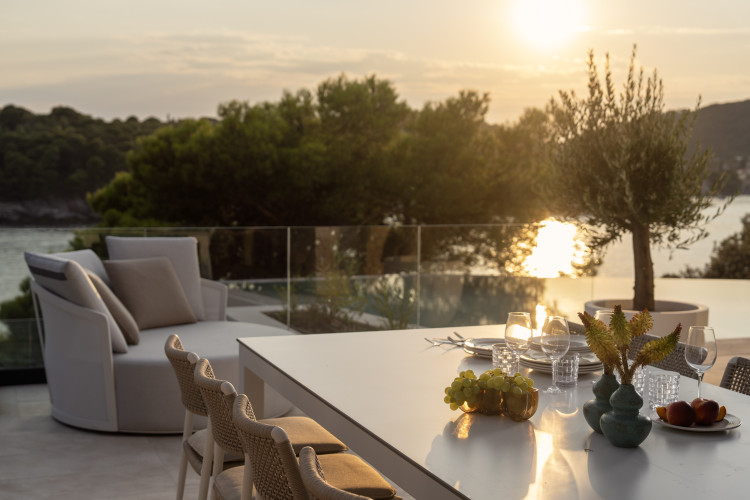
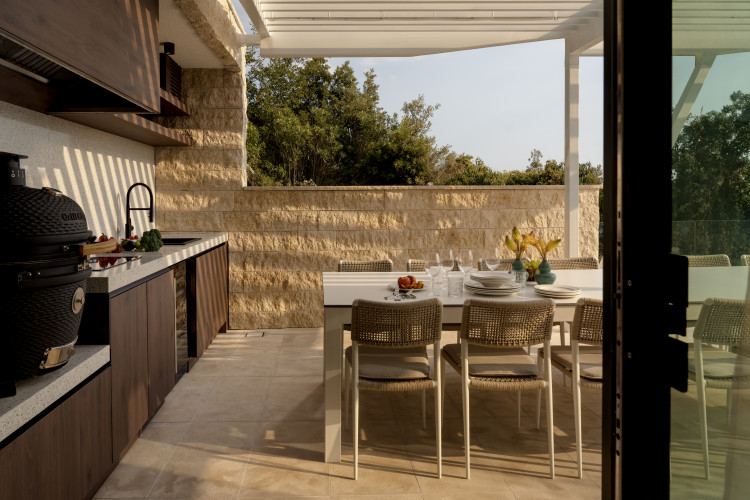
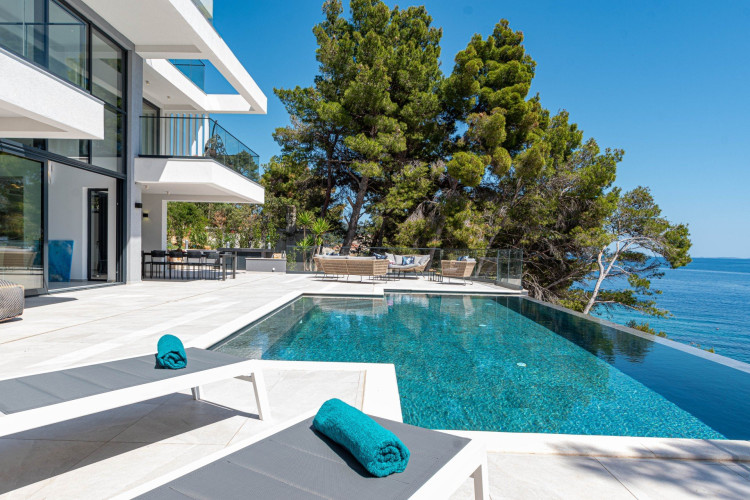
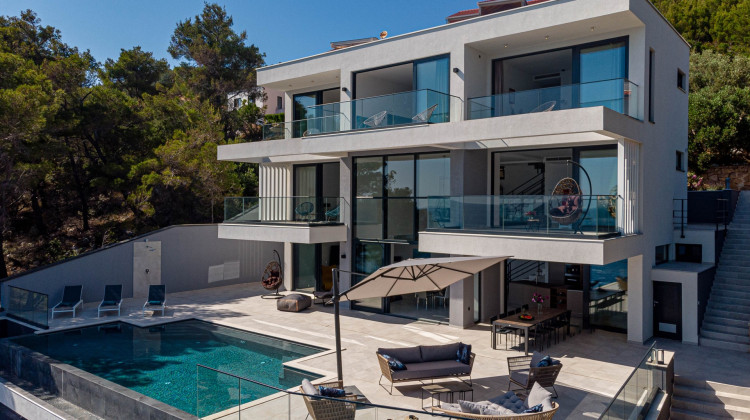
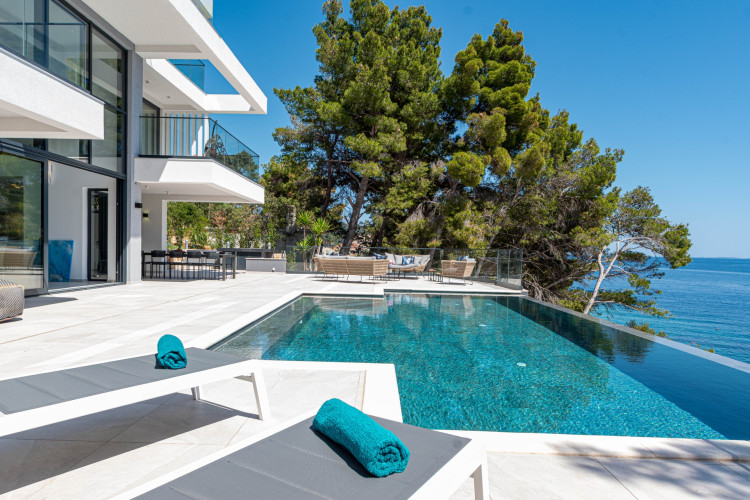
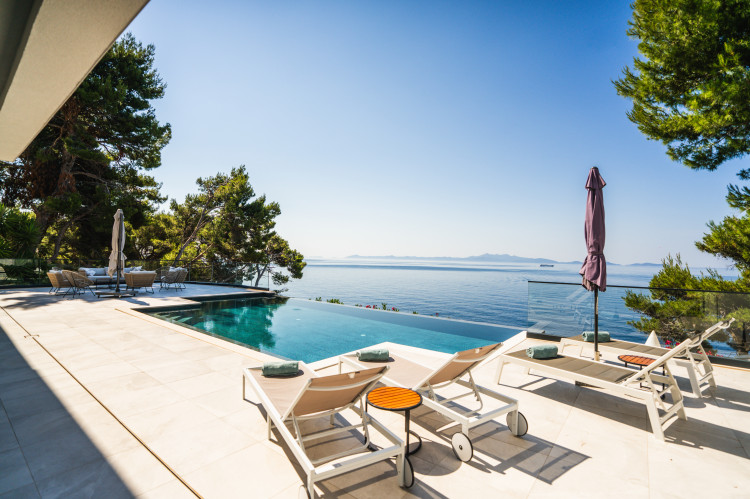
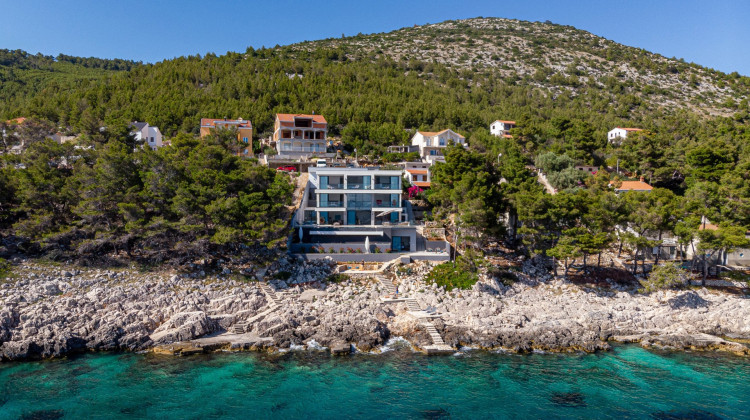
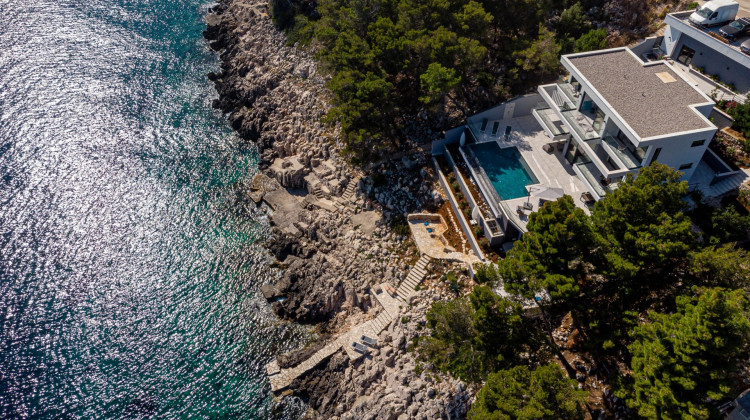
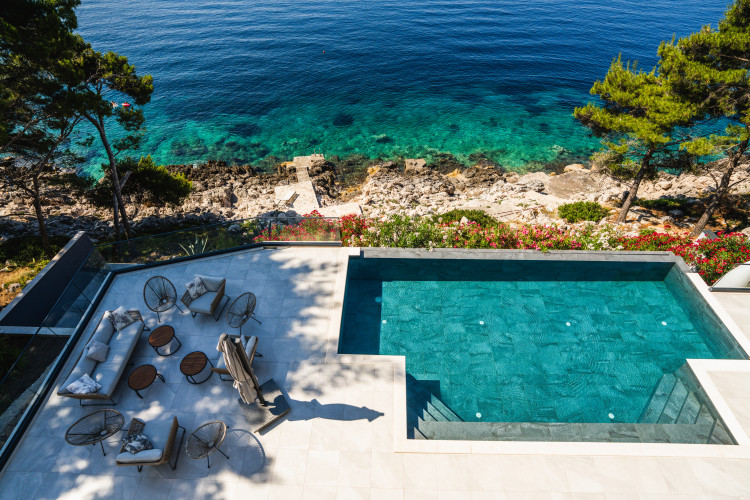
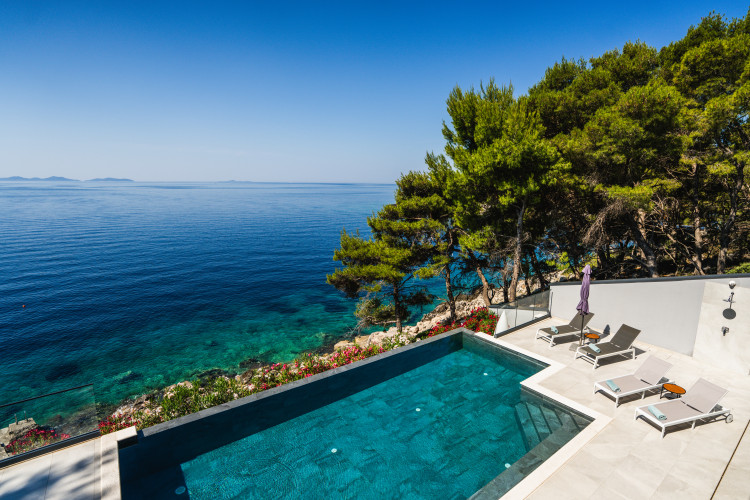
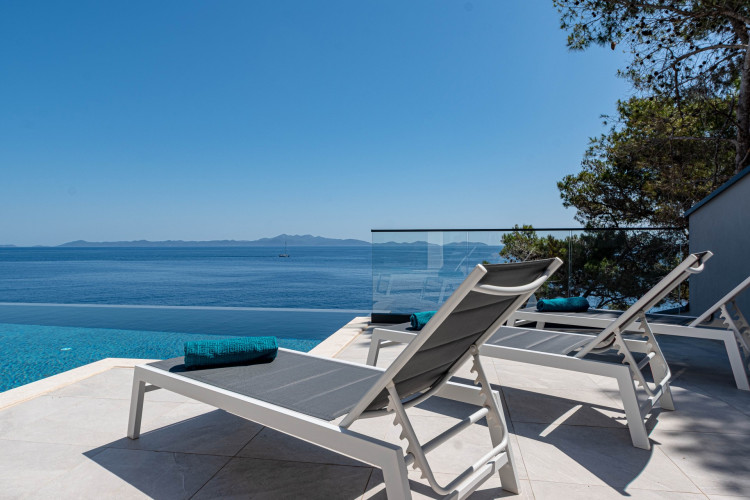
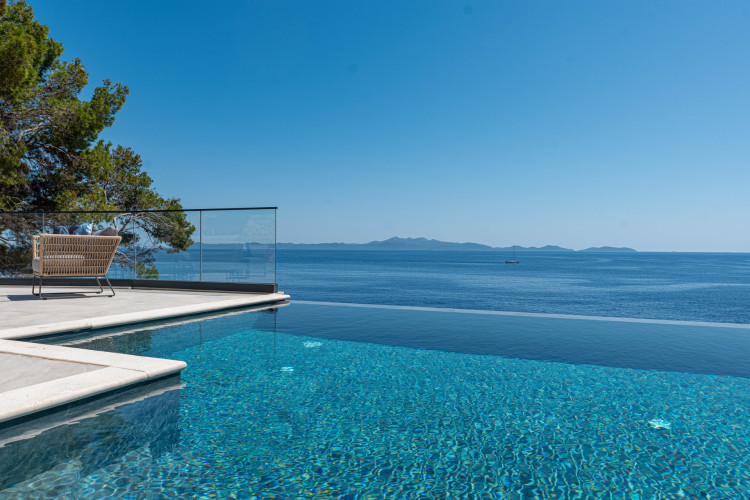
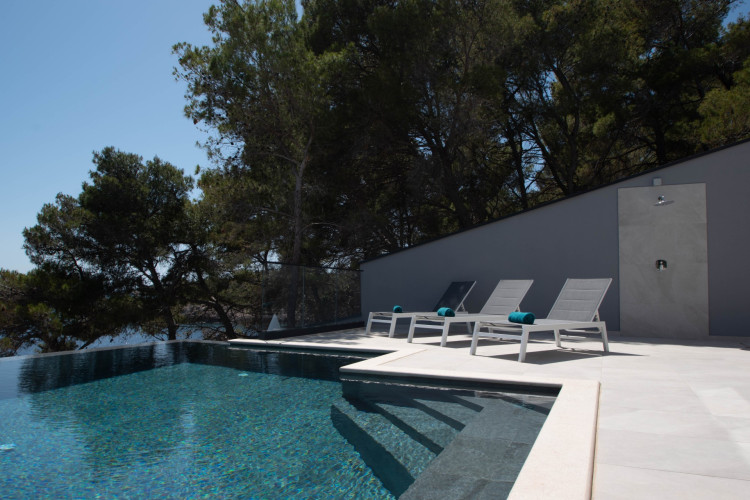

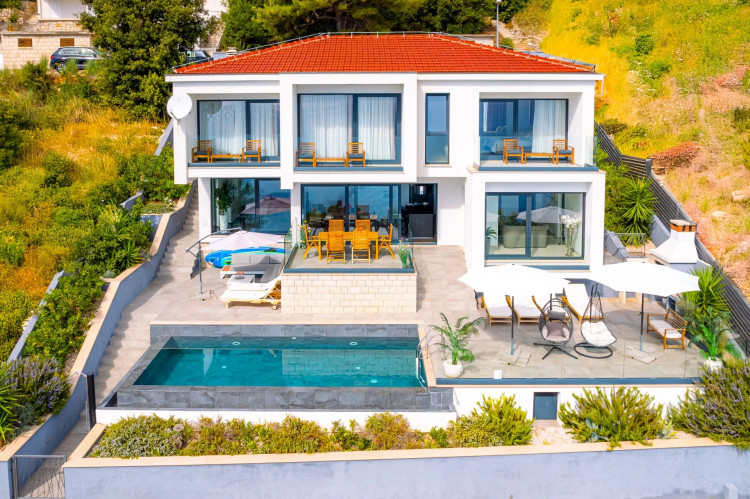
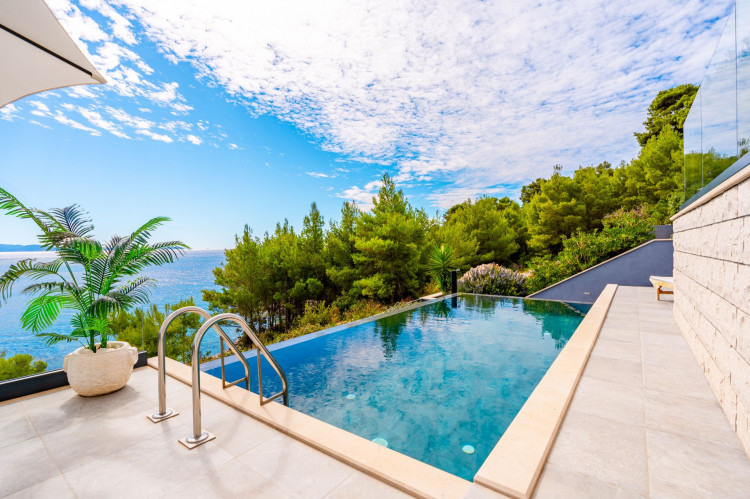
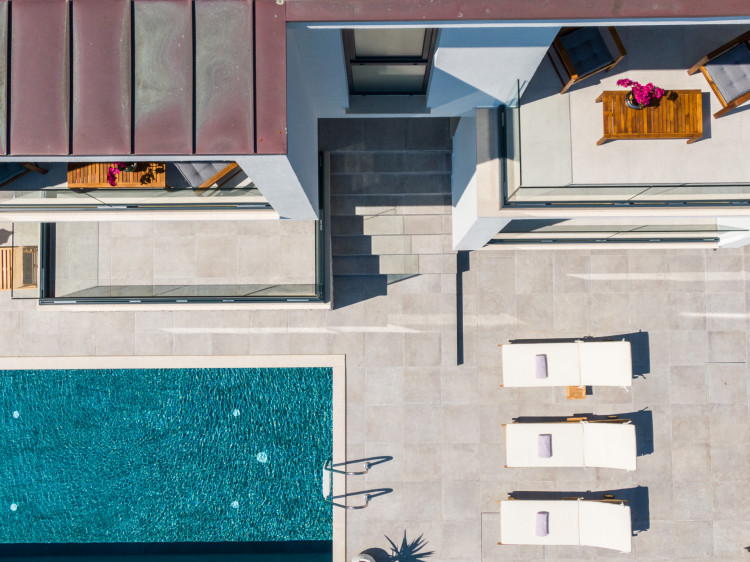
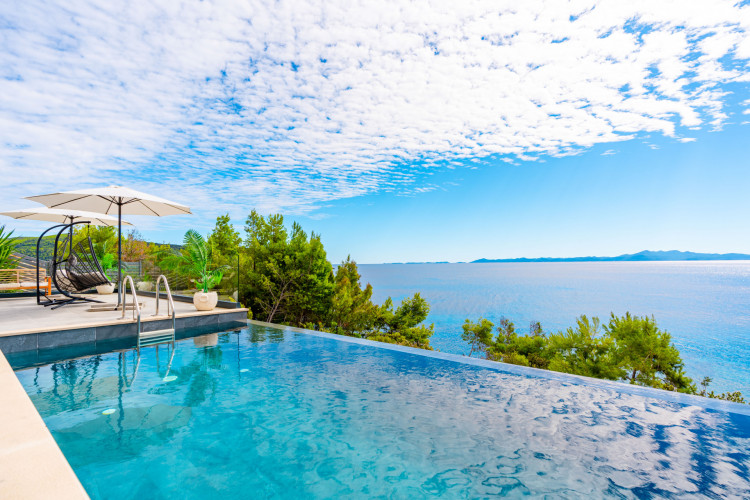
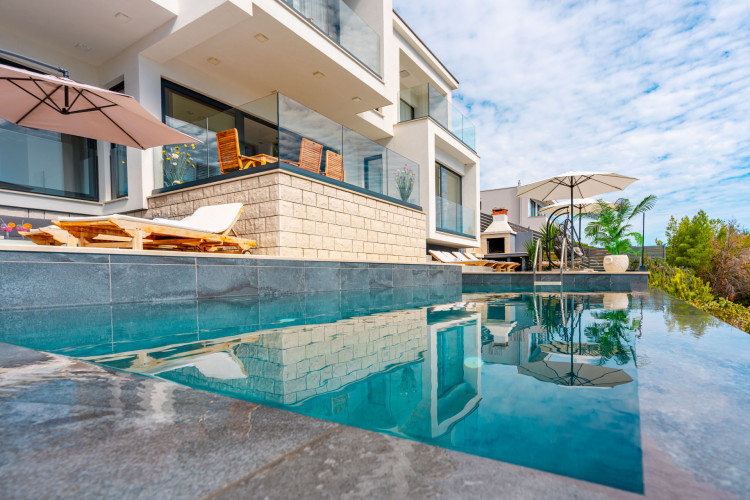
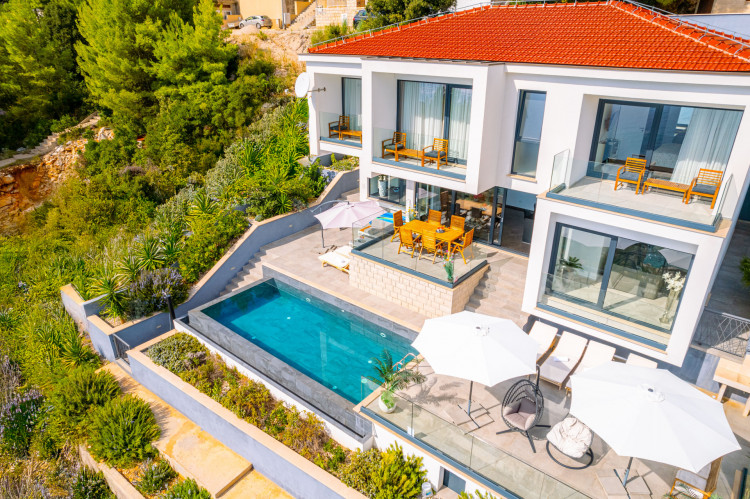
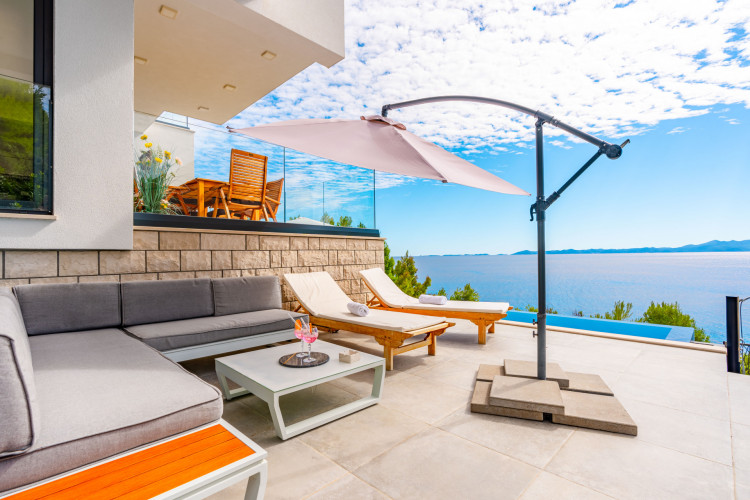
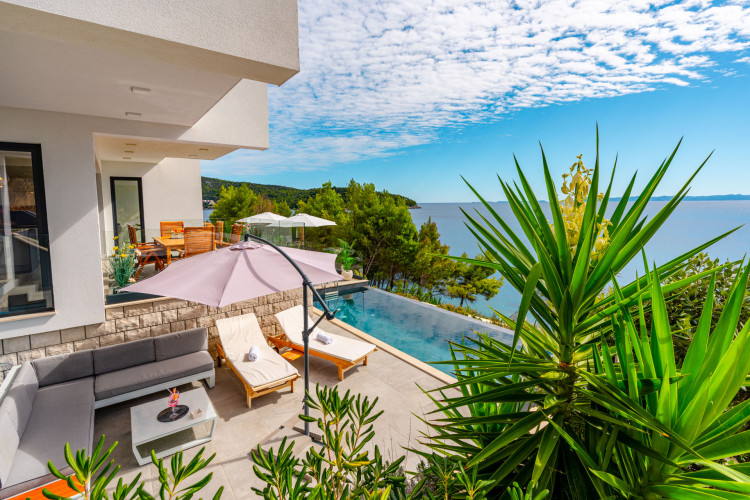


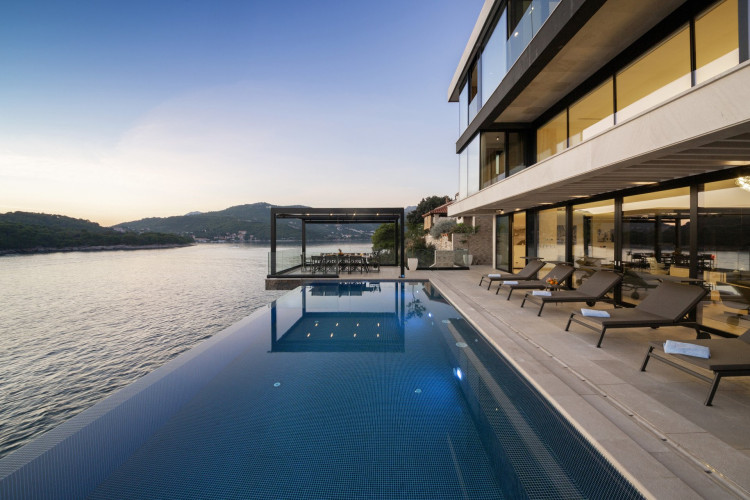
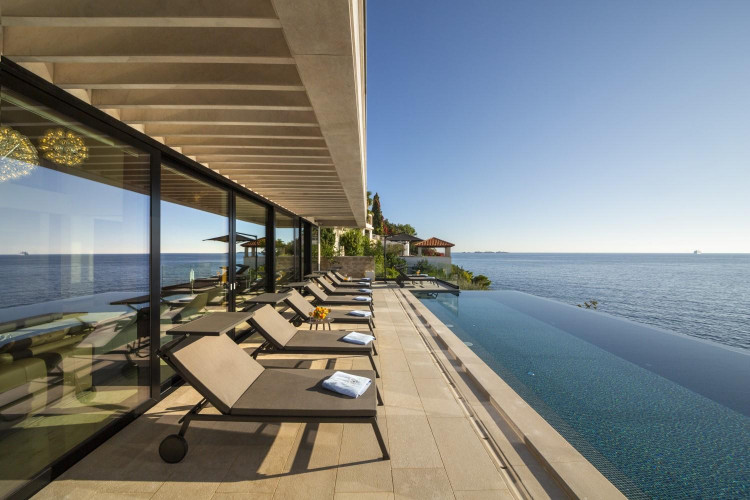
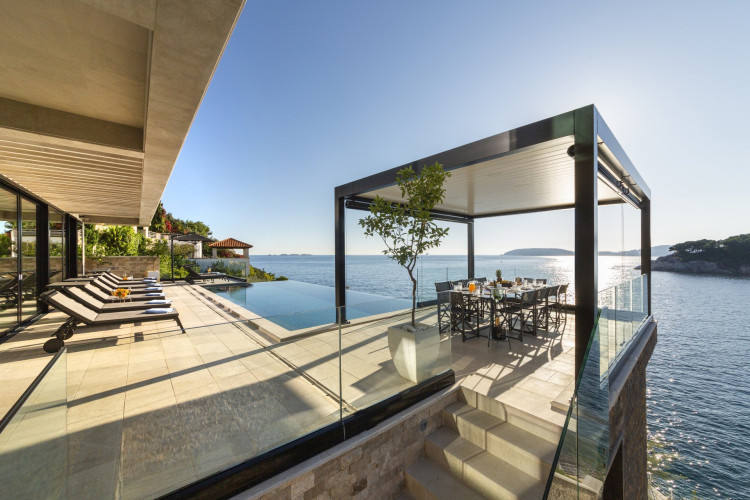
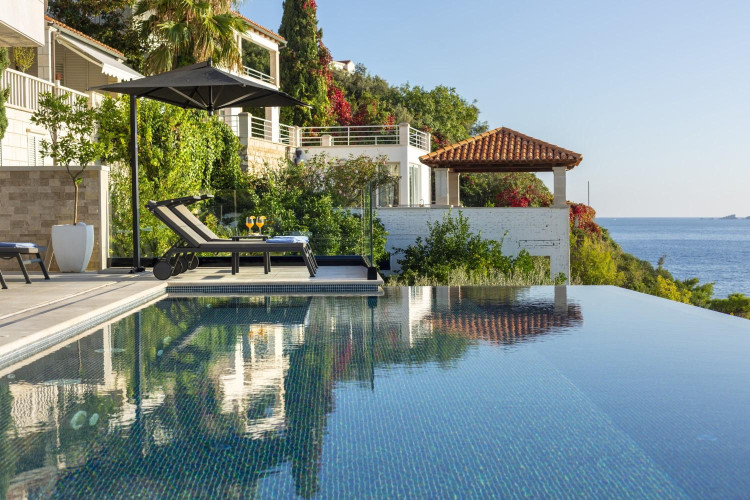
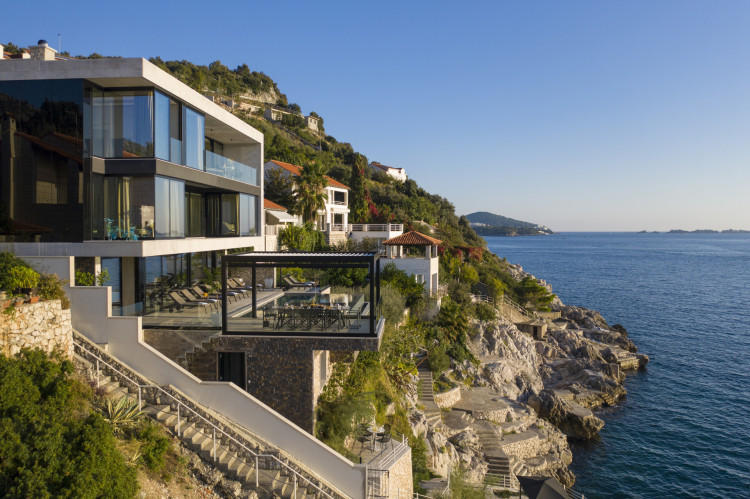
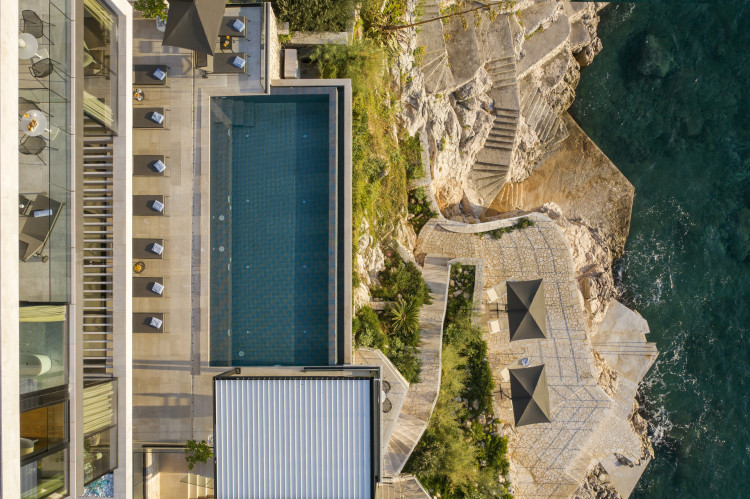
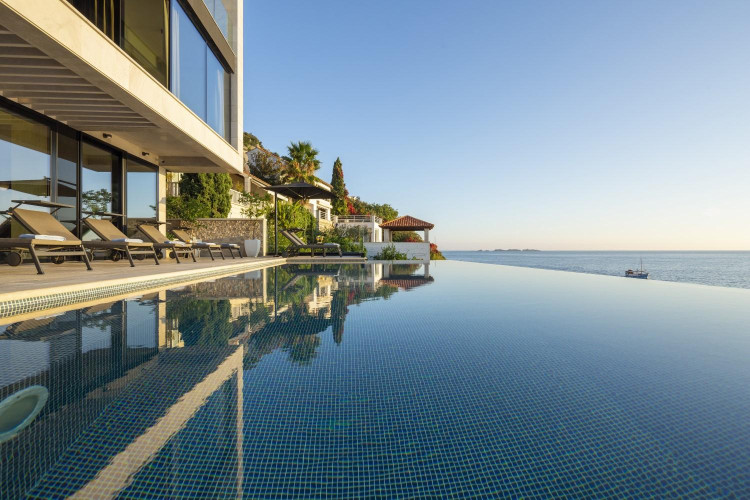
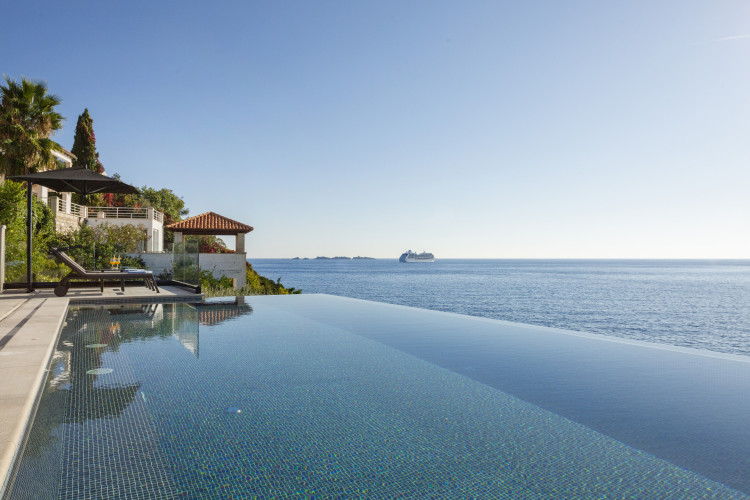
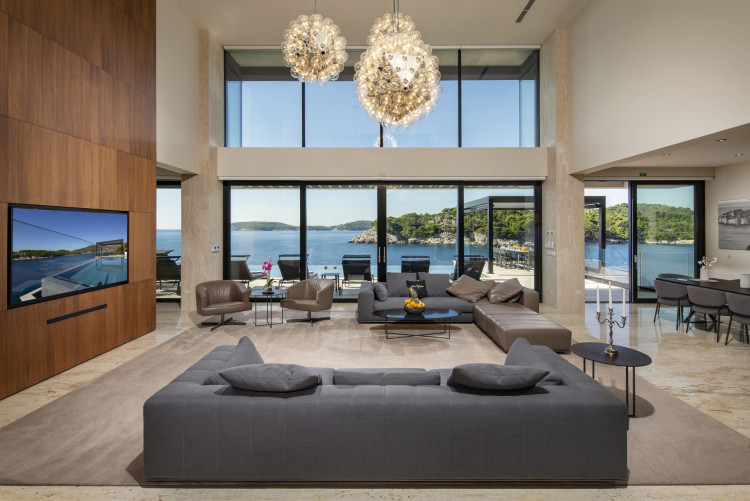
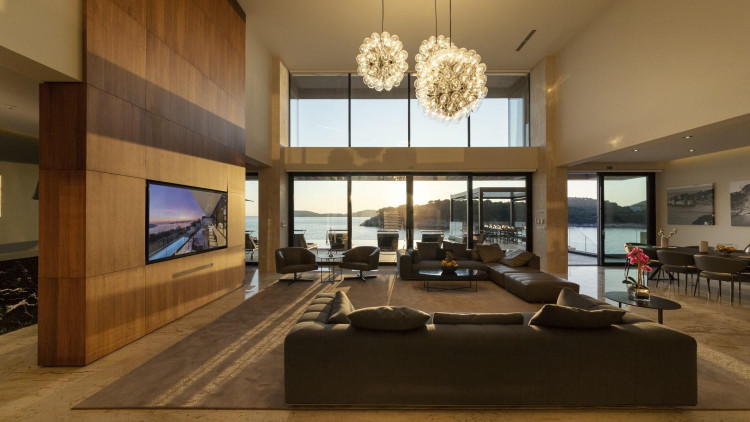
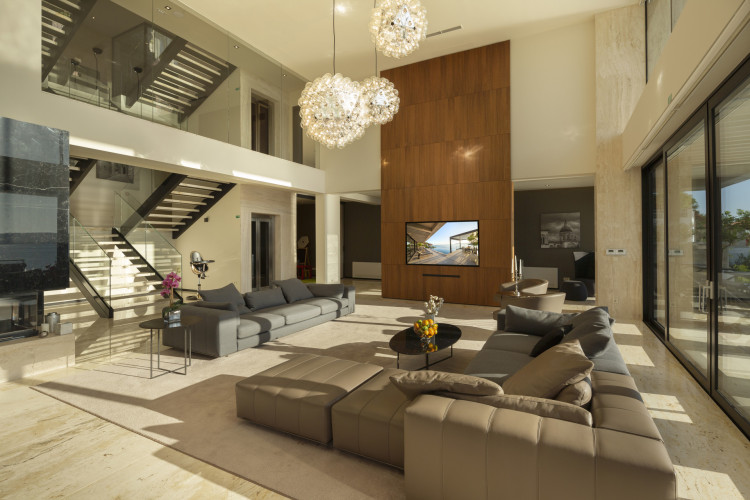
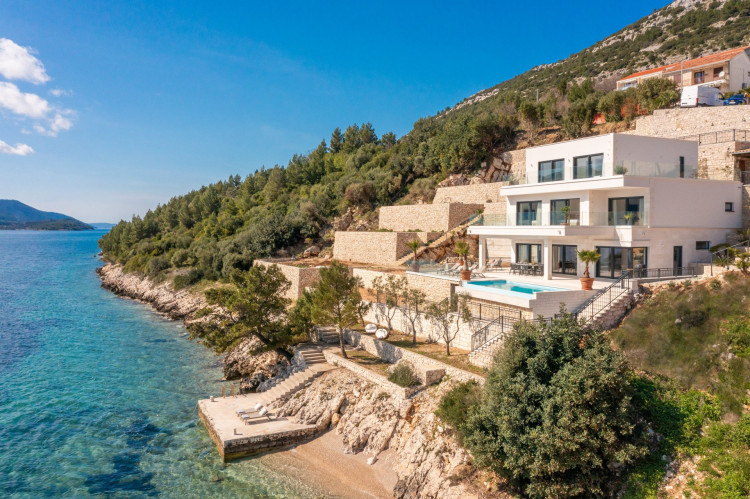
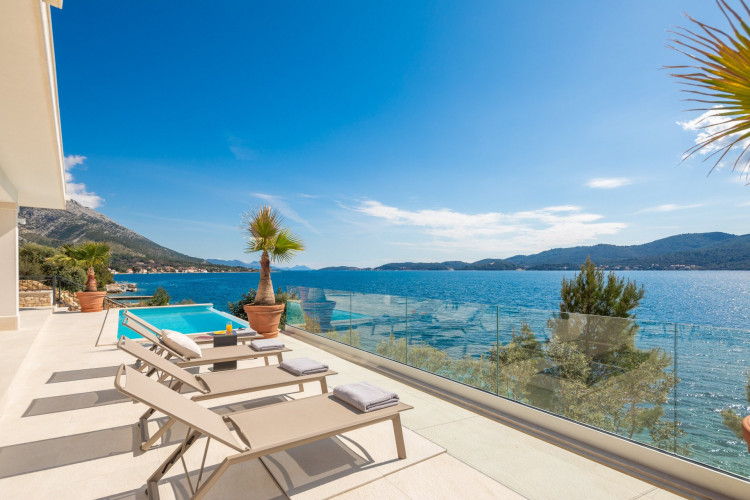
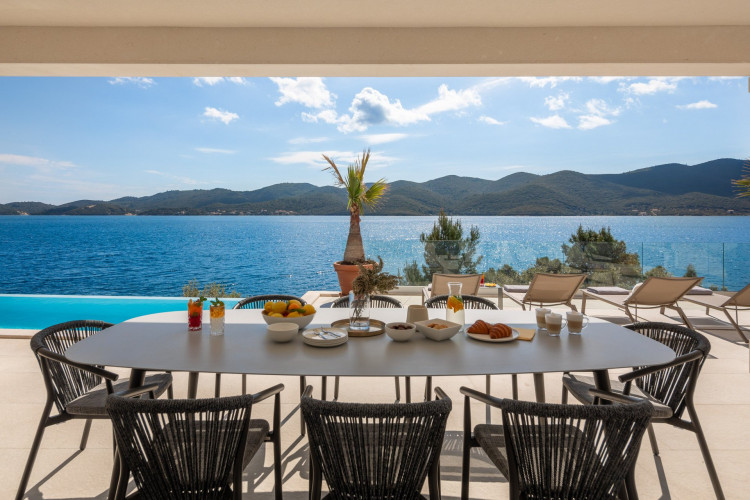
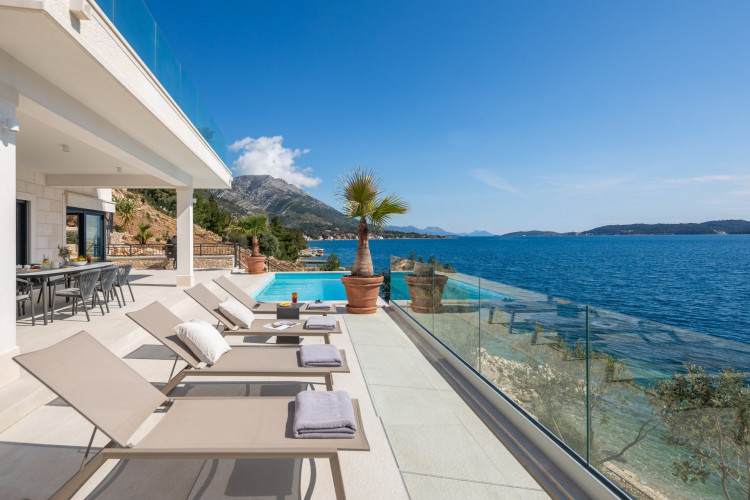
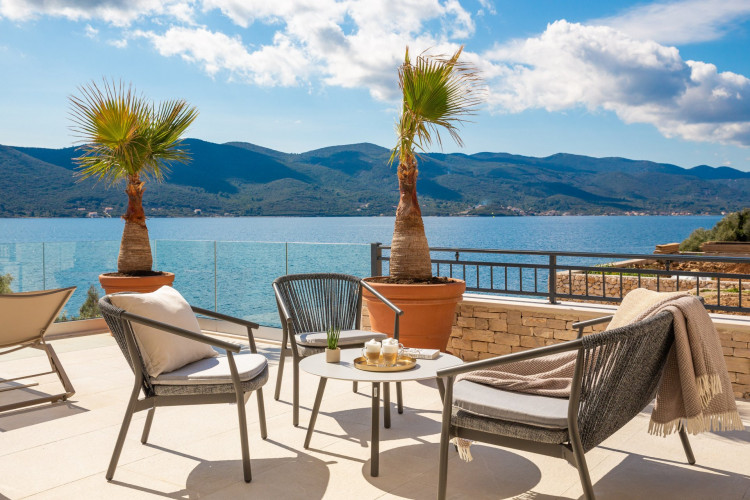
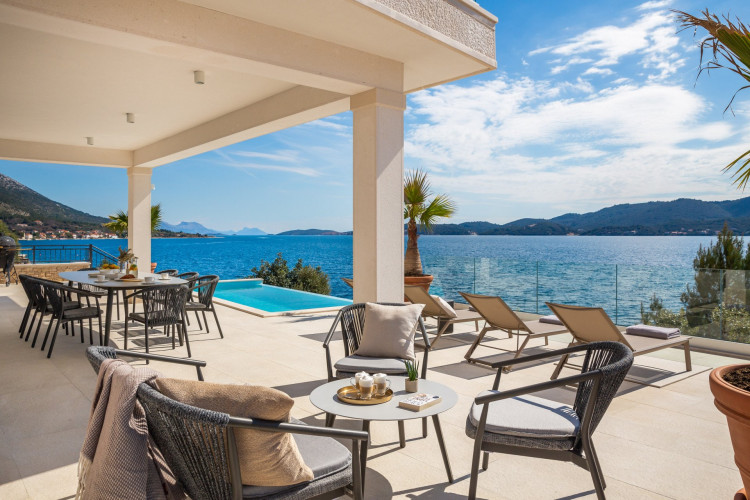
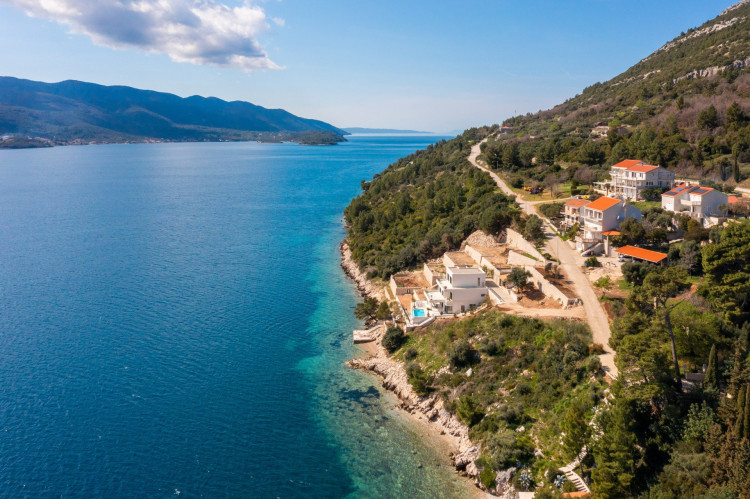
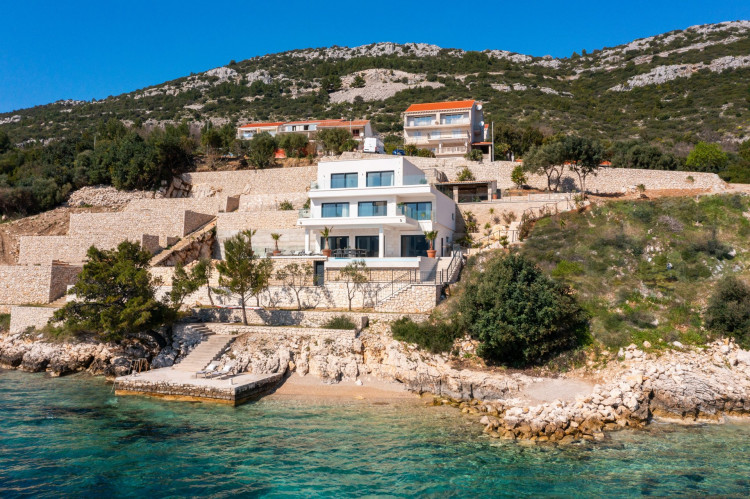
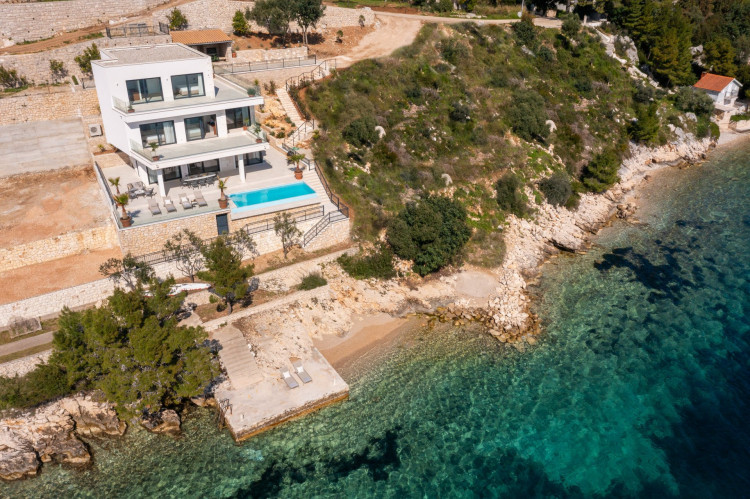
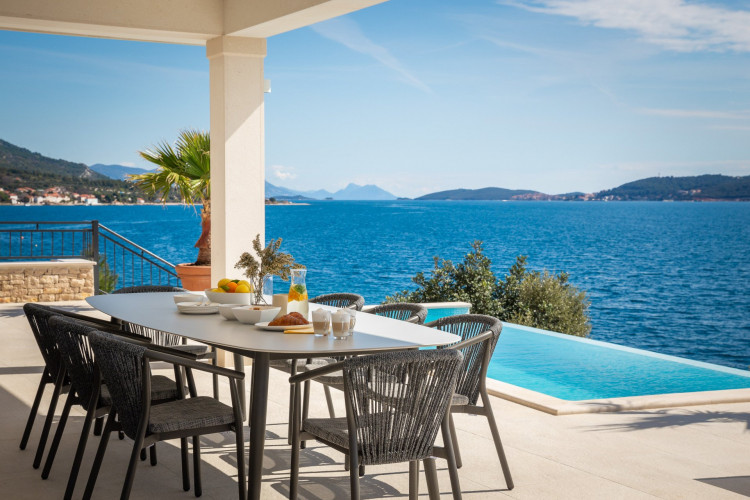
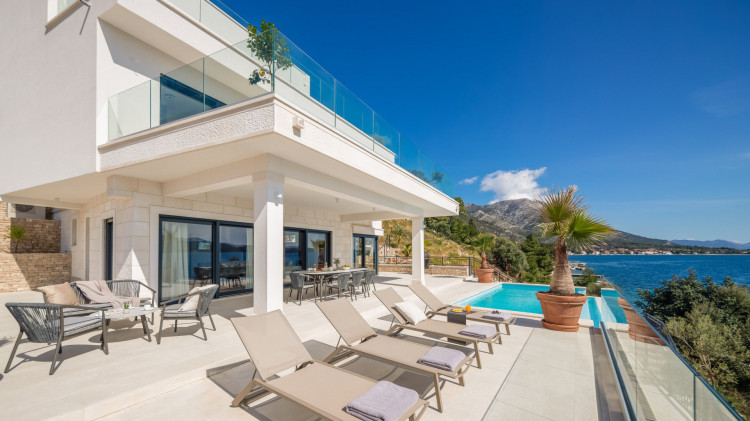
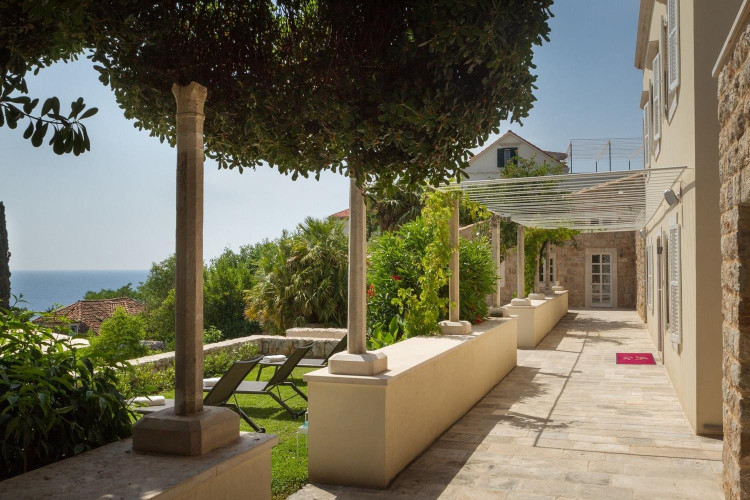
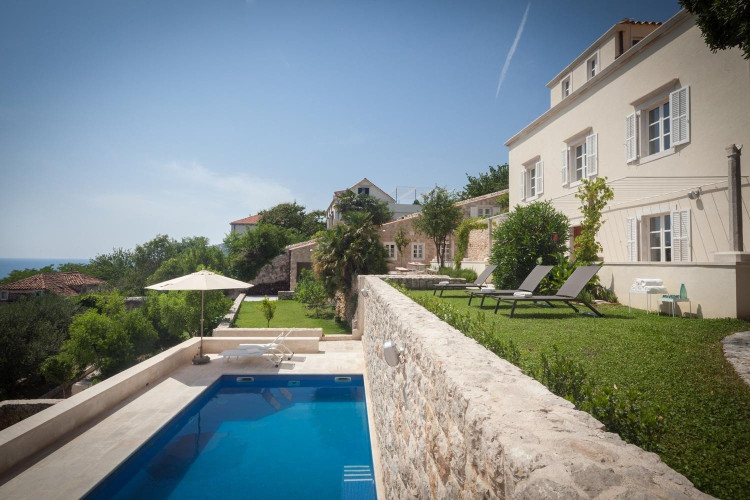

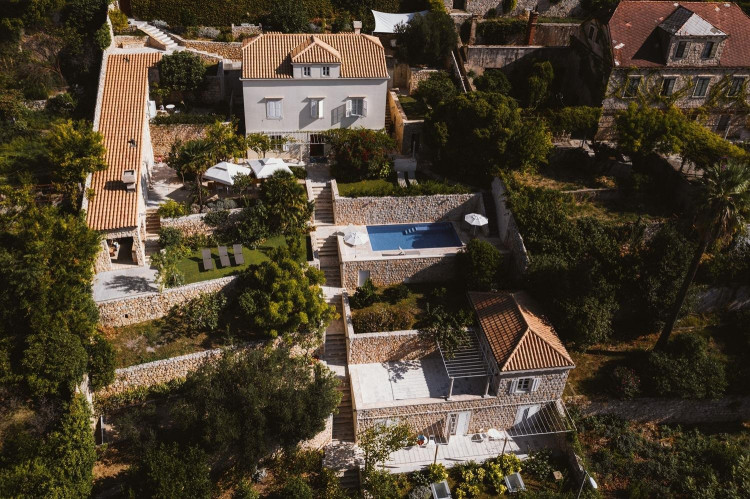
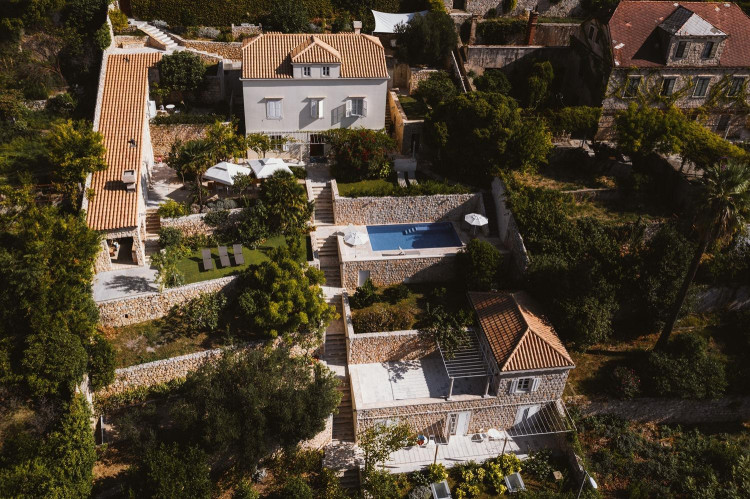
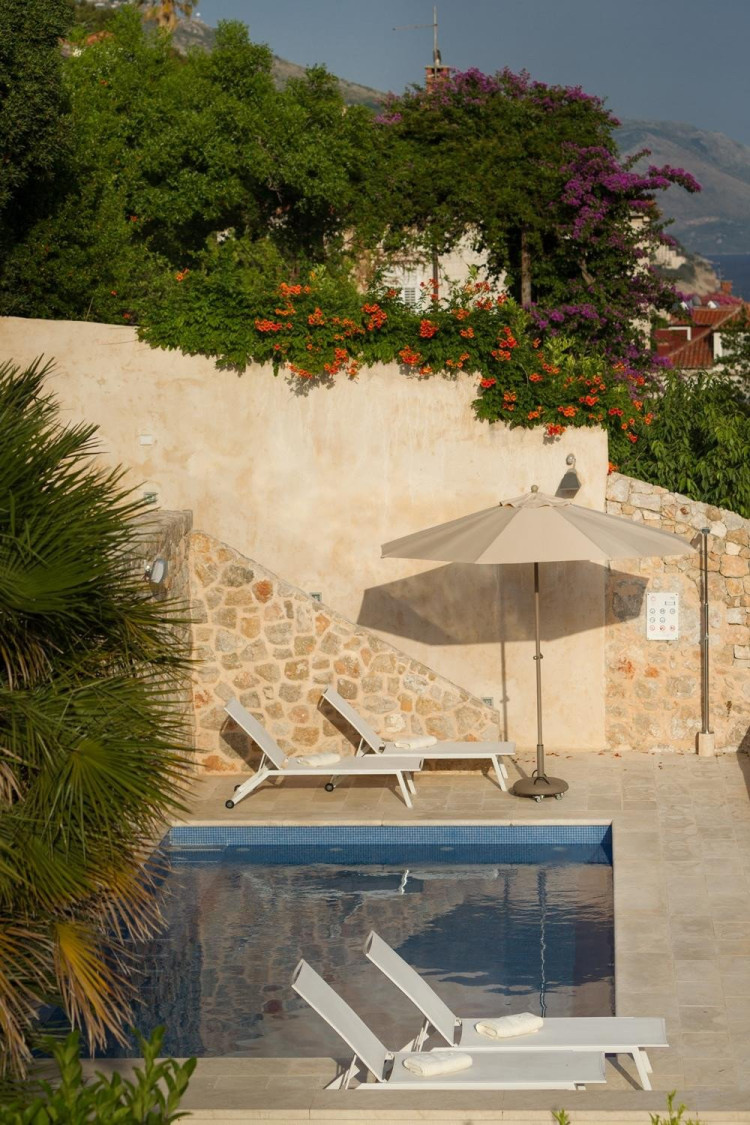
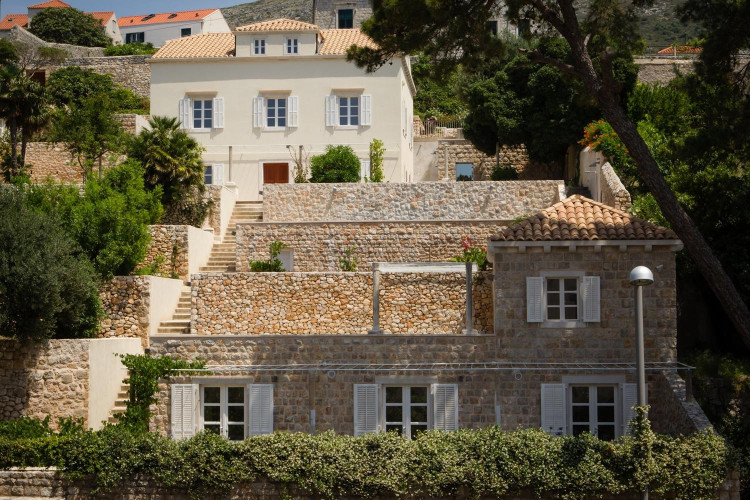
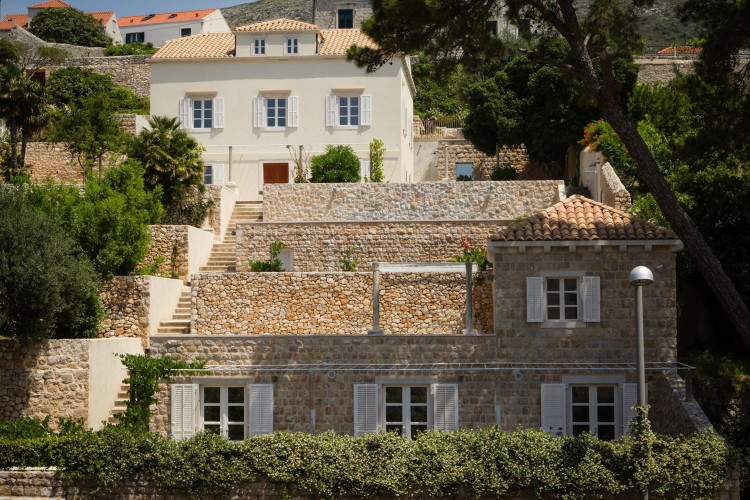


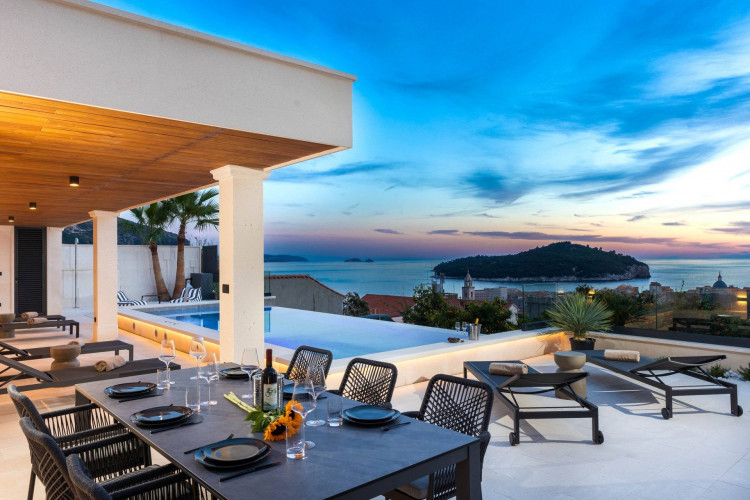
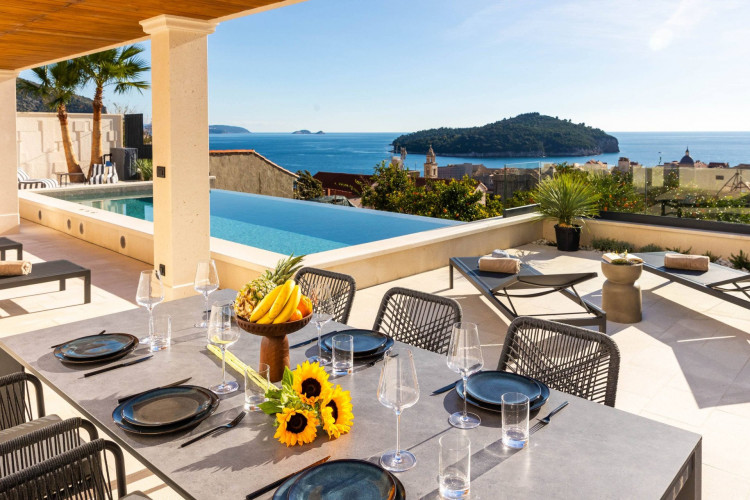
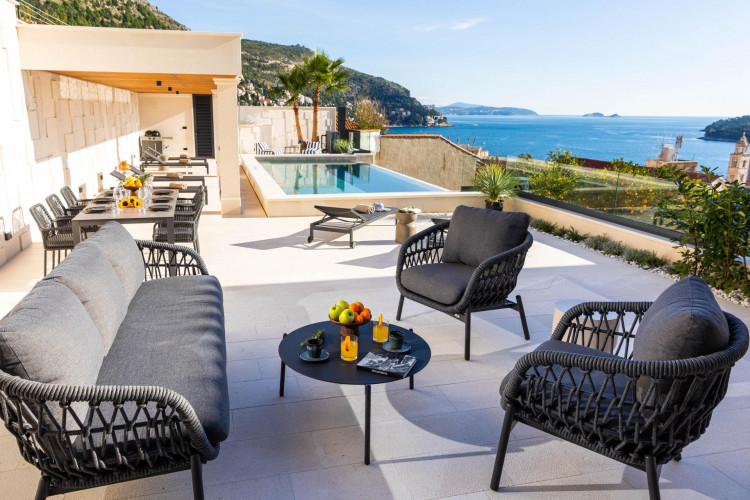
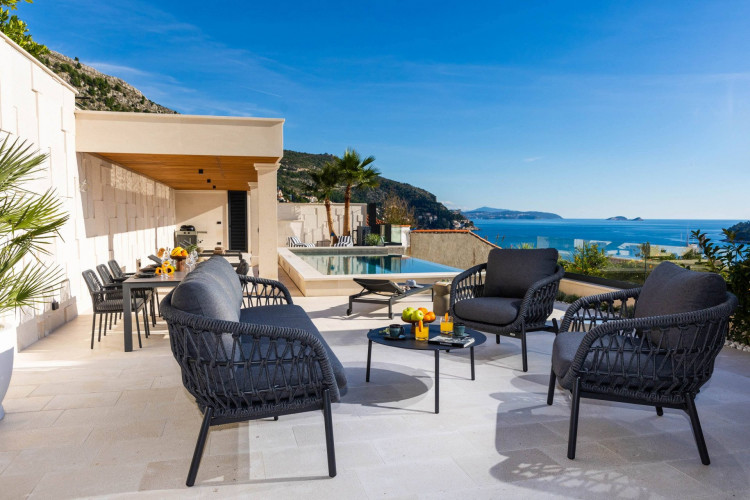
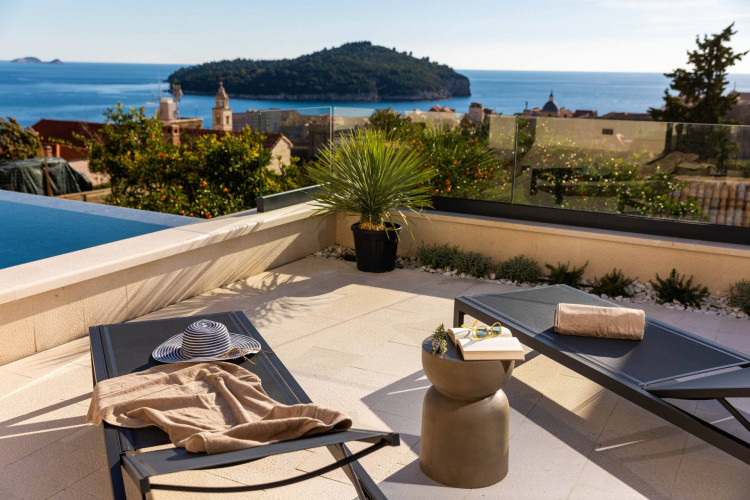

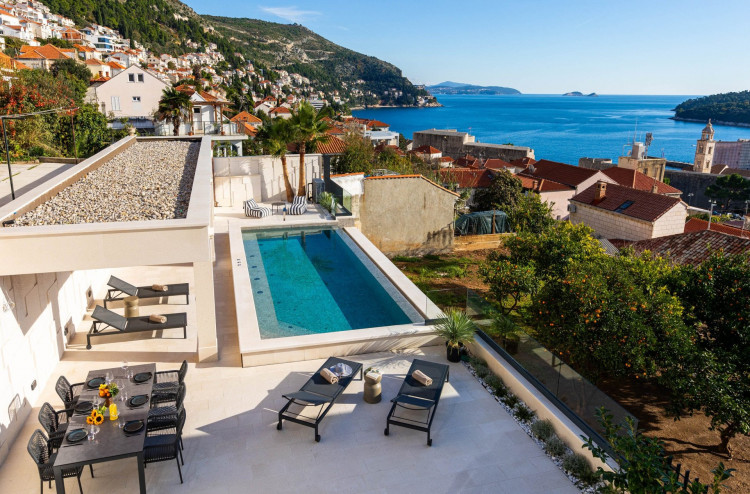
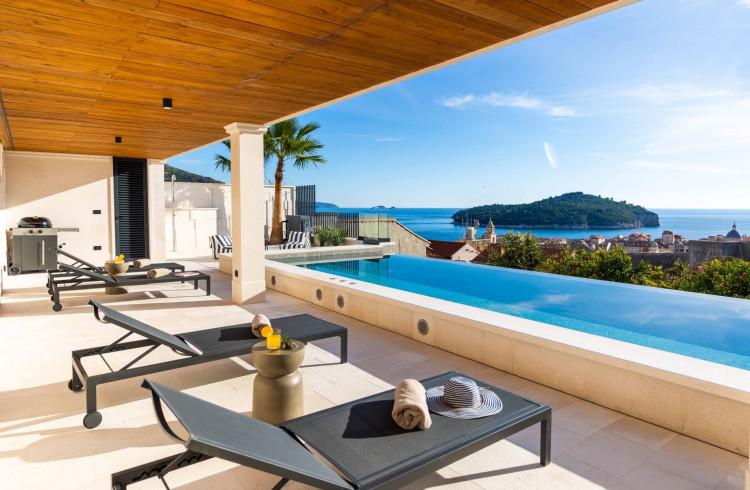
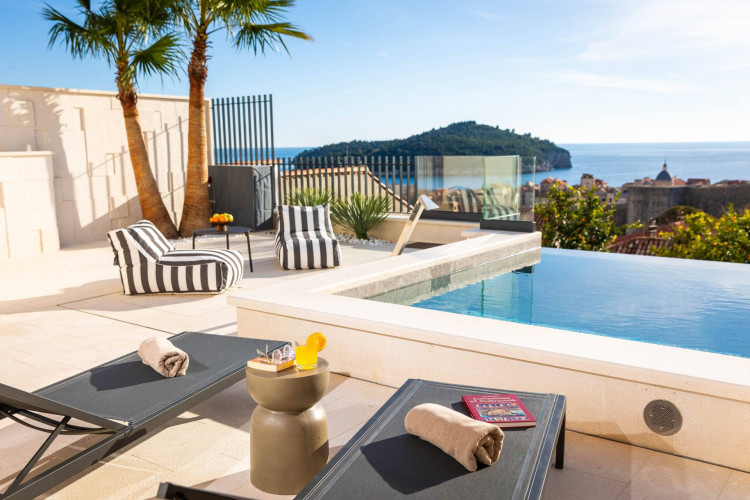
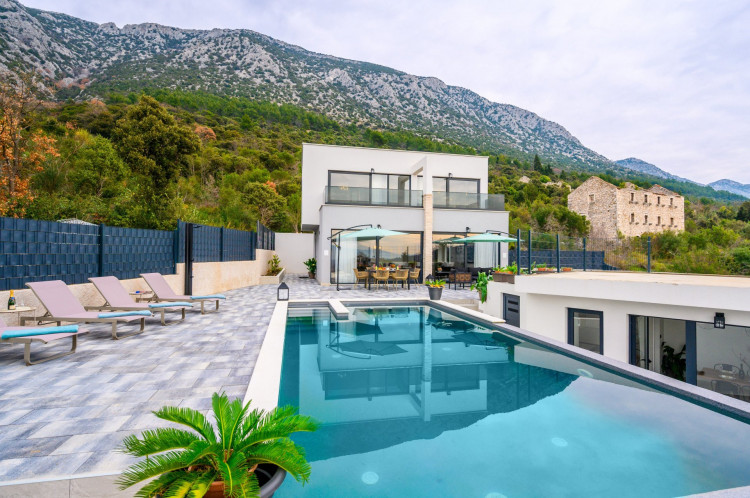
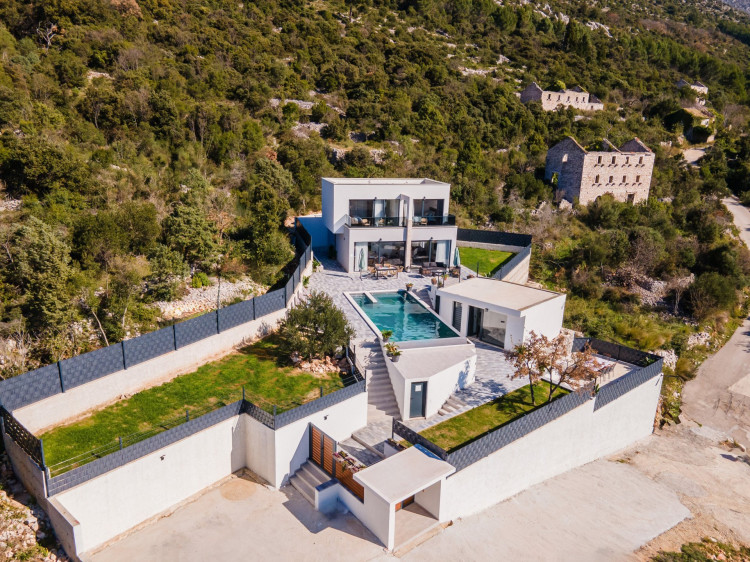
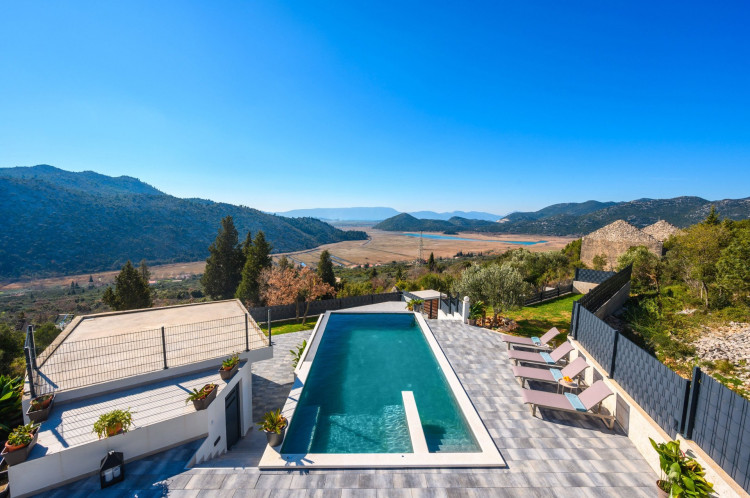
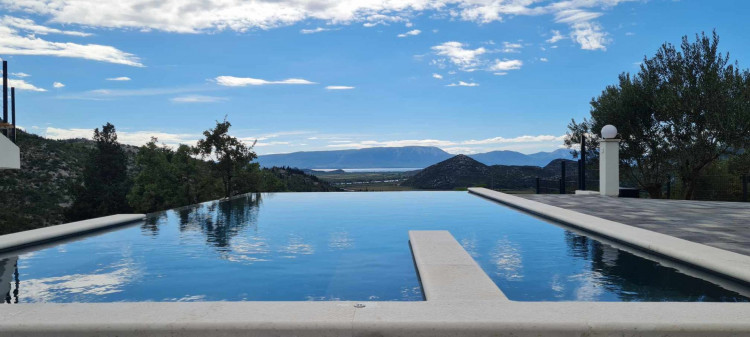
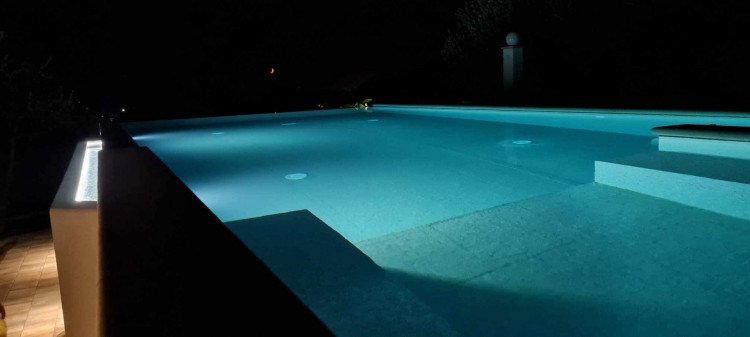
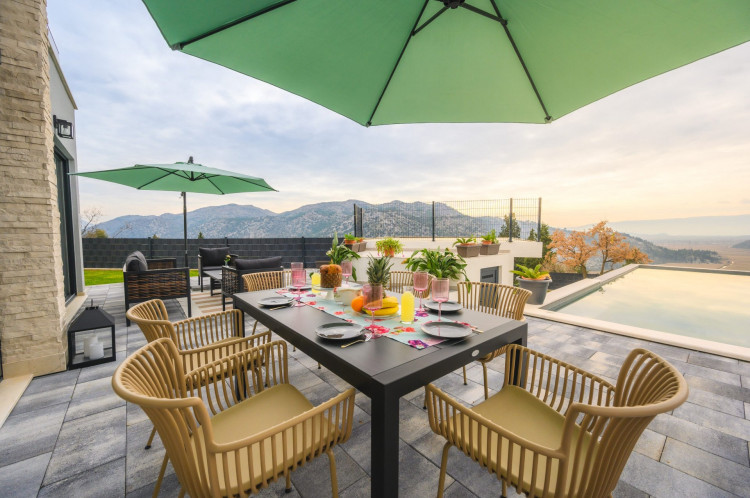
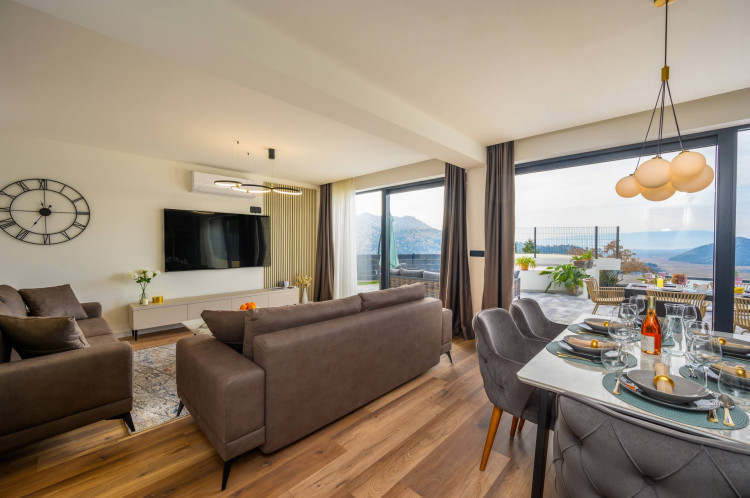
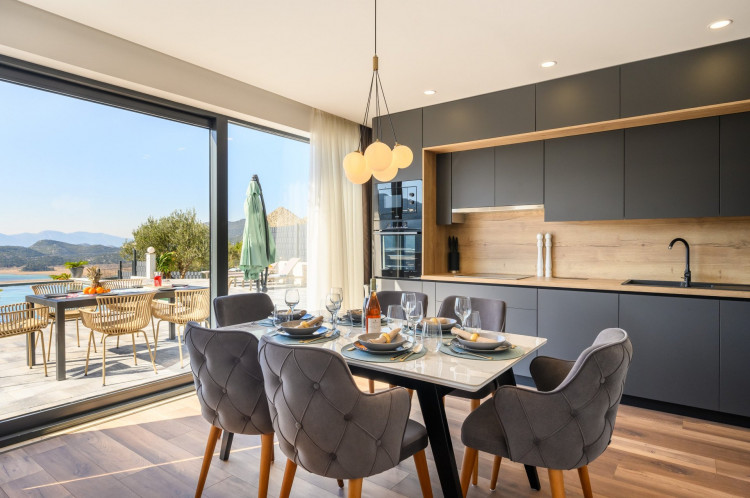
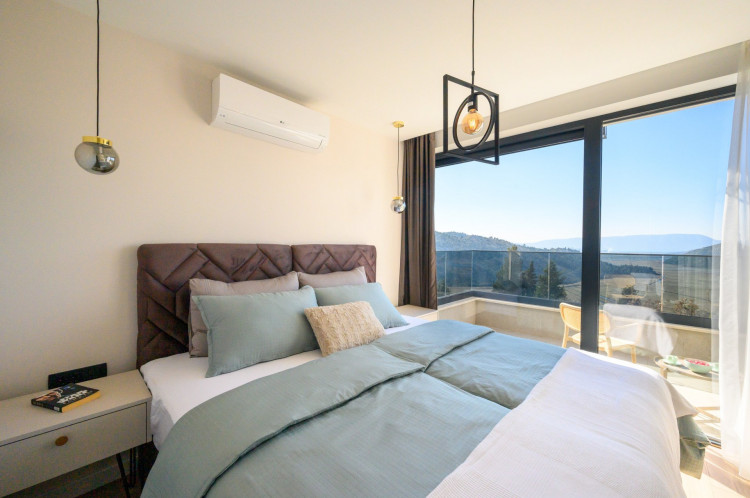
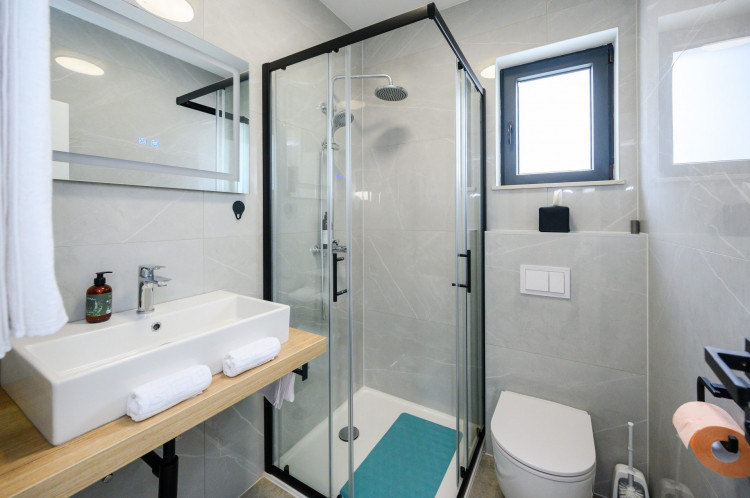
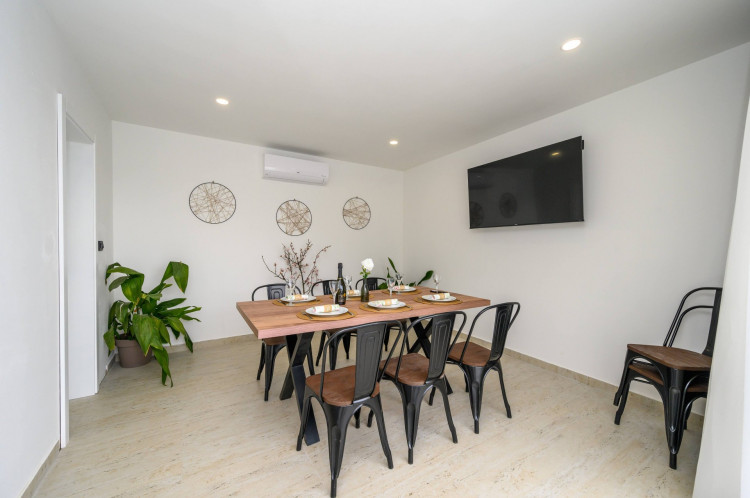
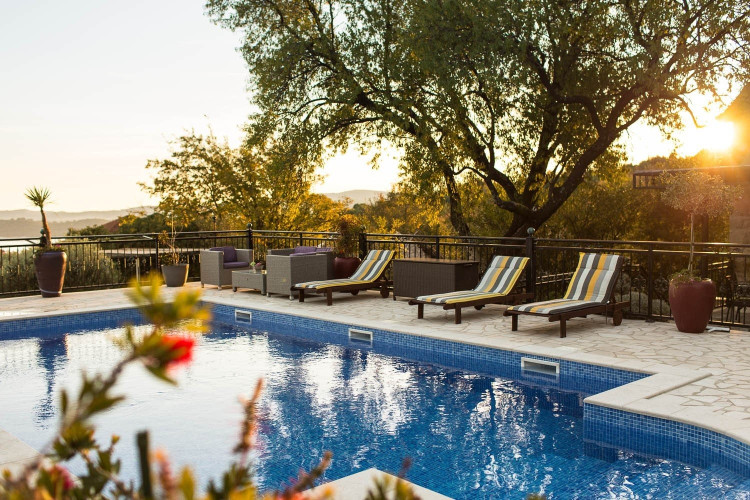
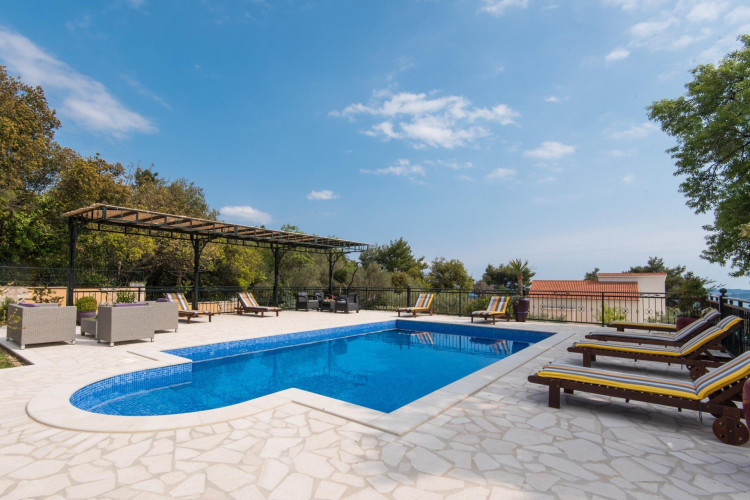
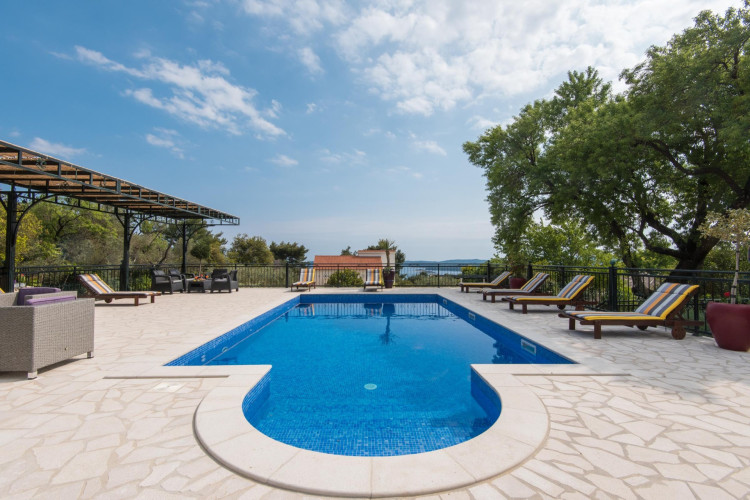
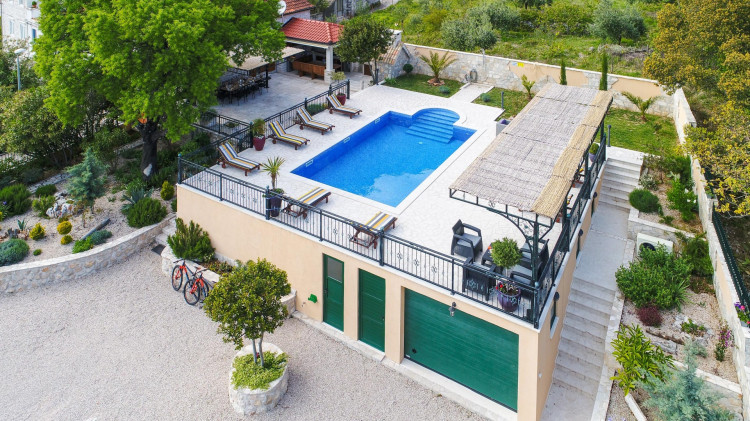
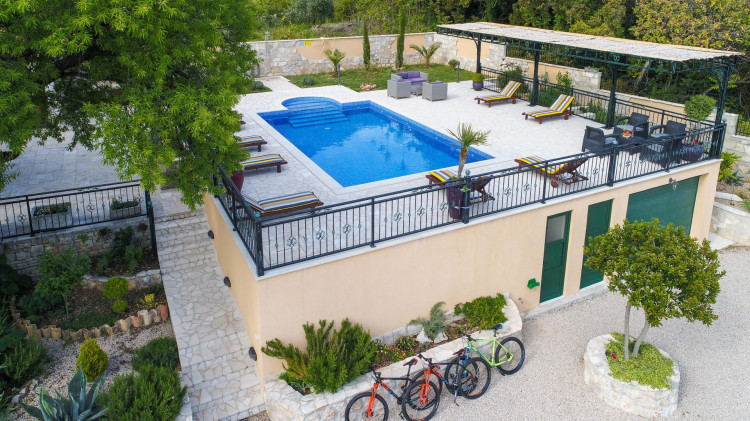

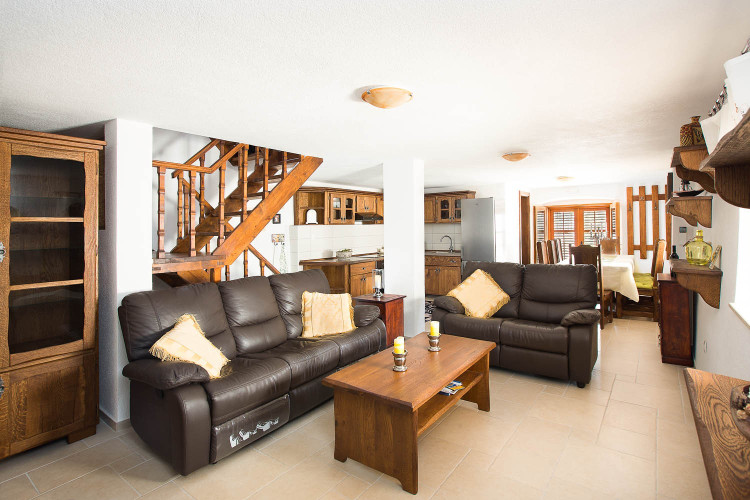
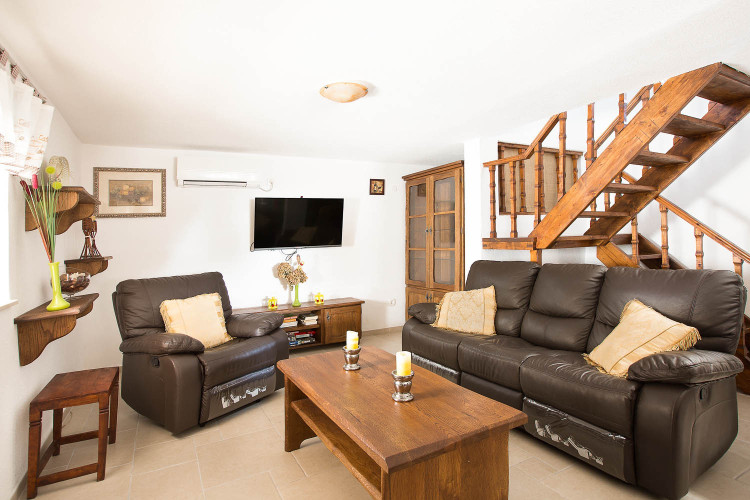
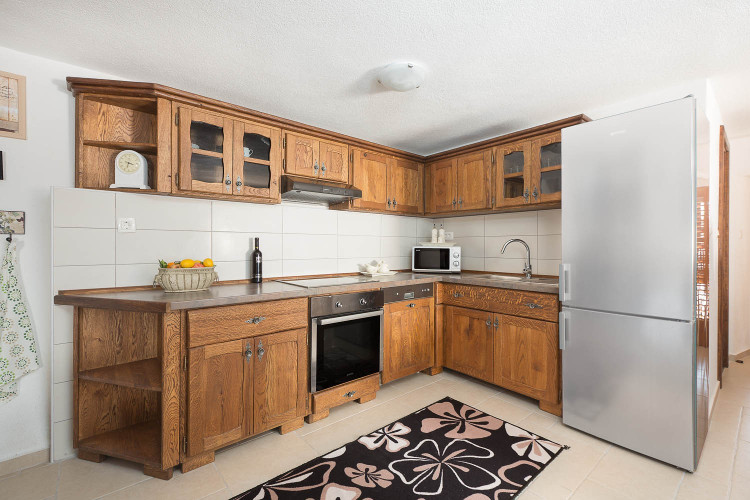
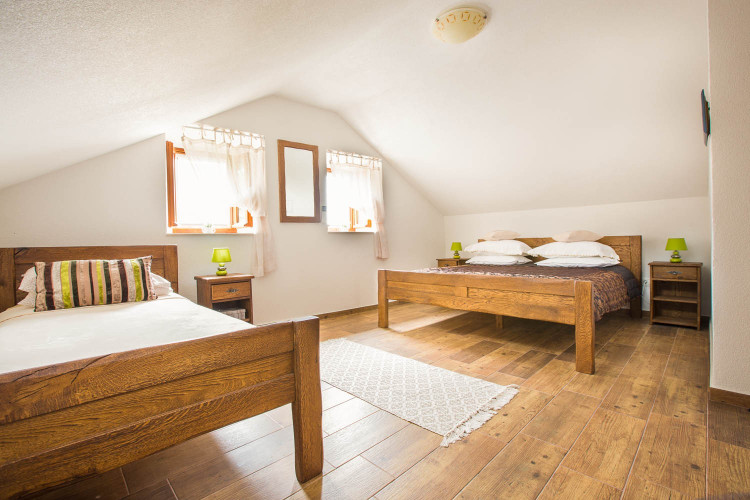
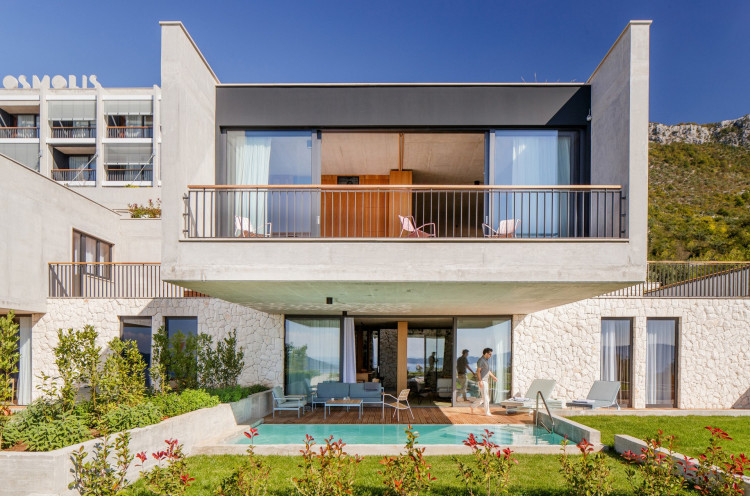
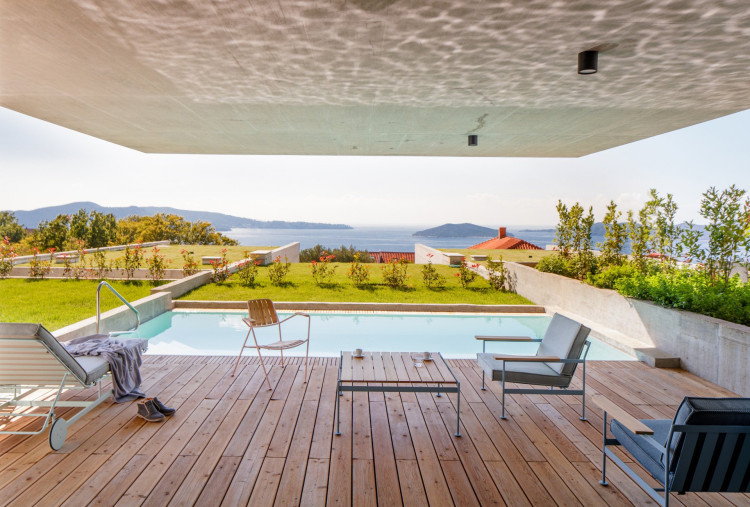
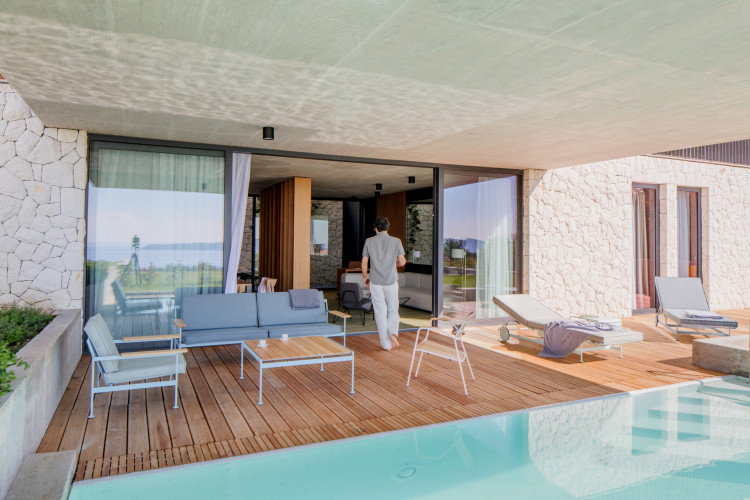

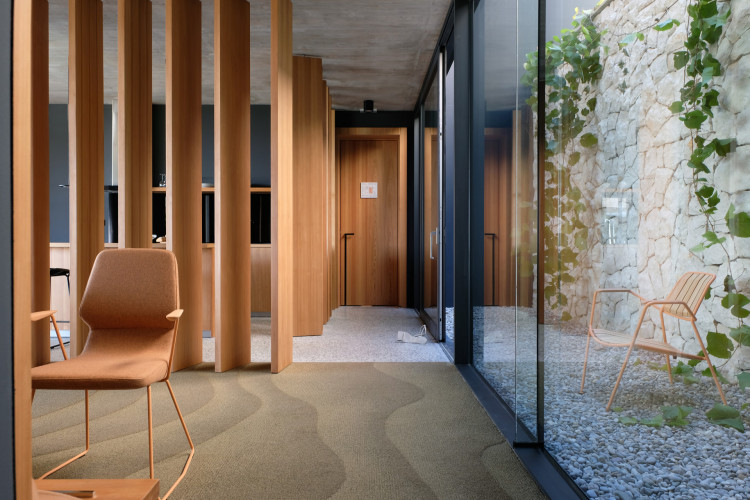
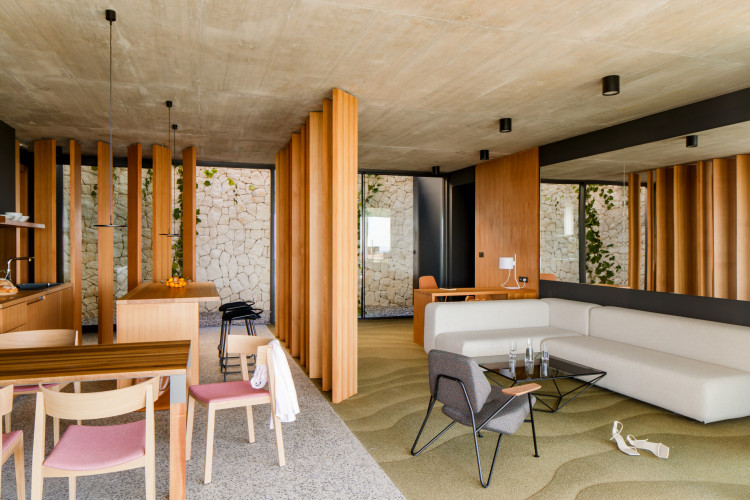
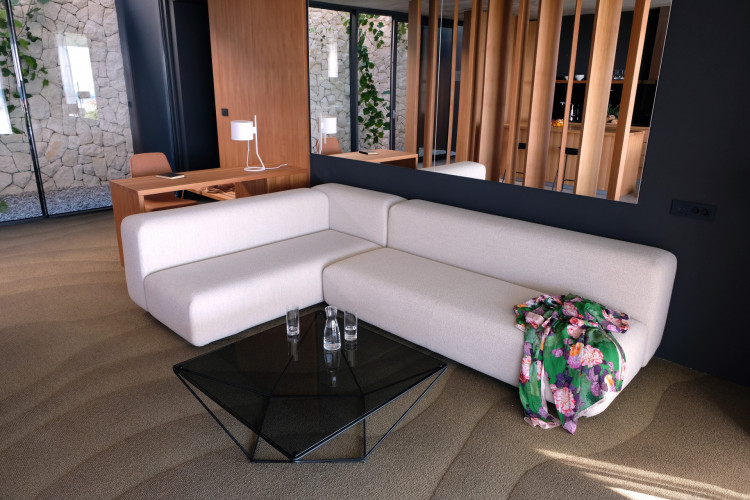
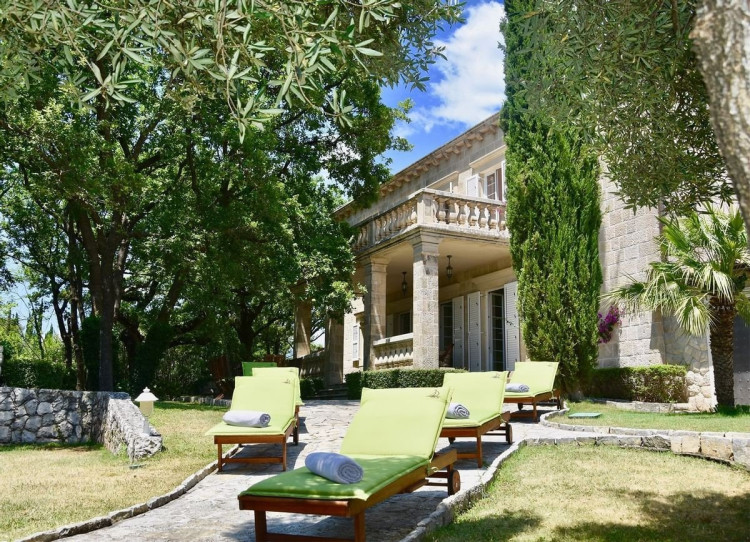
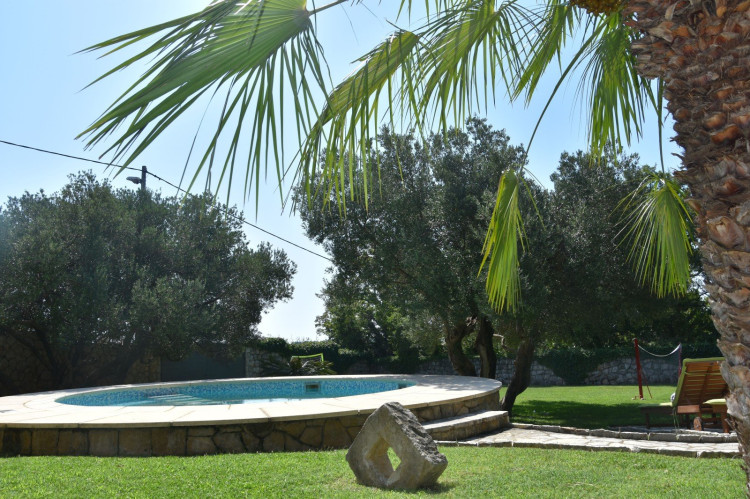
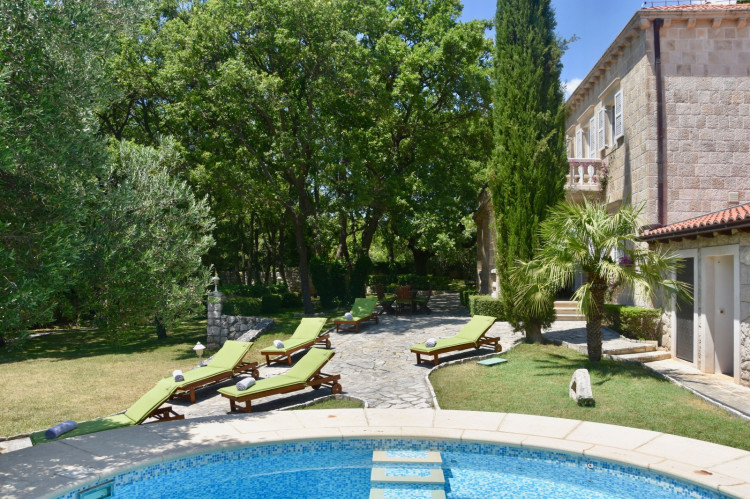
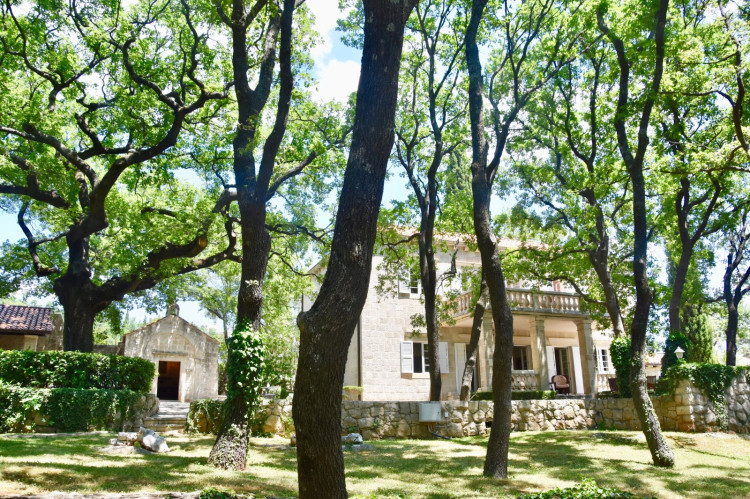
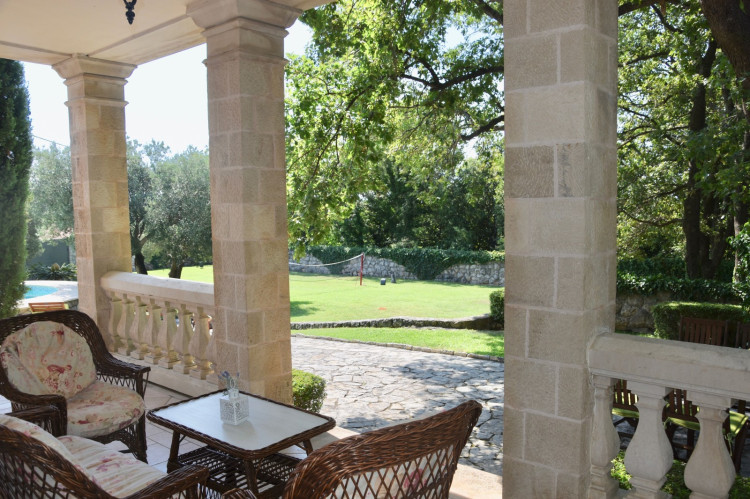
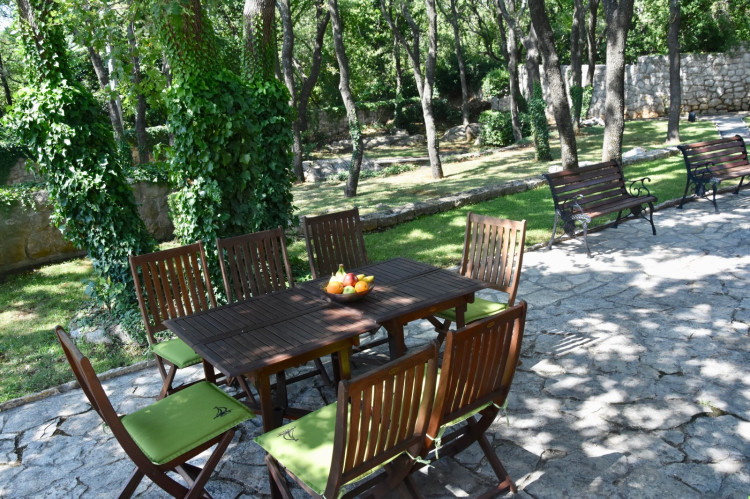
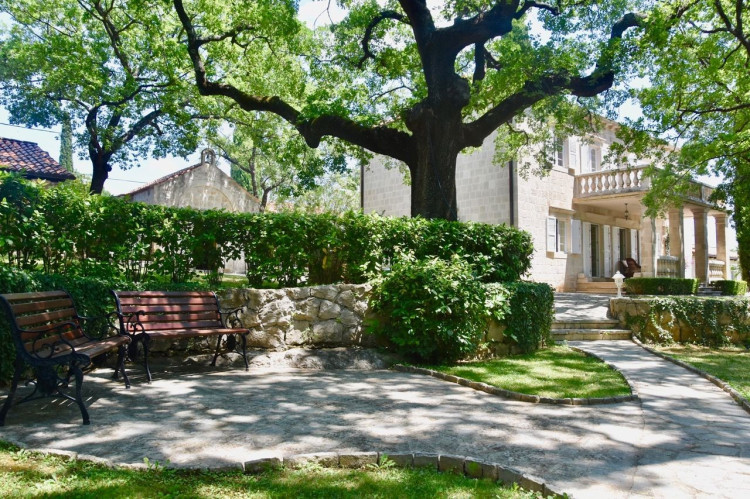
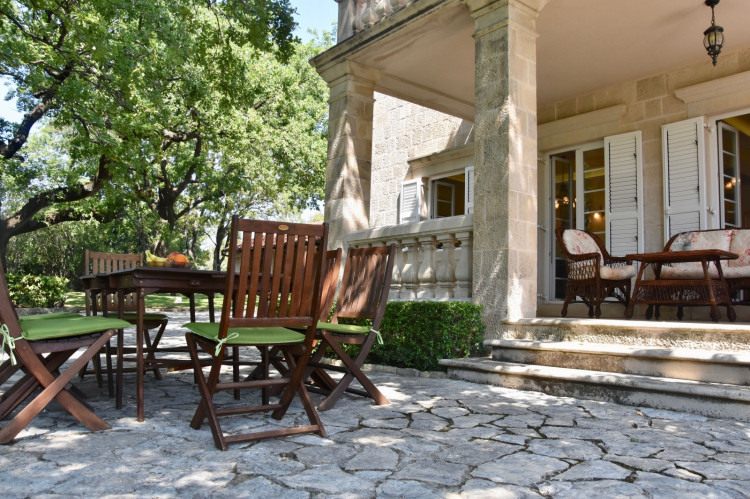
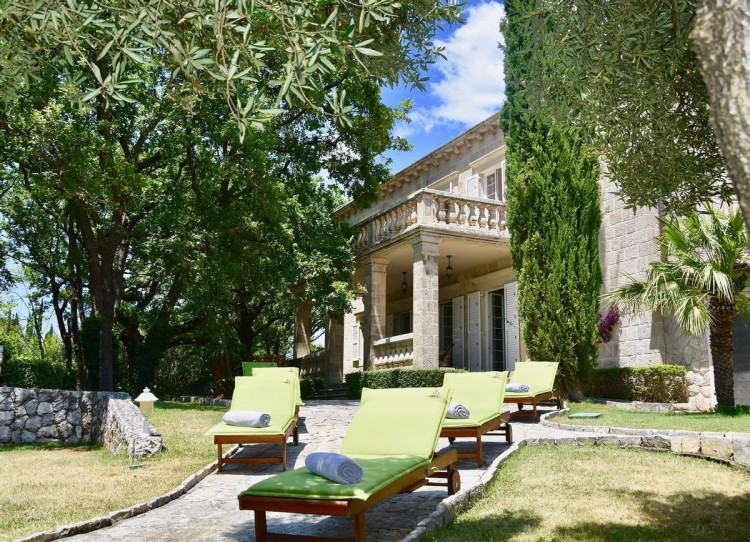
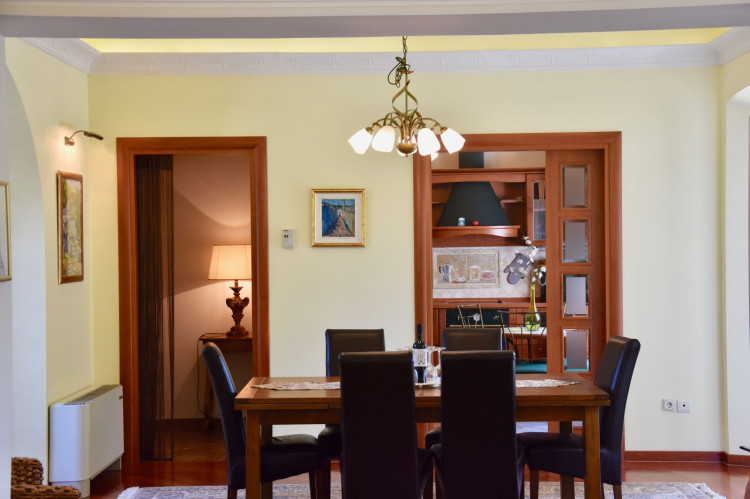
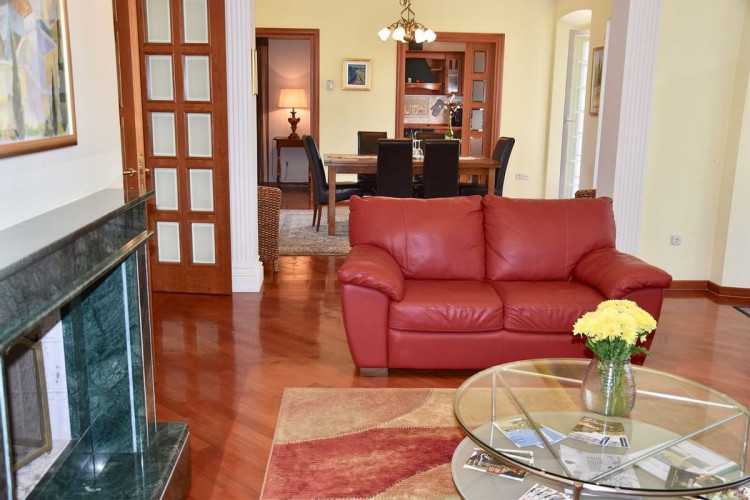
You have probably heard of Dubrovnik a million times. Known as the Pearl of the Adriatic, it is the most desirable Croatian destination. If you are looking for villas in Dubrovnik, you know this city needs little introduction. What you may not know is how much a villa holiday here differs from the hotel and cruise ship experience that dominates its reputation. Staying in a private luxury villa with a pool and terrace can transform Dubrovnik from a crowded destination into something far more personal.
Dubrovnik is located at the southern tip of the Adriatic coast in Croatia. Its old town was inscribed on the UNESCO World Heritage List in 1979 and is one of the most complete surviving medieval fortified cities in Europe. The circuit of the city walls is the most recognizable part of Dubrovnik's old town.
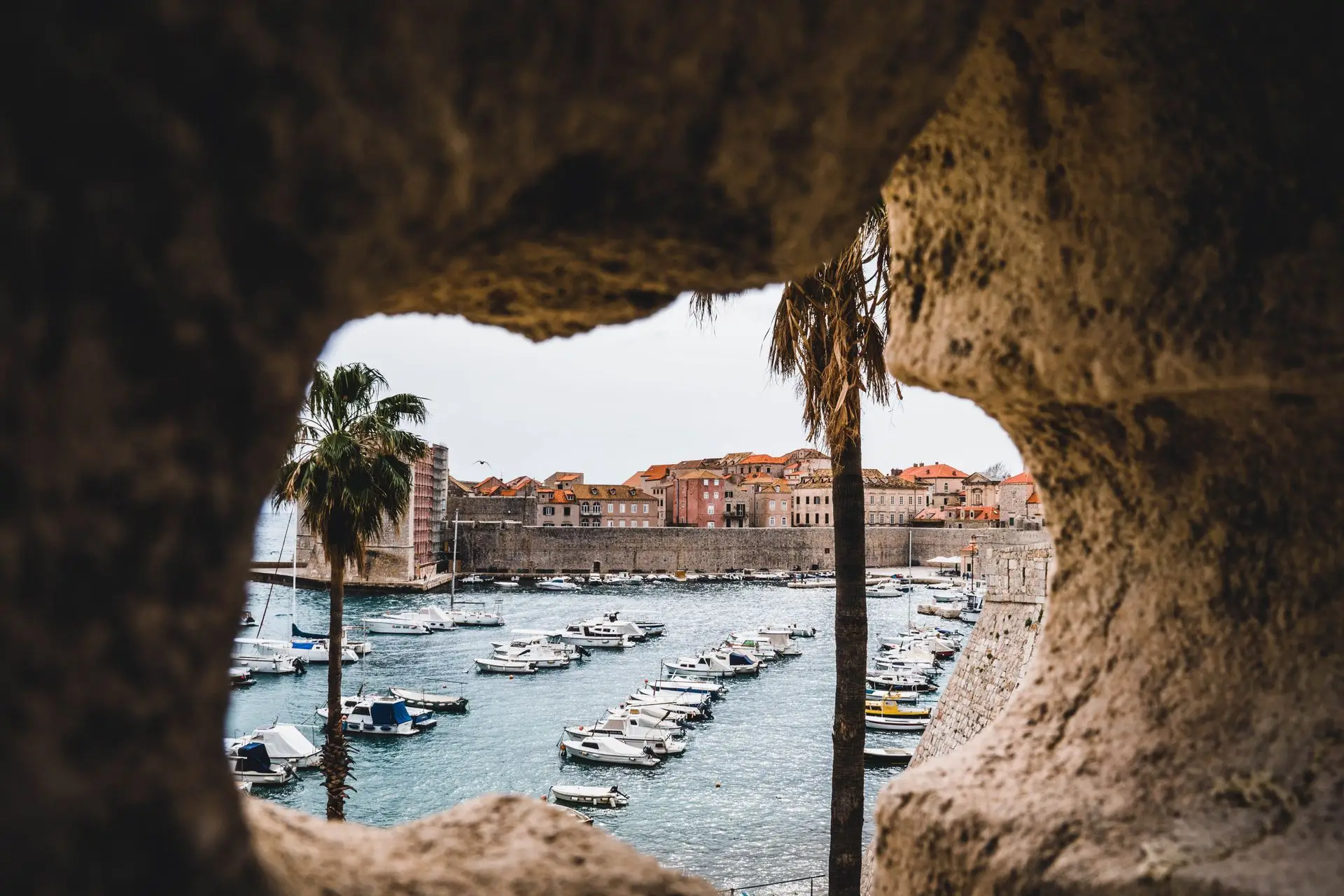
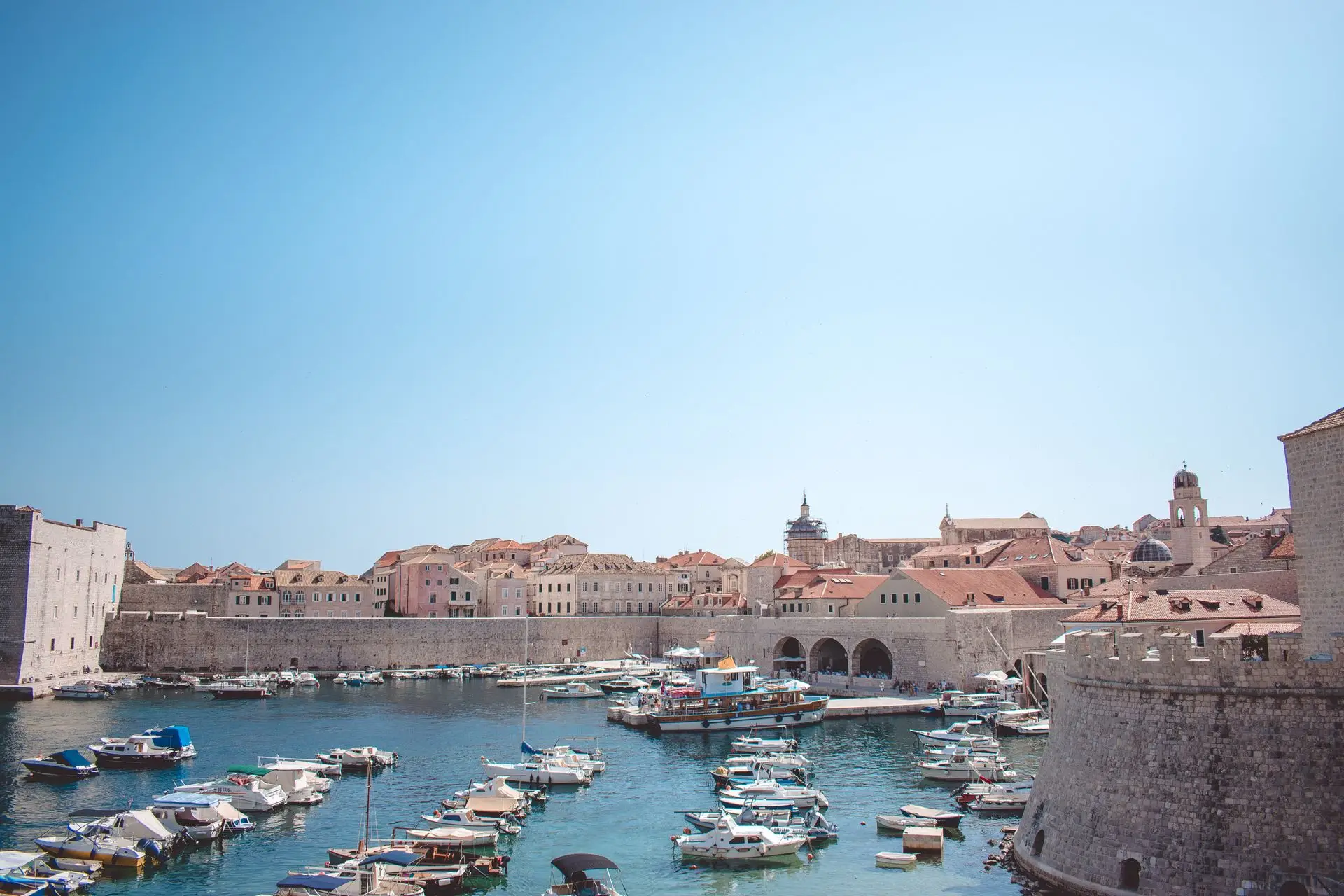 Old Dubrovnik's harbor
In July and August, tourist intensity peaks. It is when cruise ships drop off up to 8,000 passengers per day in the city. But those who choose a villa can enjoy Dubrovnik at any time. Before 9 AM and after 5 PM, it is a different city. The Stradun is not crowded, and the city walls belong to a few dozen people.
Our Dubrovnik city travel guide covers everything you need to book the right Dubrovnik villa with a pool in 2026: the best areas, old-town sights, beaches, restaurants, Game of Thrones locations, day trips, weather data, and honest comparisons with other destinations.
Charming Dubrovnik's Old Town: What to See
The old town of Dubrovnik is compact, but historically dense. You could spend three days here and still discover new details. These are the highlights for those planning their daily schedule.
Walk The City Walls (Gradske Zidine)
Walking the Dubrovnik city walls is the single activity most visitors come for. These walls date from the 13th to 17th centuries and are among the best-preserved medieval fortifications in the world. The walk takes 1-2 hours. Enjoy views over the terracotta rooftops, the old harbor, Fort Lovrijenac, and the open Adriatic.
2026 ticket prices: €40 per adult. Children from 7 to 18 years pay €15.
Tips from RLVC: As of 2026, advance booking is required. The city has implemented a timed-entry system to cap visitor numbers on the walls at any time. Book online as early as possible, especially for July and August. The section above the old harbor offers an unforgettable view. Go early morning (8–9 AM) or late afternoon (after 4 PM) to avoid peak heat and crowds. Always bring water, as there are only a few shaded areas.
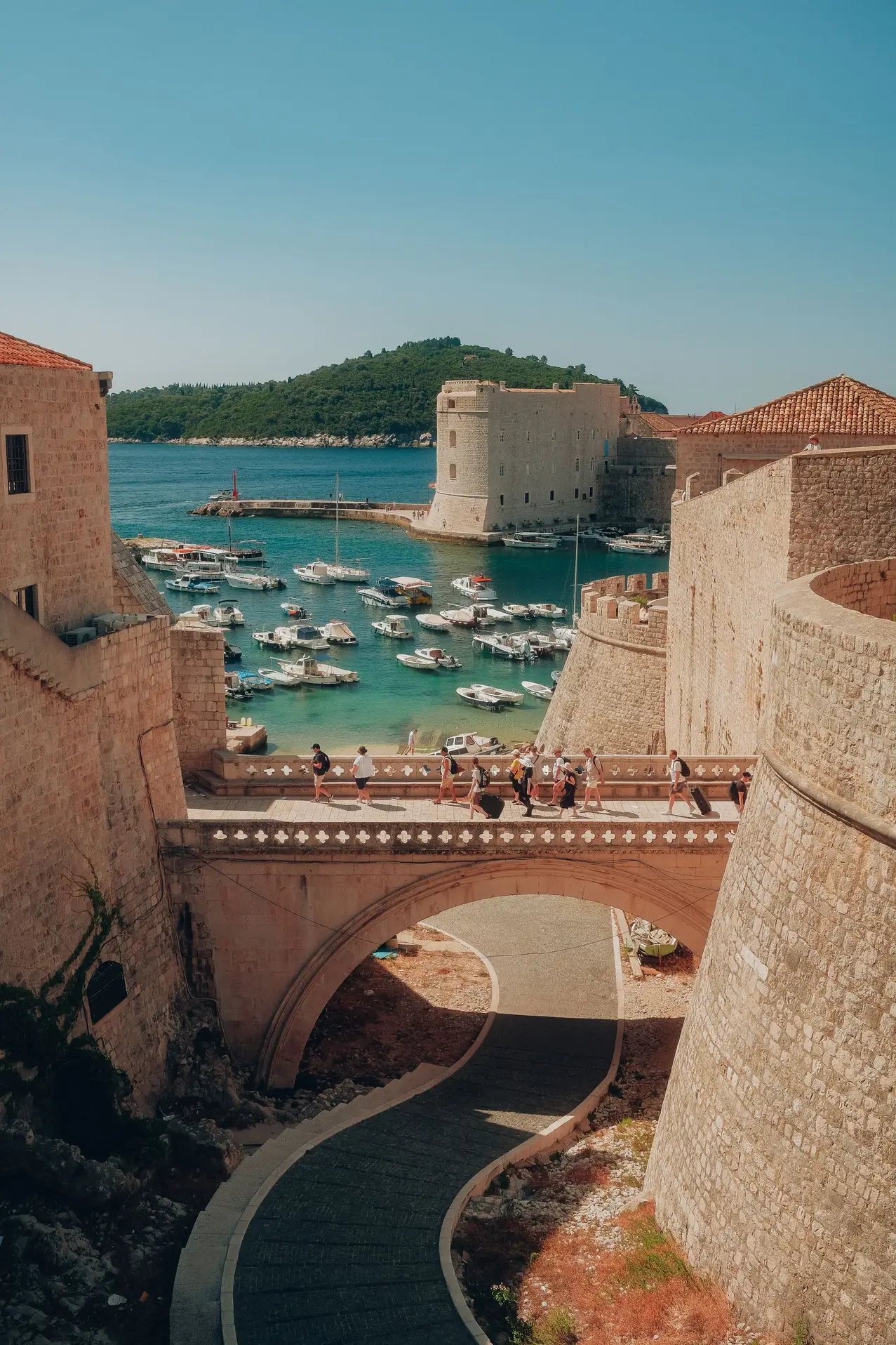 Famous Dubrovnik's City Walls
Stroll through Stradun (Placa)
The main street, Stradun, is a limestone promenade running from the Pile Gate to the Clock Tower at the opposite end. Polished to a high sheen by centuries of foot traffic, it is lined with 17th-century buildings.
At the western end, you will find the Large Onofrio's Fountain built in 1438. It supplied the old town with water via an aqueduct. Each of its 16 carved masks spouts water for public use, and the practice continues today.
Visit the Franciscan Monastery and Pharmacy
Just inside the Pile Gate entrance, on the northern side of Stradun, stands the Franciscan Monastery. The monastery houses a library, including rare manuscripts, and its pharmacy has operated continuously since 1317. That makes it one of the oldest functioning pharmacies in Europe. You can still buy handmade creams and lotions based on centuries-old recipes.
Rector's Palace (Knežev Dvor)
The political heart of the Republic of Ragusa. This Gothic-Renaissance palace served as the residence of the Rector. He was the elected head of state who governed for just one-month terms to prevent the accumulation of power. Today, it houses the Cultural History Museum. Entrance is approximately €20 for adults, €10 for children.
Cathedral of the Assumption
The Baroque cathedral was built on the site of an earlier Romanesque cathedral destroyed in the 1667 earthquake. Its treasury contains relics, including what is claimed to be a fragment of the True Cross and the skull of St. Blaise (Sv. Vlaho), Dubrovnik's patron saint. The treasury is small but impressive.
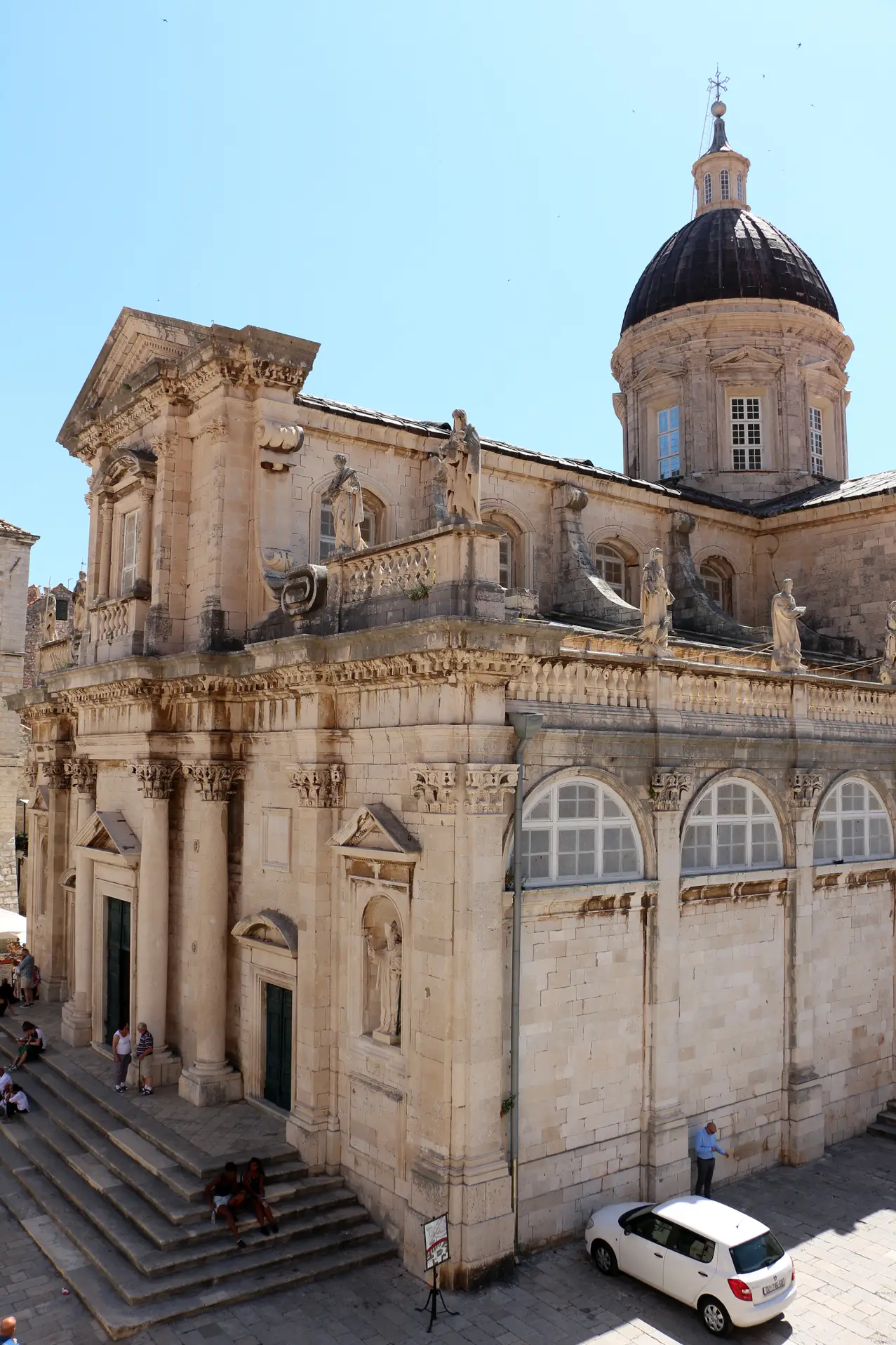 Cathedral of the Assumption
Fort Lovrijenac (St. Lawrence Fortress)
Standing on a 37-meter cliff west of the old town, Fort Lovrijenac is known as "Dubrovnik's Gibraltar." You can see the inscription above its entrance: Non bene pro toto libertas venditur auro ("Freedom is not to be sold for all the gold in the world"). It captures the spirit of the Republic of Ragusa's fierce independence. The fortress offers views back toward the city walls and out to sea. During the Dubrovnik Summer Festival, it doubles as an open-air theatre. Entrance is €15.
Game of Thrones: Dubrovnik as King's Landing
Dubrovnik served as the primary filming location for King's Landing across multiple seasons of Game of Thrones. If you are a fan, you can visit the filming locations. Game of Thrones walking tours in Dubrovnik typically cost €30–60 per person and last 2–3 hours. Or take a map and explore these locations on your own.
Fort Lovrijenac (The Red Keep). The majority of scenes set within the Red Keep were filmed inside this clifftop fortress. Joffrey's nameday tournament and key throne-room scenes were filmed in the interior courtyard of Lovrijenac.
City Walls (The fortifications of King's Landing). The walls and towers provided panoramic shots of the city's defenses throughout the series.
Jesuit Staircase (Cersei's Walk of Shame). The grand Baroque staircase near the Cathedral of the Assumption was used for one of the series' most iconic scenes in Season 5 - Cersei Lannister's forced walk through the city.
Pile Harbor (King's Landing harbor). The small harbor just outside the Pile Gate featured in departure scenes, most memorably when the Lannisters bid farewell to Myrcella as she sailed to Dorne.
Minčeta Tower (House of the Undying in Qarth). The fortress's circular tower on the northern wall was used for Season 2 scenes featuring Daenerys.
Lokrum Island (Qarth gardens). The island's botanical garden and Benedictine monastery provided the setting for Qarth's luxurious gardens.
Trsteno Arboretum (Tyrell Gardens). Located 18 km northwest of Dubrovnik, this 15th-century Renaissance arboretum, one of the oldest in Europe, served as the private gardens where Olenna Tyrell held court.
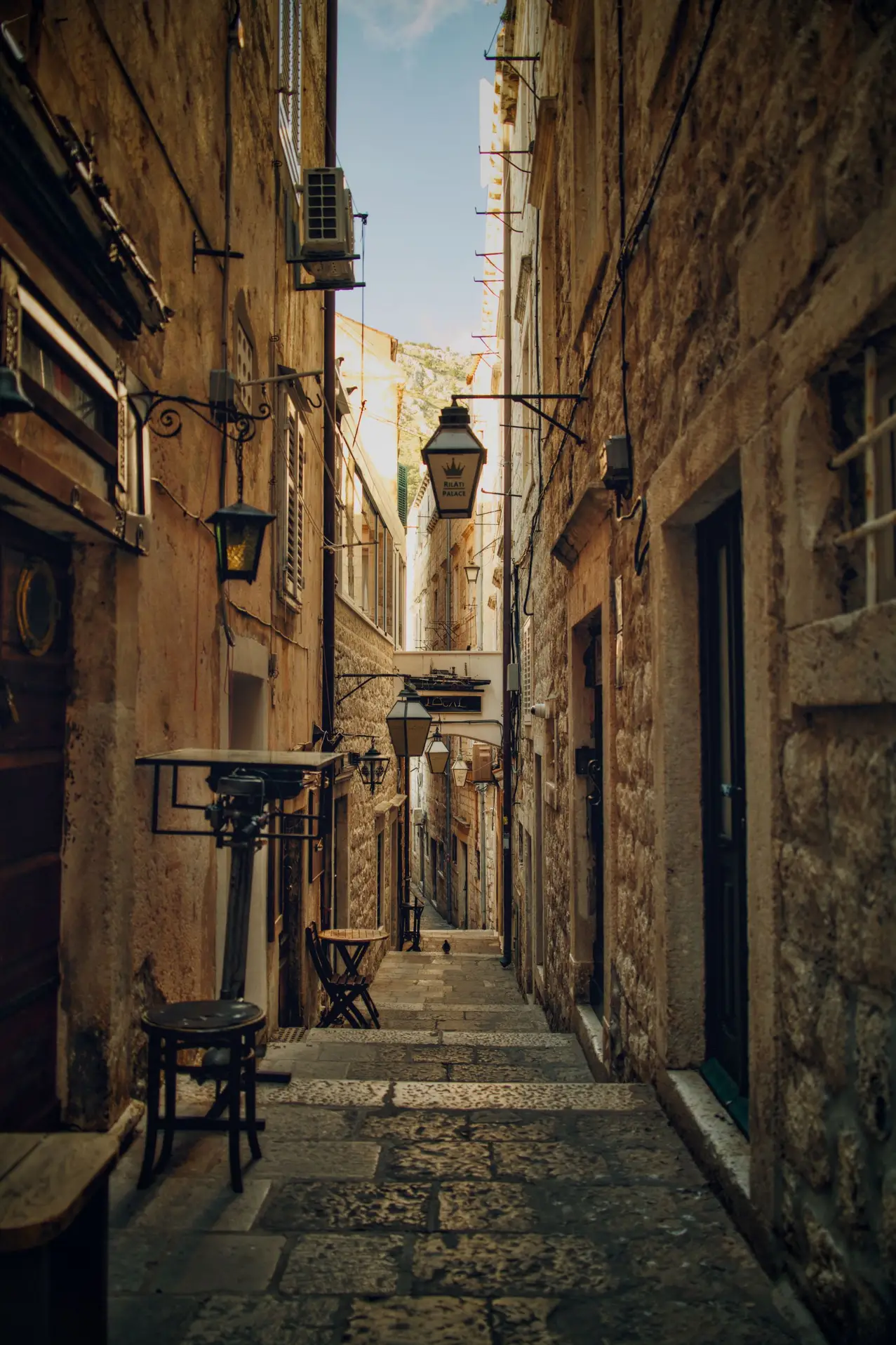 Explore the streets of Dubrovnik
Best Areas for Luxury Holiday Villas in Dubrovnik in 2026
The city center itself has limited villa stock. The real luxury villas in the Dubrovnik market are located along the surrounding coastline and in villages. Browse the RLVC collection of Dubrovnik villas to find the perfect one.
Mlini and Srebreno
The name Mlini means "mills." It is a small seaside village 10 km southeast of Dubrovnik. Mlini is tucked into a sheltered bay with a pebble beach and a peaceful atmosphere. The village has a daily bus service to Dubrovnik, with buses departing every 15 to 20 minutes in summer.
Srebreno, at the western end of the same bay, has more restaurants and a promenade that connects the two villages along the waterfront.
Villas are usually situated on the hillside above the bay. Relaxation is guaranteed with sea views, heated pools, and generous outdoor terraces.
Expect prices of €5,000–€10,000 per week for 3–5-bedroom villas with a pool.
Cavtat
20 km south of Dubrovnik, you will find Cavtat. It is a small town with a palm-lined harbor promenade and its own cultural identity. Visit the Račić Mausoleum, designed by sculptor Ivan Meštrović in 1921. It sits on a cypress-studded hill above the town and is one of Croatia's finest 20th-century monuments.
Cavtat's beaches, like Žal, Sustjepan, and Ključice, are cleaner and less crowded than Dubrovnik's urban beaches.
Regular water taxis run from Cavtat harbor to Dubrovnik's old port. Cavtat is also close to the airport.
Prices are around €7,000–€11,000 per week for 3–5-bedroom villas.
Zaton and Orašac
Zaton Bay is a long, sheltered inlet northwest of Dubrovnik. It has a rustic, residential feel. The bay is shallow and calm, perfect for families with young children. Orašac is slightly further along the coast. It is a village with some of the most dramatic clifftop villa positions in the Dubrovnik area.
A local bus connects to the old town of Dubrovnik in 20 minutes.
Expect to pay €4,000–€9,000 per week for a 3-5 bedroom villa.
Lapad and Babin Kuk
This residential peninsula is the closest villa area to the old town, yet it offers pools, privacy, and sea access. Lapad has its own beach (Uvala Lapad), as well as a concentration of restaurants, supermarkets, and practical amenities.
Copacabana Beach in Babin Kuk is a well-equipped family beach with pebbles and sand, shallow water, paddleboard hire, and children's inflatables.
Villas in Lapad and Babin Kuk are within walking distance of the old town of Dubrovnik, or a 10- to 15-minute bus ride.
Prices in this part of Dubrovnik range from €2,000 to €11,000 per week.
Dubrovnik Riviera: Slano and Beyond
For those seeking seclusion, head to villages north of Dubrovnik - Slano, Trsteno, and Brsečine. Slano is a former Republic of Ragusa trading port with a sheltered harbor, excellent konobas, and regular catamaran connections to the Elafiti Islands. The Trsteno Arboretum is famous for its Oriental plane trees and its role as the Tyrell Gardens in Game of Thrones.
Prices are €2,000–€6,000 per week for larger properties.
Konavle Valley
Konavle is Dubrovnik's agricultural hinterland, located 25–35 km south of the city. It is a fertile valley between coastal mountains and the sea. It is one of the least touristy areas near Dubrovnik, with family farms, olive groves, vineyards, and horse-riding operations.
Villas here offer more space, lower prices, and a countryside setting. The area is also the closest to Montenegro (the border is 15–20 minutes south).
Konavle villas cost €3,000–€6,000 per week.
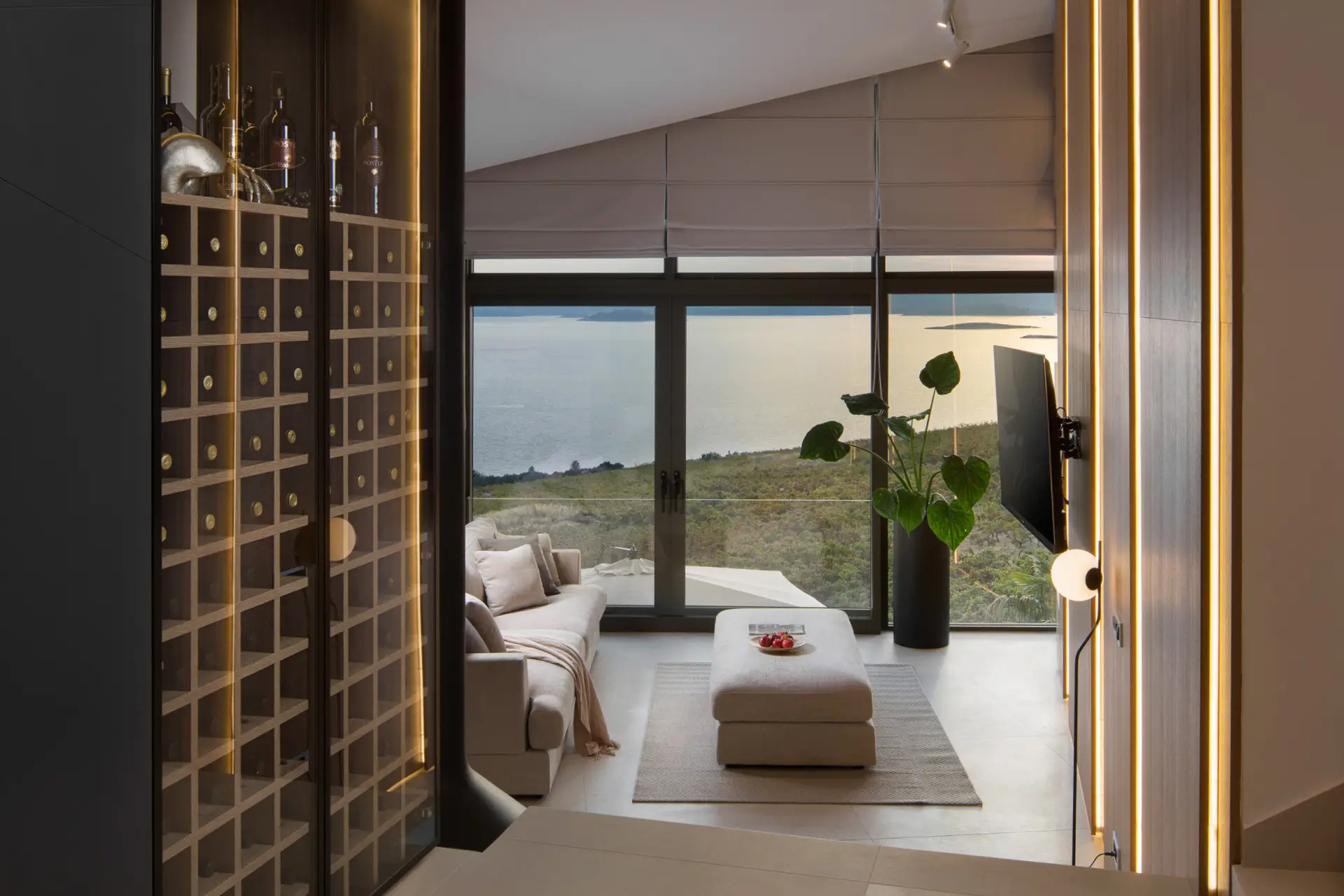 A view to enjoy
Dubrovnik Area vs. Other Croatian Holiday Destinations
Table No. 1. Price Comparison (Peak Season, 4-Bedroom Villa with Pool, Per Week)
|
Location |
Price per week during peak season | Value for price |
|
Dubrovnik area |
€4,000–€15,000 | Premium pricing reflects demand |
|
Split area |
€3,500–€10,000 | 20–30% less than Dubrovnik |
|
Šibenik area |
€1,500–€5,000 | Best value in Dalmatia |
|
Hvar Island |
€3,000–€10,000 | Island premium, ferry logistics |
|
Istria |
€1,200–€6,000 | Comparable quality, lower cost |
*Prices based on RLVC 2026 portfolio data and comparable listings.
Dubrovnik has Croatia's highest villa prices, but delivers a distinctive experience in return. You are paying for proximity to one of Europe's most iconic walled cities, world-class dining, and an international infrastructure with direct flights, widely spoken English, and high service standards.
Crowd Levels
Dubrovnik's crowd problem is concentrated between 10 AM and 4 PM during July and August when cruise ships are docked. Outside those hours and outside the city walls, the experience is entirely different. Villa guests who plan their Dubrovnik old town visits for early morning or evening can spend midday at their pool or relaxing on the beaches, effectively bypassing the overtourism issue.
Best Beaches in Dubrovnik
Dubrovnik's coastline is rocky. Beaches are carved into cliffs and coves. Here are the beaches that RLVC recommends.
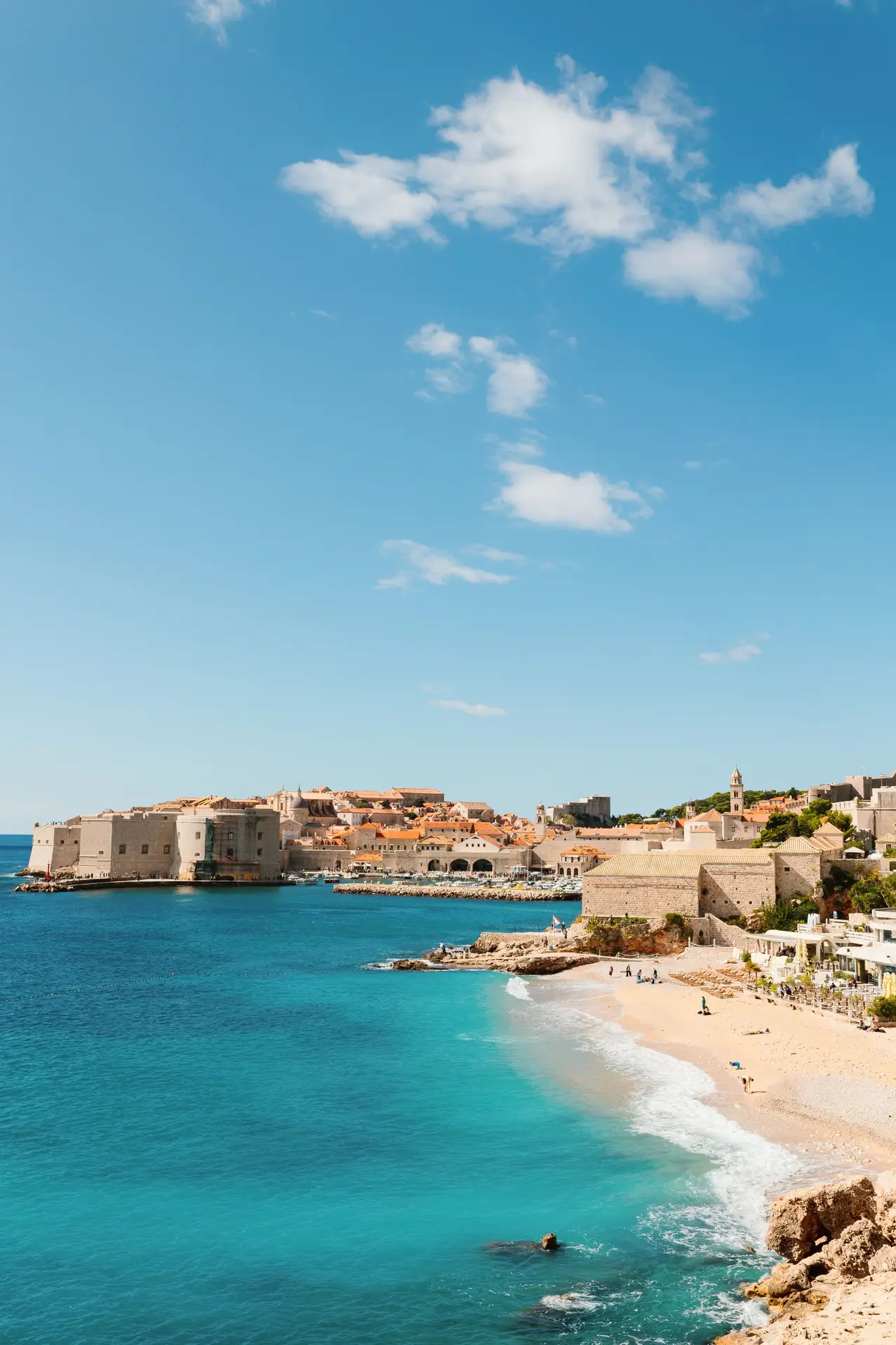 Banje Beach
Banje Beach
The most famous beach in Dubrovnik is located immediately east of the Ploče Gate. Pebble and sand, with a full-service beach club where you can rent a sunlounger for approximately €20-30 per day. There is also a restaurant and watersports hire. Enjoy the direct views of the old town walls and Fort Revelin. Banje is glamorous but crowded in peak season. Arrive before 9 AM to secure a good spot, or pay the premium and rent a sunbed.
Uvala Lapad
The largest beach in Dubrovnik is located on the Lapad peninsula. Part sand, part pebble, with a gentle entrance, it will suit families with young children. Facilities include a waterslide, cafés, a promenade with sunset views, and parking nearby. It is a practical beach for a full day with children.
Copacabana Beach (Babin Kuk)
This beach is pebbly and rocky, with a shallow entrance that is safe for children. It is popular among families. Have fun with water sports, paddleboard hire, and inflatable play areas. Copacabana is accessible by bus from the old town (15 minutes).
Sveti Jakov (St.James) Beach
A hidden gem below the cliffs is accessed by a steep staircase. St. James Beach is a pebble beach with a view of the town from a completely different angle. Far less crowded than Banje, it is one of the few Dubrovnik beaches where you can reliably find space in August. There are no facilities beyond a small beach bar, so bring water and supplies.
Šunj Beach (Lopud Island)
Šunj is a fine sand beach on Lopud, one of the Elafiti Islands. You can get there by a 50-minute ferry from Dubrovnik's Gruž harbor. Šunj is the finest sandy beach in the Dubrovnik area with a beach bar serving lunch. It is worth the effort, especially with children who prefer sand to pebbles.
What to Do in the Dubrovnik Area – Complete 2026 Travel Guide
Cable Car to Mount Srđ
The Dubrovnik cable car carries you 405 meters above sea level in a few minutes. From there, you can enjoy panoramic views of Lokrum Island, the Elafiti archipelago, and the open Adriatic. The upper station has a restaurant, a small museum dedicated to the 1991–92 siege, and a viewing platform. The cable car operates on a flexible schedule and does not run in bad weather.
2026 ticket prices: Return tickets from €30 per adult; children 4–12 €8; under 4 free.
A tip from RLVC: Go 45 minutes before sunset for the best light and fewer crowds. The restaurant at the summit serves drinks and light meals. An aperitif watching the sun drop behind the Elafiti Islands is one of Dubrovnik's unforgettable experiences.
Lokrum Island
A 10-15-minute ferry takes you to this car-free nature reserve, forested with pines, holm oaks, and exotic botanical species. A true paradise. The attractions include a Benedictine monastery (dating from 1023), a small saltwater lake called the "Dead Sea", a nudist beach on the eastern shore, and a resident colony of peacocks that roam freely. A Game of Thrones exhibition inside the monastery includes an Iron Throne photo opportunity.
Ferries run every 30 minutes in summer from the old harbor. Return tickets cost approximately €30. Allow 2–3 hours for a comfortable visit.
Elafiti Islands Day Trip
The Elafiti archipelago offers the easiest island-hopping experience. It consists of 13 islands, 3 of which are inhabited. Regular Jadrolinija ferries connect Dubrovnik's Gruž harbor with Koločep (20 minutes), Lopud (50 minutes), and Šipan (75 minutes), with 4–5 daily sailings in summer.
Koločep is the smallest inhabited car-free island. It has two villages connected by a footpath through pine and olive forests. It is also excellent for snorkeling in sheltered coves.
Lopud is the most popular, with Šunj Beach, a Franciscan monastery, and 15th-century summer residences of Dubrovnik nobility.
Šipan is the largest of the three islands. Visit olive groves, vineyards, and the most authentic agricultural island atmosphere.
Organized day-trip boat cruises covering all three islands cost approximately €50 per person. Or take the regular ferry and island-hop independently.
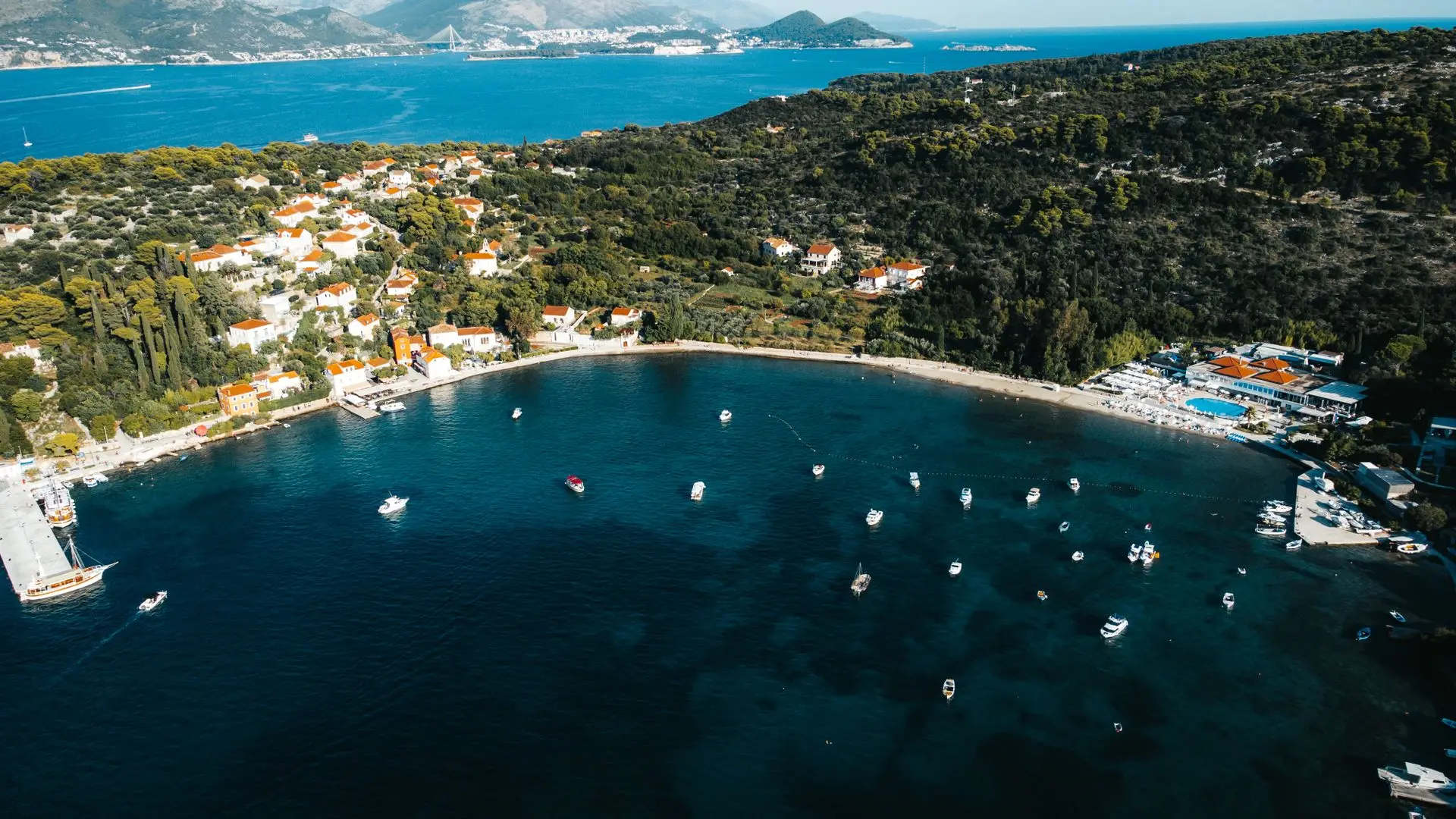 Koločep is the car-free island
Montenegro Day Trip (Kotor and Perast)
Dubrovnik's proximity to Montenegro makes it one of the most popular day trips. Kotor is a UNESCO-listed town and is a 1.5 to 2-hour drive from Dubrovnik. The Bay of Kotor, Europe's southernmost fjord, is genuinely dramatic. Climb the fortress trail for spectacular views down the entire bay.
Perast, 10 minutes from Kotor, is a Baroque village with two offshore church islands. Our Lady of the Rocks is accessible by boat for €5-8. It is one of the most photogenic small towns in the Balkans.
Organized tours from Dubrovnik cost €50–90 per person. Self-driving is straightforward, but keep in mind the time for the border crossing, which can get up to 60 minutes in peak season. And bring your passport.
Mostar and Kravice Waterfalls (Bosnia)
Mostar (2.5 hours from Dubrovnik) is the most popular cross-border day trip into Bosnia and Herzegovina. The rebuilt Old Bridge (Stari Most) is a UNESCO World Heritage Site and one of the most photographed structures in the Balkans. It is a 16th-century Ottoman stone arch over the Neretva River. It was destroyed in 1993 and renovated by 2004. The old town's cobbled bazaar, mosques, and Turkish houses offer a cultural experience unlike anything else in Croatia.
On the return route, stop by Kravice Waterfalls. These magical waterfalls cascade into a clear pool. Swimming is permitted, which is a refreshing activity on a hot day. Entry costs approximately €8.
Organized tours from Dubrovnik cost €50–80 per person. Self-driving requires a brief transit through Bosnia's Neum corridor, so you will need a passport.
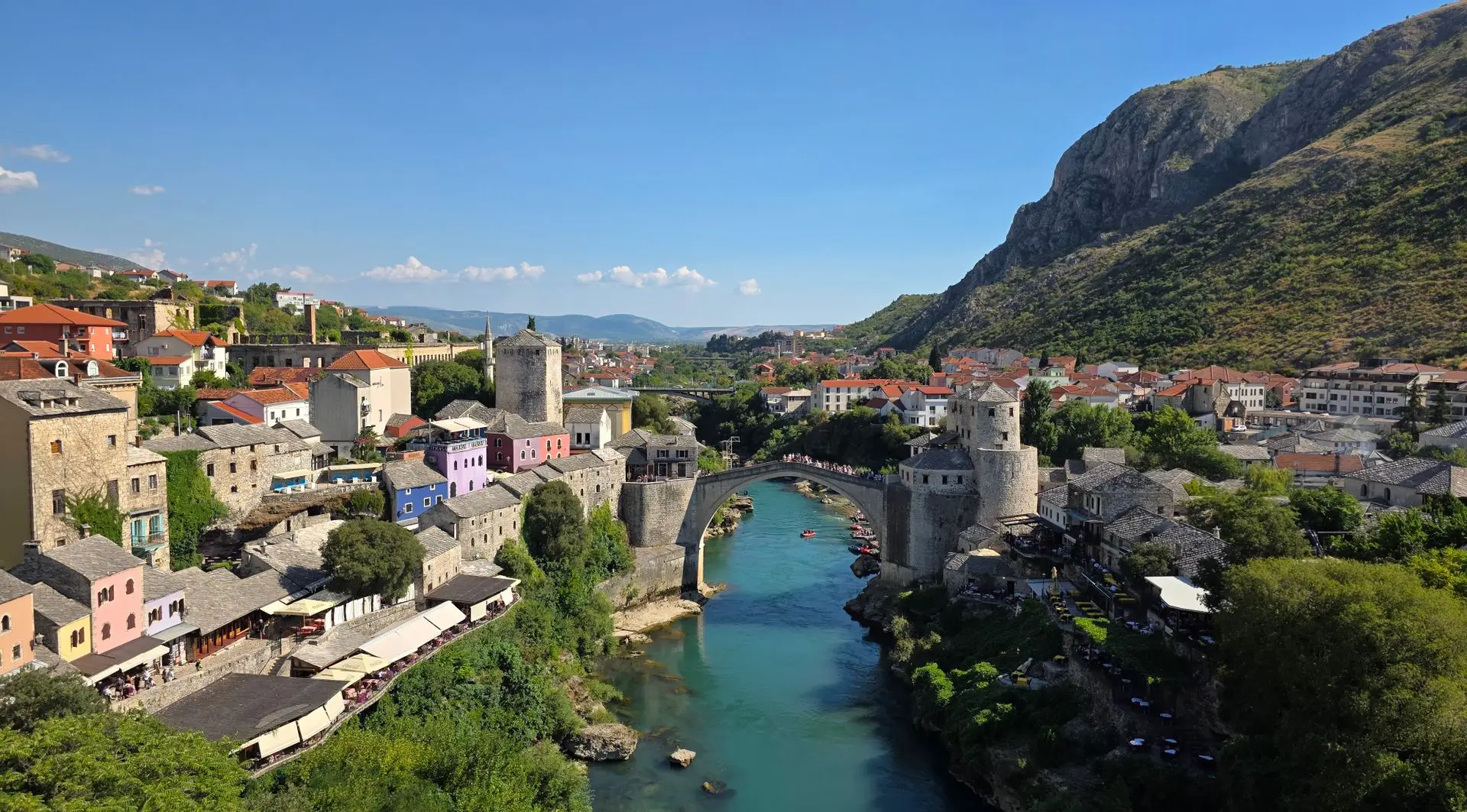 Old Bridge in Mostar
Mljet National Park
The western third of Mljet Island is a national park centered around two saltwater lakes surrounded by dense forest. On a small island within the larger lake sits a 12th-century Benedictine monastery, accessible by boat. The park is known for exceptional swimming, kayaking, and cycling through pristine forest. Rent a bike and explore this natural beauty.
Catamaran services from Dubrovnik's Gruž harbor reach Mljet in approximately 1.5 hours (seasonal, check Jadrolinija or TP Line). Entry to the national park is approximately €30, depending on the season. Allow yourself a full day.
Korčula Island
Korčula is claimed to be the birthplace of Marco Polo. The island produces some of Dalmatia's finest white wines - Pošip and Grk. The Moreška sword dance, performed in Korčula Town on Thursday evenings, is one of Croatia's most distinctive cultural performances.
The catamaran from Dubrovnik takes approximately 2 hours. A full day allows time to explore the town, enjoy a wine tasting, and swim.
Restaurants
Dubrovnik's dining scene includes one Michelin-starred restaurant, several Michelin-listed restaurants, and a deep bench of traditional konobas.
Restaurant 360° is Dubrovnik's only Michelin-starred restaurant. It is located within the city walls with a terrace with views over St. John's Fortress and the old harbor. Restaurant combines Mediterranean foundations with Asian accents and refined French technique. Expect to pay €140–180 per person for the tasting menu. Book at least 2–3 weeks ahead for July–August, as they serve dinner exclusively.
Nautika is a Michelin-listed restaurant located at the Pile Gate entrance, with a terrace overlooking Fort Lovrijenac. Expect plenty of fresh seafood and Mediterranean dishes. This place is one of the city's most formal dining experiences.
Taj Mahal is a Michelin Bib Gourmand, a good value. This one is different because it has Bosnian and Balkan cuisine. The ćevapi and Bosnian pies are must-try dishes, and the prices are more affordable than at fine-dining options.
RLVC recommendations for local specialties to try: Black risotto (made with cuttlefish ink), Ston oysters (from the Pelješac peninsula, some of the finest in the Mediterranean), peka (slow-cooked lamb or octopus under an iron bell), Dubrovnik rozata (a crème caramel-like dessert flavored with rose liqueur).
Shopping and Souvenirs in Dubrovnik – What to Buy and Where to Find It
One pleasure of a holiday is bringing home something meaningful. For yourself or someone else. A bottle of wine from the peninsula you drove through, salt harvested by hand from medieval pans, or a necktie from the country that invented it. Dubrovnik is full of shops, but the quality varies. This section covers what is worth buying, where to find it, and how to tell the difference.
Markets: Where Locals Buy Their Food
Gruž Market - If you are self-catering, start here. This is Dubrovnik's working market, used daily by locals. It is located near the main port in the Gruž neighborhood. The fish section opens as early as 6 AM. The catch arrives straight off the boats: sea bass (brancin), sea bream (orada), squid (lignje), prawns, and other Adriatic offerings. At fruit and vegetable vendors, look for seasonal produce in summer: tomatoes, peppers, figs, grapes, and stone fruit. Arrive before 8 AM for the best selection.
Gundulić Square Market is smaller but still sells genuine local products. It is the best place within the walls to buy dried lavender sachets, local olive oil, jars of honey, homemade rakija (fruit brandy), and traditional Dubrovnik sweets such as arancini (candied bitter orange peel).
Food and Drink: The Best Edible Souvenirs
Arancini (candied orange peel) - In Dubrovnik, arancini are strips of bitter orange peel slowly candied in sugar syrup and sometimes dipped in dark chocolate. The recipe dates back centuries. A bag of arancini is lightweight, keeps well, and captures a memorable flavor.
Ston Salt - The Ston saltworks on the Pelješac peninsula have produced salt using traditional evaporation pans since the Middle Ages. The salt pans are among the oldest in Europe and are still in continuous operation. Fleur de sel (flower of salt), hand-harvested from the surface of the pans, is the premium product. It is delicate, mineral-rich, and sold in small jars. Ston salt is an easy and affordable gift with a genuine story.
Pelješac Wine - The Pelješac peninsula, an hour's drive north of Dubrovnik, produces Croatia's most celebrated red wines. Dingač is Croatia's first wine to receive a PDO (Protected Designation of Origin). It is a powerful, full-bodied red made from Plavac Mali grapes. Postup is slightly softer but equally complex.
For whites, Pošip from Korčula is a must. It is a dry, aromatic variety that pairs beautifully with seafood. Bottles of Dingač and Postup range from €15 to €50 depending on the producer and vintage.
Olive Oil - Dalmatian extra-virgin olive oil is internationally recognized. Croatian producers regularly win gold medals at global competitions. Small bottles make excellent gifts. Look for dark glass bottles and recent harvest dates such as 2025 or 2026.
Rakija - Croatian fruit brandy distilled from local produce. In the Dubrovnik area, the most distinctive varieties are orahovac (walnut rakija, dark and aromatic), rogačuša (carob), and travarica (herb-infused). Small producers sell bottles at both markets.
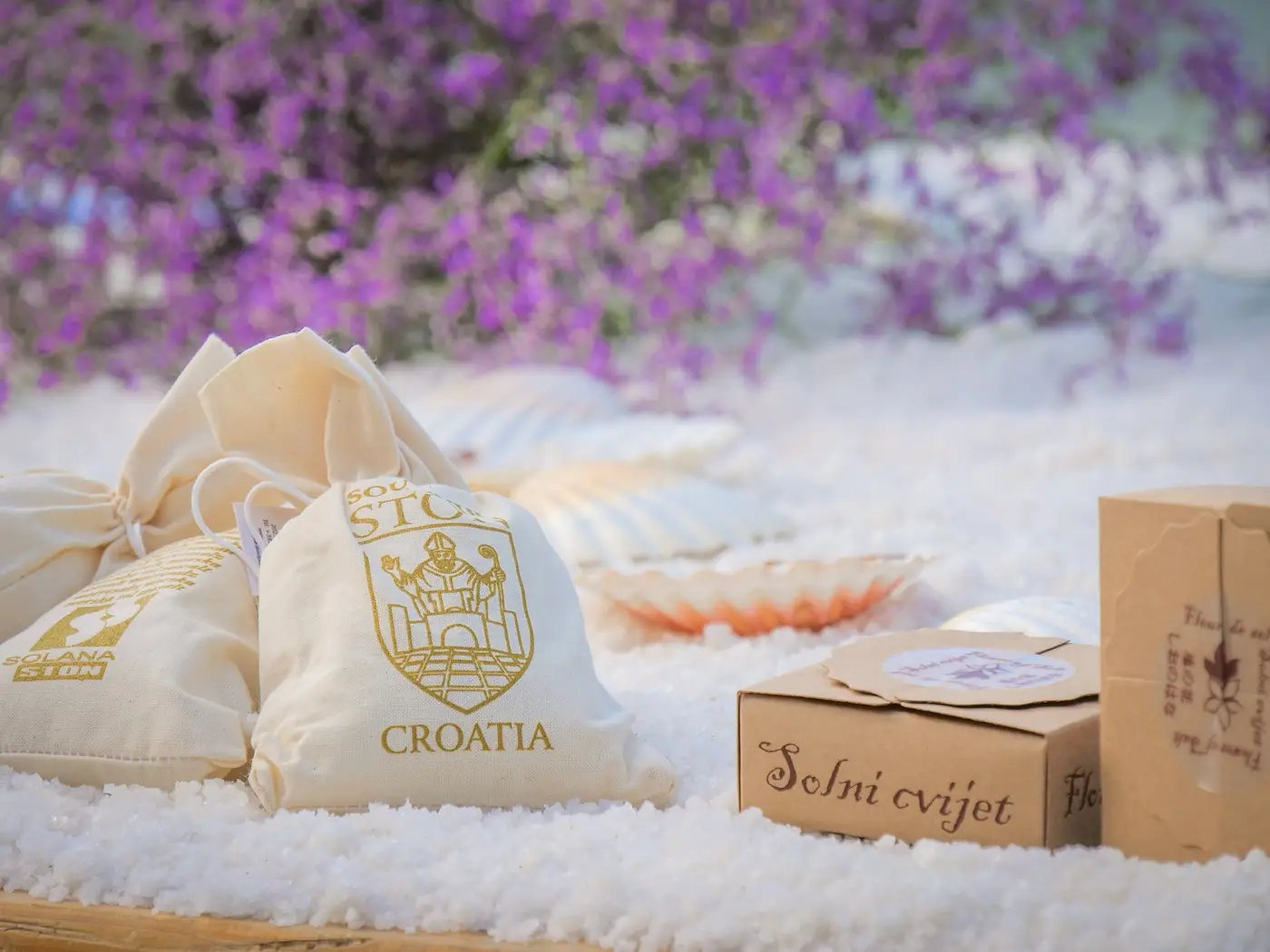 Salt from Ston is great souvenir, source
Crafts and Design
The Necktie (Kravata) - The modern necktie originates from Croatia. The Croata shop on Stradun sells premium ties, scarves, and accessories with designs inspired by Croatian heritage. Each tie comes in a presentation box with a brief history. Prices range from €50–120 for silk ties. This is a souvenir with a genuinely unique story.
Konavle Embroidery - The Konavle valley has a centuries-old tradition of hand-embroidered textiles. Designs are typically geometric patterns stitched in red, black, and gold silk thread on white linen. Originally, they were used for traditional folk costumes. Today, embroidered table runners, cushion covers, and framed panels are sold as decorative souvenirs. Look for handmade pieces at Gundulić Square Market or at the Konavle Heritage Museum in Čilipi. Mass-produced imitations exist, so check for hand-stitching.
Filigree Jewelry - Croatian filigree is a centuries-old craft rooted in Dubrovnik's medieval goldsmithing tradition. Common motifs include the Dubrovnik button (botuni), a spherical ornament originally worn on traditional folk costumes. You can find them at a jewelry shop.
Coral Jewelry - Red coral has been harvested from the Adriatic for centuries. Coral necklaces, bracelets, and earrings remain a traditional Dalmatian souvenir. Mediterranean coral is now protected, and harvesting is strictly regulated. Buy from established shops that can confirm the provenance and legality of their coral products.
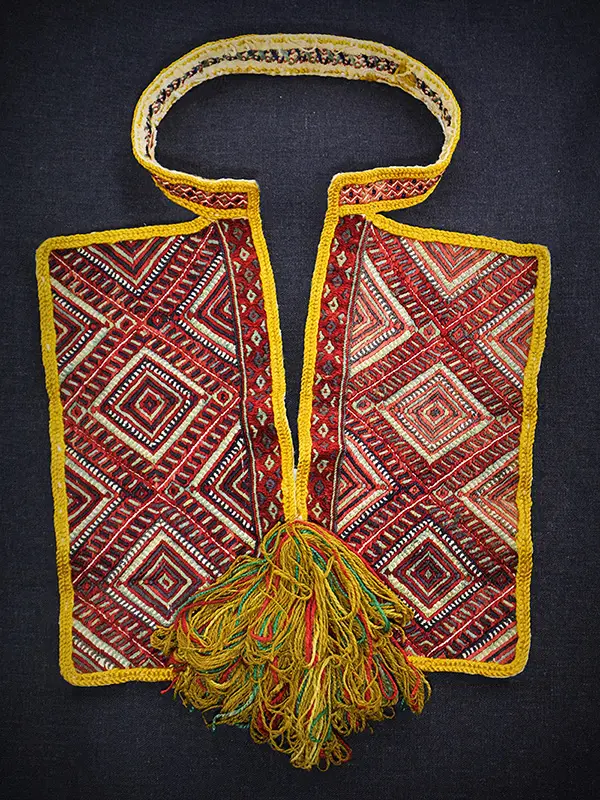 Konavle Emroidery, source
Cultural Experiences
Dubrovnik Summer Festival (Dubrovačke ljetne igre) has been running annually since 1950. In 2026, it starts from 10th July to late August. It stages theatre, opera, classical music, and dance performances in the city's historic venues, including Fort Lovrijenac, the Rector's Palace atrium, and the island of Lokrum. Performances are often held at sunset, with the city walls and Adriatic as a backdrop. Check the Dubrovnik Summer Festival official website for the 2026 program and tickets.
The Feast of St. Blaise (Sv. Vlaho) is held on 3 February. Dubrovnik's patron saint's day is inscribed on the UNESCO Intangible Cultural Heritage List. The city fills with processions, folk performances, and religious ceremonies.
Best Time For Your Dubrovnik Escape
Dubrovnik has a typical Mediterranean climate with hot, dry summers and mild, wet winters.
| Month | Temperature in °C | Sea temperature in °C | Activities | Prices |
| May | 17–23 | 17–19 | Warm days and pleasant evenings with few crowds. Ideal for sightseeing. | 30–40% below peak |
| June | 21–27 | 20–23 | Warm, swimmable sea. Increasingly busy but manageable. The festival starts in late June. | 15–25% below peak |
| July | 24–30 | 23–25 | Hot and sunny. Peak season. Cruise ships are at full capacity. Book months ahead. | Peak pricing |
| August | 24–31 | 24–26 | Hottest month. Busiest period. Sea at its warmest. Summer Festival in full swing. | Peak pricing |
| September | 21–27 | 22–24 | Warm sea from summer heating. Crowds thin noticeably. Excellent dining season. | 20–30% below peak |
| October | 16–22 | 19–21 | Still swimmable in early months. Wine harvest. Olive season. Very few crowds. | 35–50% below peak |
RLVC recommendation: June or September. These months offer warm weather and a sea warm enough for daily swimming. Villa prices are 15–30% below peak levels, and occupancy is low. For adults without school-age children, May and October deliver warm days, pleasant sightseeing conditions, and the lowest prices of the season.
Getting to Dubrovnik and Getting Around
Transfers and Car Hire
Pre-booked private transfers from Dubrovnik Airport to Dubrovnik cost approximately €50- 80. Shared shuttles (Atlas, Platanus) run to the Pile Gate area for approximately €15 per person (return ticket).
A hire car is useful for day trips to Montenegro, Mostar, Pelješac, or Korčula, but is not necessary for daily life. Local buses and water taxis efficiently connect these areas to the old town. Car hire at Dubrovnik Airport starts from approximately €60 per day in summer.
Parking warning: The old town has no car access. The closest parking is at the Pile Gate car park (€5-8 per hour in summer, often full by 10 AM) or in the Gruž area.