




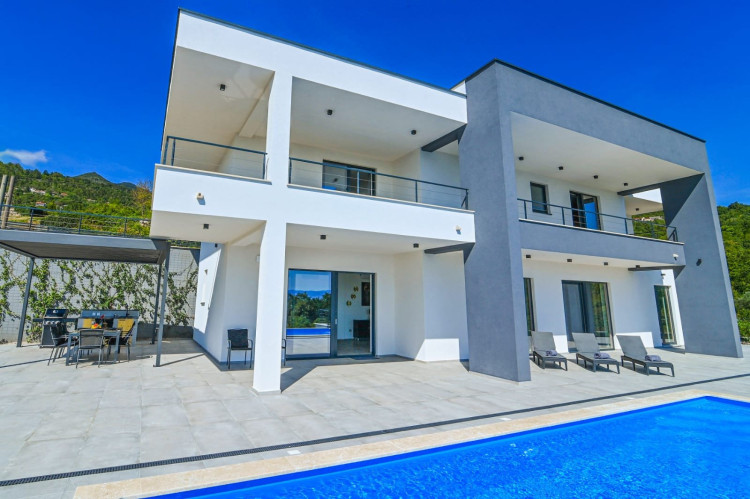

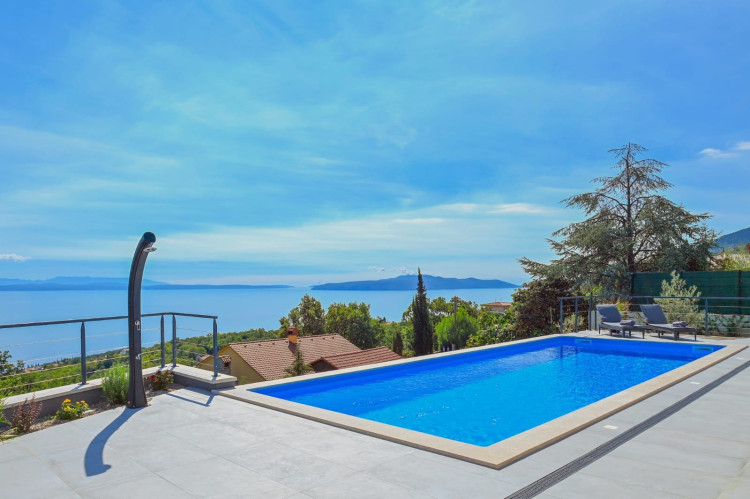
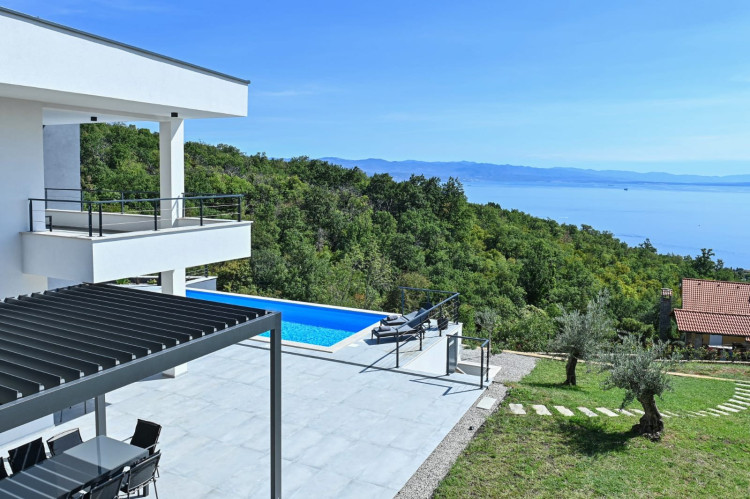
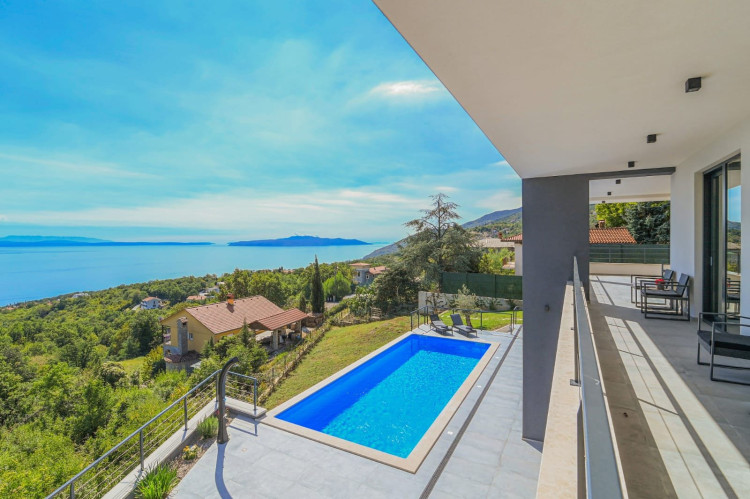









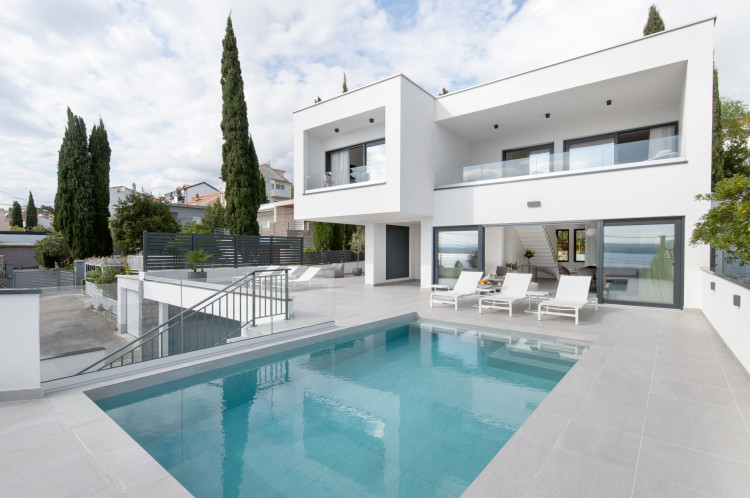
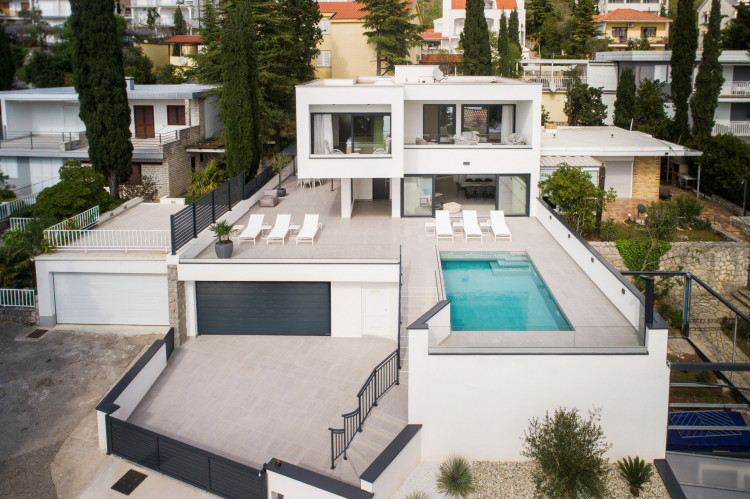




Villas in Istria, Croatia – The Complete Luxury Guide for 2026
Looking for holiday villas in Istria, Croatia? You've found the right guide. This heart-shaped peninsula, known as Croatian Tuscany, has quietly become one of the Mediterranean's most refined destinations. Think of the Adriatic coastline with Roman amphitheaters, and a home to the world's smallest town - Hum.
Istria is the largest peninsula in the Adriatic Sea and borders Slovenia and Italy. This meeting of cultures defines everything here - from bilingual town signs to Istrian cuisine.
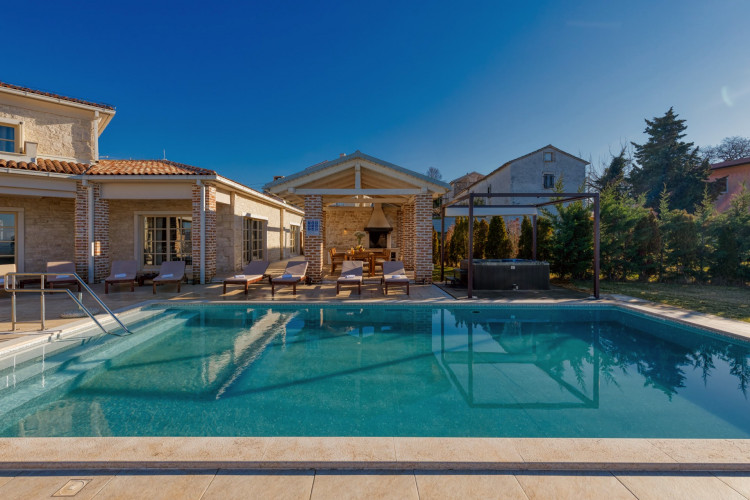
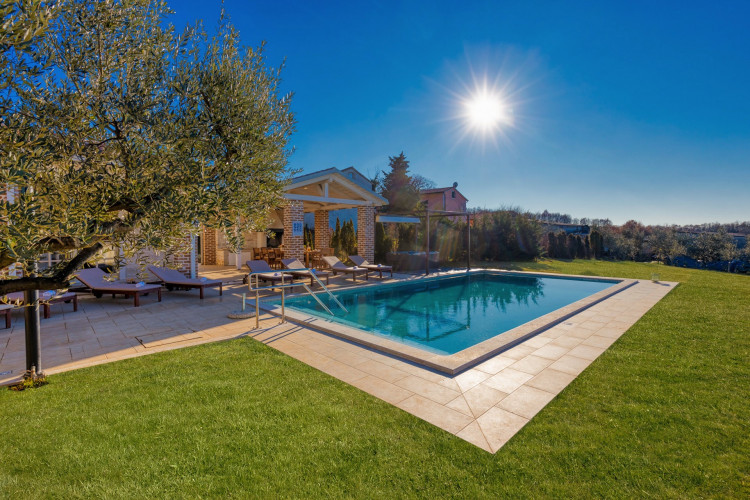
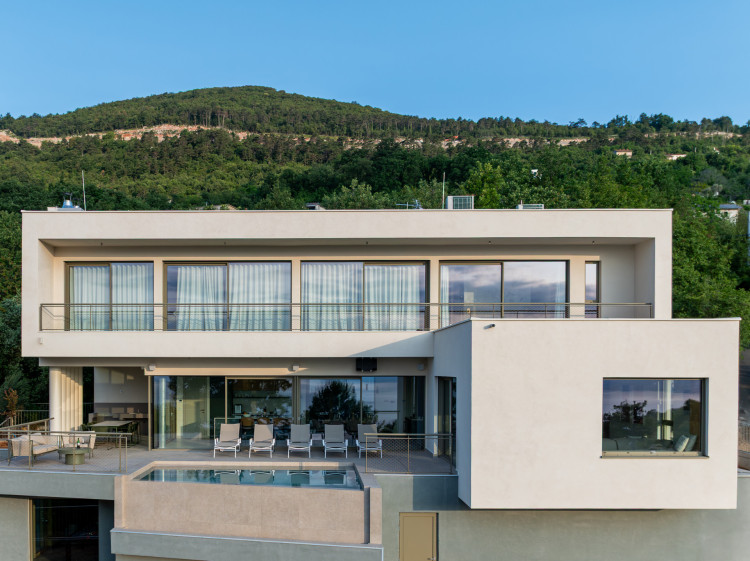
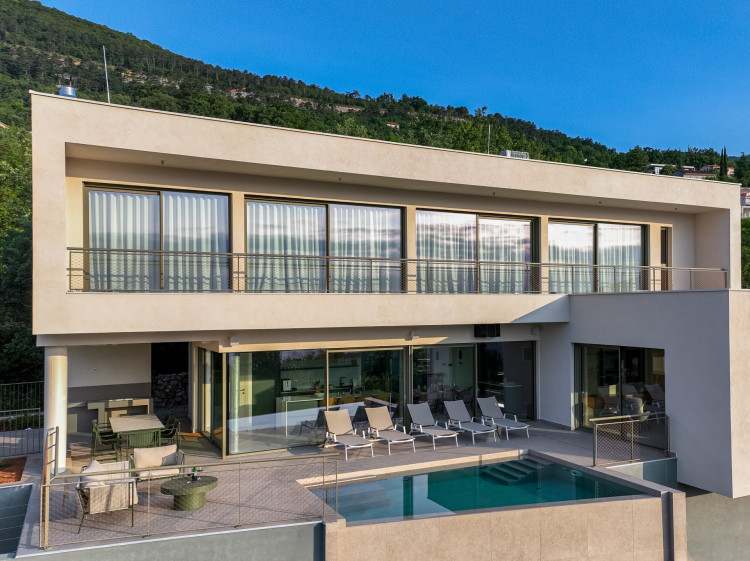
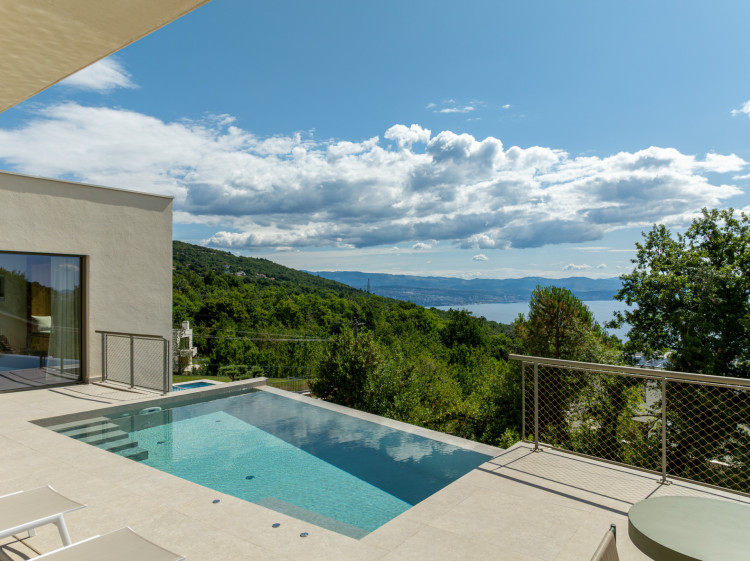
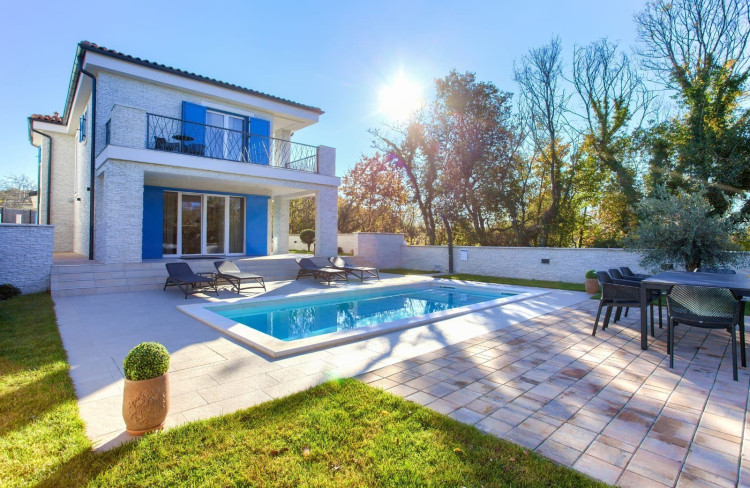
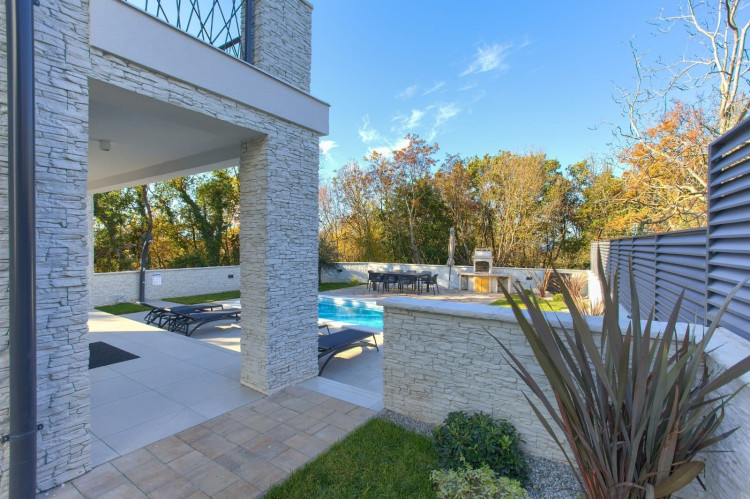
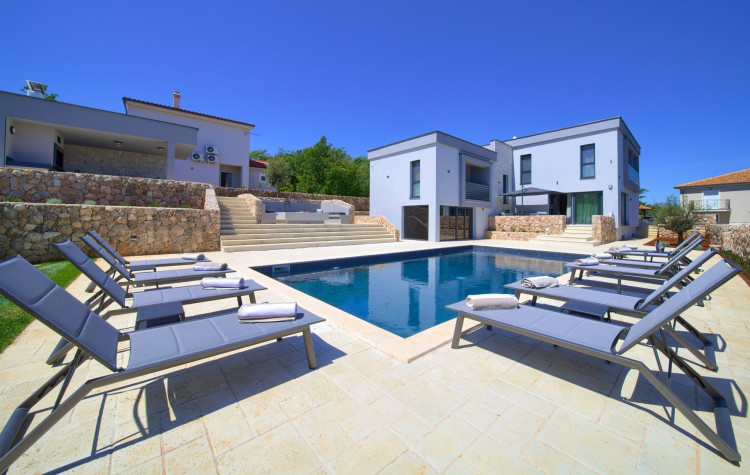
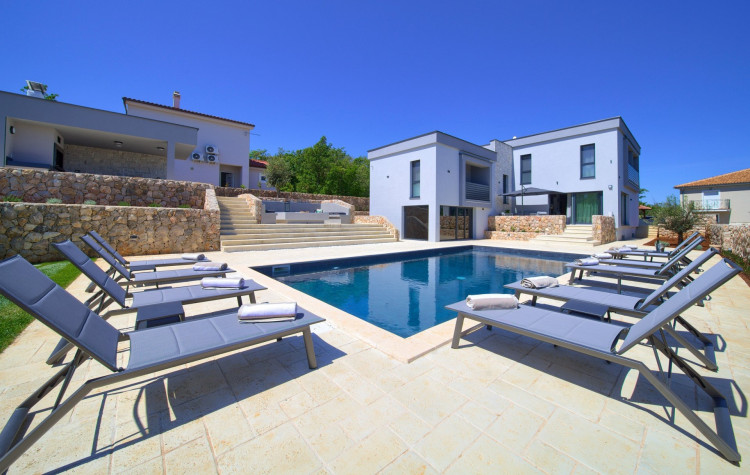
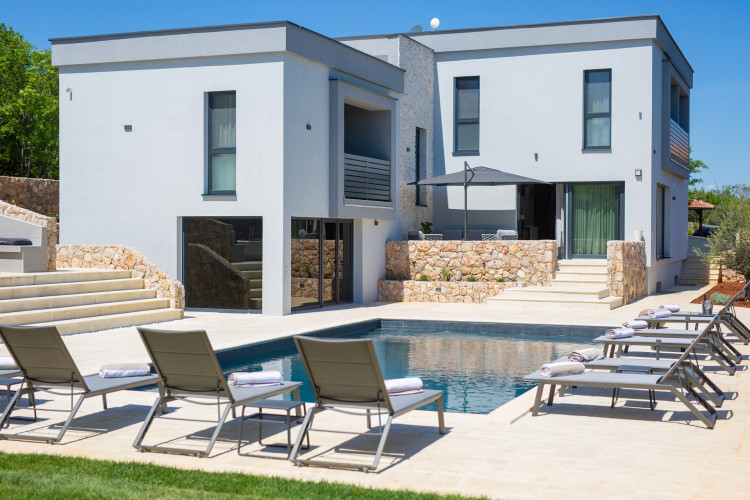
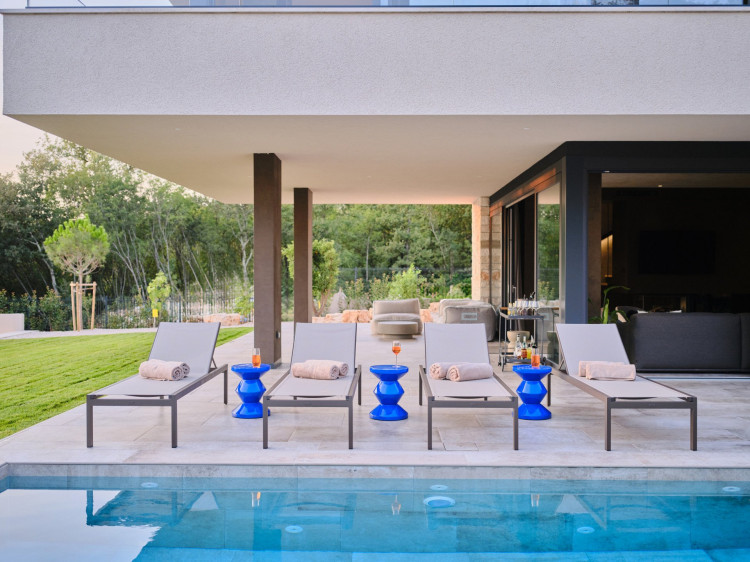
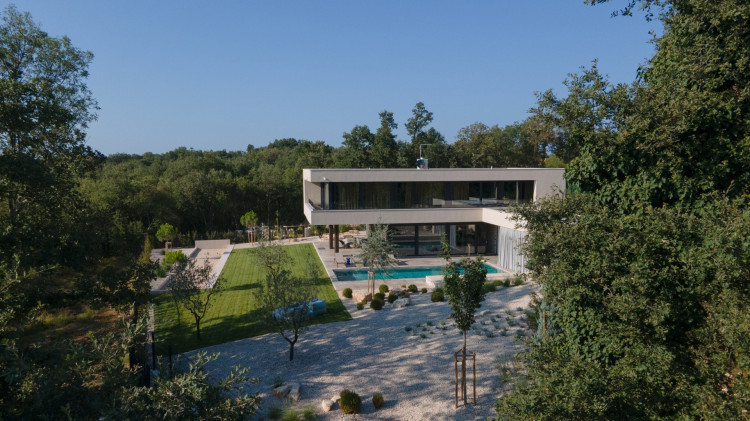
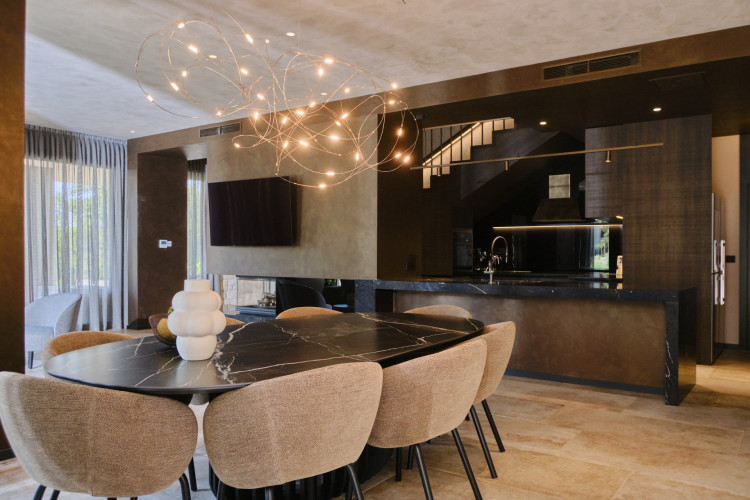
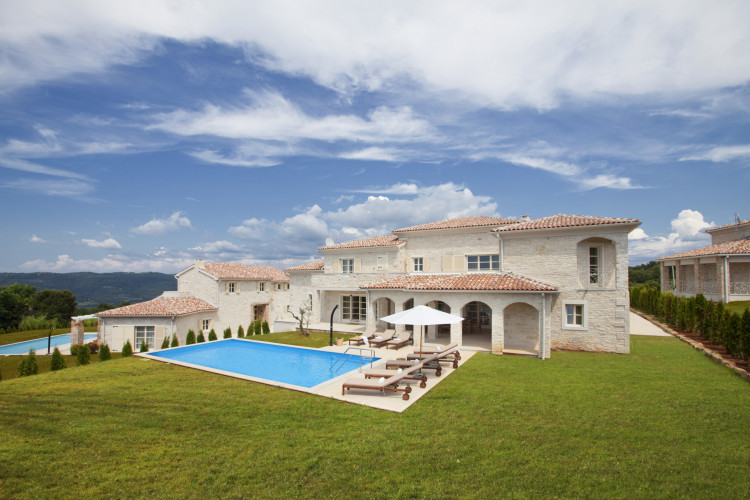
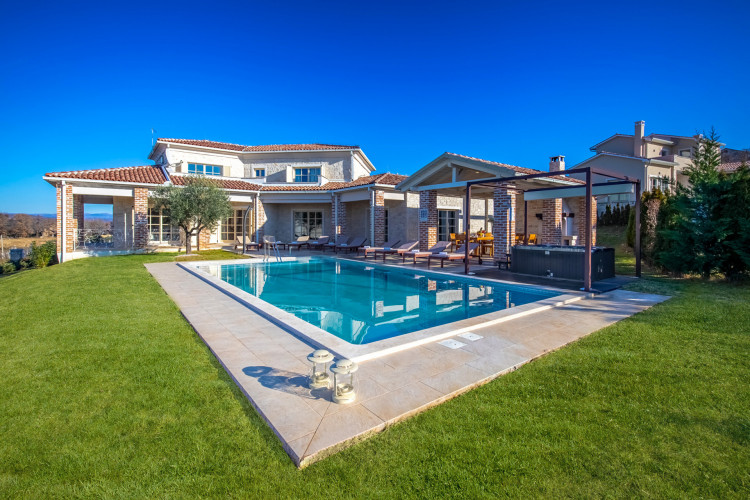
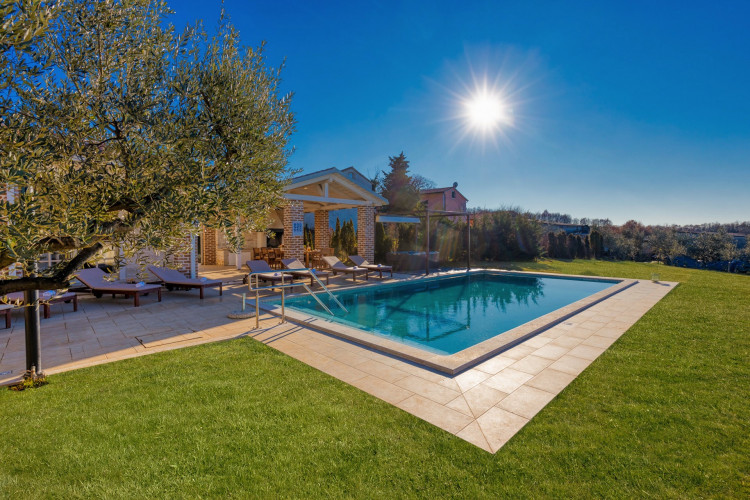
Booking luxury villas in Istria is the best way to experience the peninsula. You will have space, privacy, and the freedom to explore at your own pace. Rent Luxury Villas Croatia offers a carefully curated portfolio across the peninsula's most desirable locations.
Best Areas in Istria for Luxury Villas in 2026
Choosing where to base your Istria villa holiday depends on what you're looking for. The peninsula naturally divides into a glamorous coastline and a rustic interior.
Rovinj and Surroundings
Rovinj is the jewel of the Istrian coast and a charming, photogenic town. The old town tumbles down a hillside toward a yacht-filled harbor. Artists have been drawn here for decades, and during the summer, you can see art exhibitions transform the historic center into a gallery. The atmosphere is Italian-influenced, making Rovinj a popular honeymoon destination.
South of the center, the Golden Cape (Zlatni Rt) forest park offers a rocky coastline with a pine-shaded pebble cove. The park was created in the late 19th century. Today, it remains one of the most beautiful parks of the Adriatic coastline.
Rovinj is Istria's most upscale address. Beyond fine dining, harbor-front taverns serve superb fresh fish. As for the truffles, find them in the morning green market in autumn. The surrounding countryside is rolling vineyards and olive groves. Istria's celebrated wines are produced there, which you can taste at several family wineries.
What to expect: Villas in the Rovinj area typically range from €400 to €2000 per night. That depends on the property during the peak season. In spring and autumn, prices can be significantly lower, starting at €200. Couples and newlyweds, families, and food-lovers will enjoy this charming town on the Istrian peninsula.
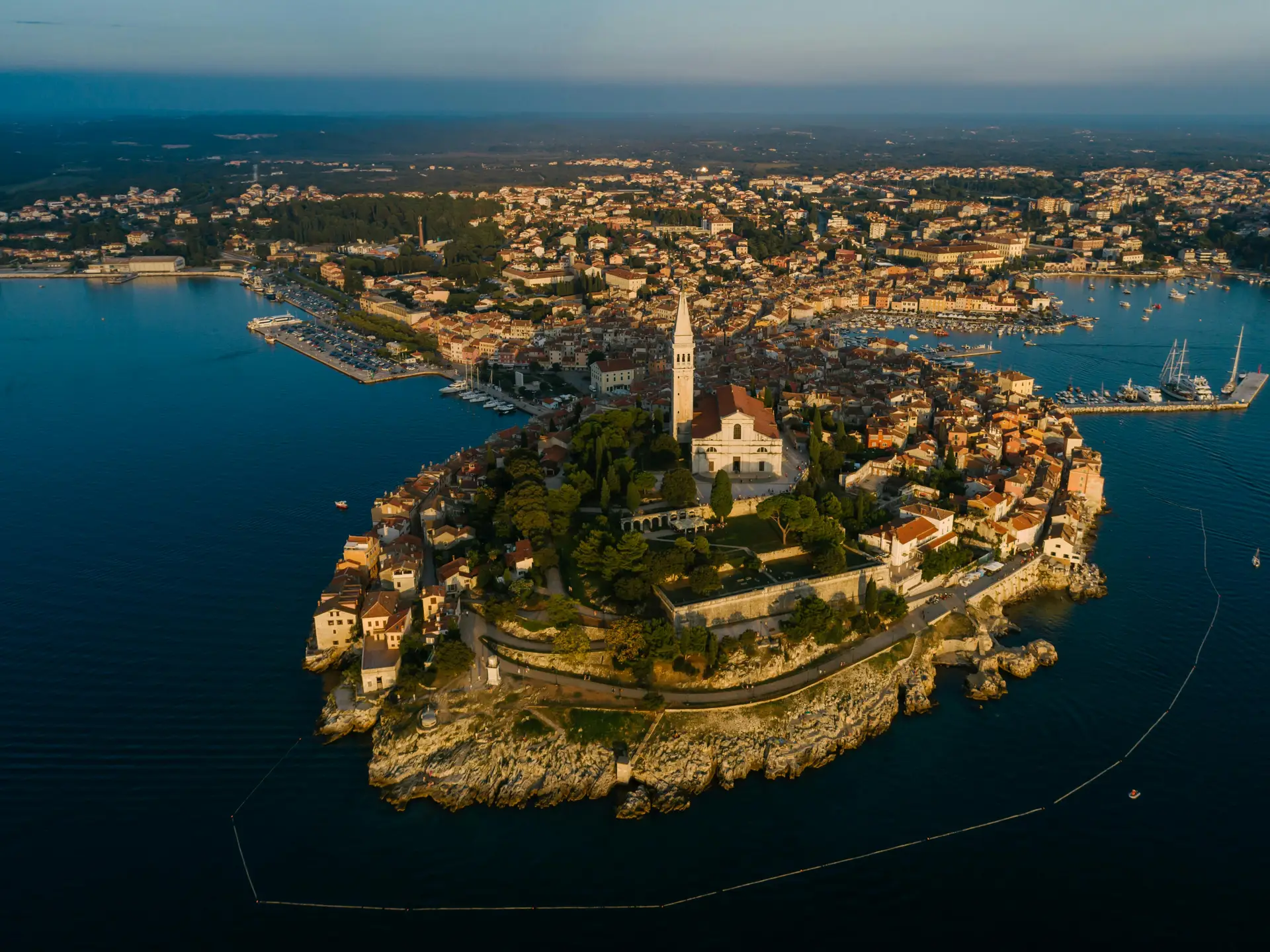 Rovinj
Pula and the Southern Coast
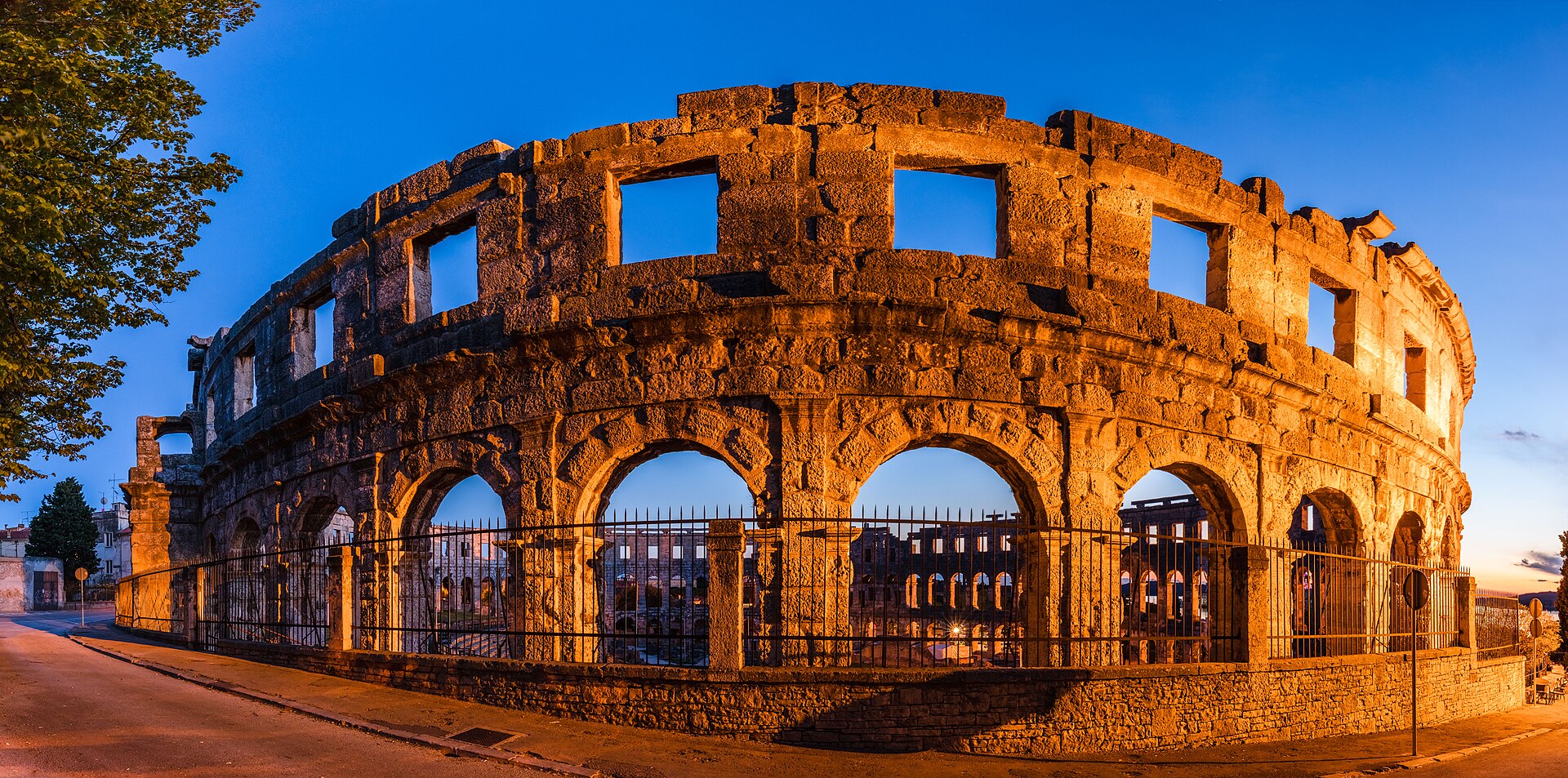
Pula is Istria's largest city and its historical anchor. The Pula Arena, a Roman amphitheater, is one of the world's best-preserved. It is the only remaining example with its entire sidewall circuit intact. Nowadays, it hosts concerts. Despite its age, the amphitheater has surprisingly good acoustics, making it a favorite venue for musicians. Especially under the open summer sky.
The Temple of Augustus on Pula's Forum is one of the best-preserved Roman temples outside Italy.
Pula is a city with a rich Austro-Hungarian heritage and numerous fortresses. There are as many as 28 in the city and its surroundings. Among them is Fort Bourguignon, which is an interesting place to visit.
Inside a fort, you can visit the Aquarium Pula, which is a hit among children.
South of Pula, the coastline becomes wilder. It is a different Istria: raw, uncrowded, and home to fossilized dinosaur footprints along the rocks.
Medulin is a resort town 10 km south of Pula. Its bay is shallow and sheltered, and Bijeca is one of Istria's few genuine sandy beaches. The waterfront promenade is lined with casual restaurants, ice-cream parlors, and small-boat hire operations. It is perfect for families. Medulin has a farmers' market on Saturday mornings and excellent fish restaurants.
What to expect: Pula-area villas range from €200 to €1,400/night outside of the season. And during the summer months, expect to pay between €660 and €1,700 per night. In this area, history lovers, beach enthusiasts, and sports-minded families will find much to enjoy.
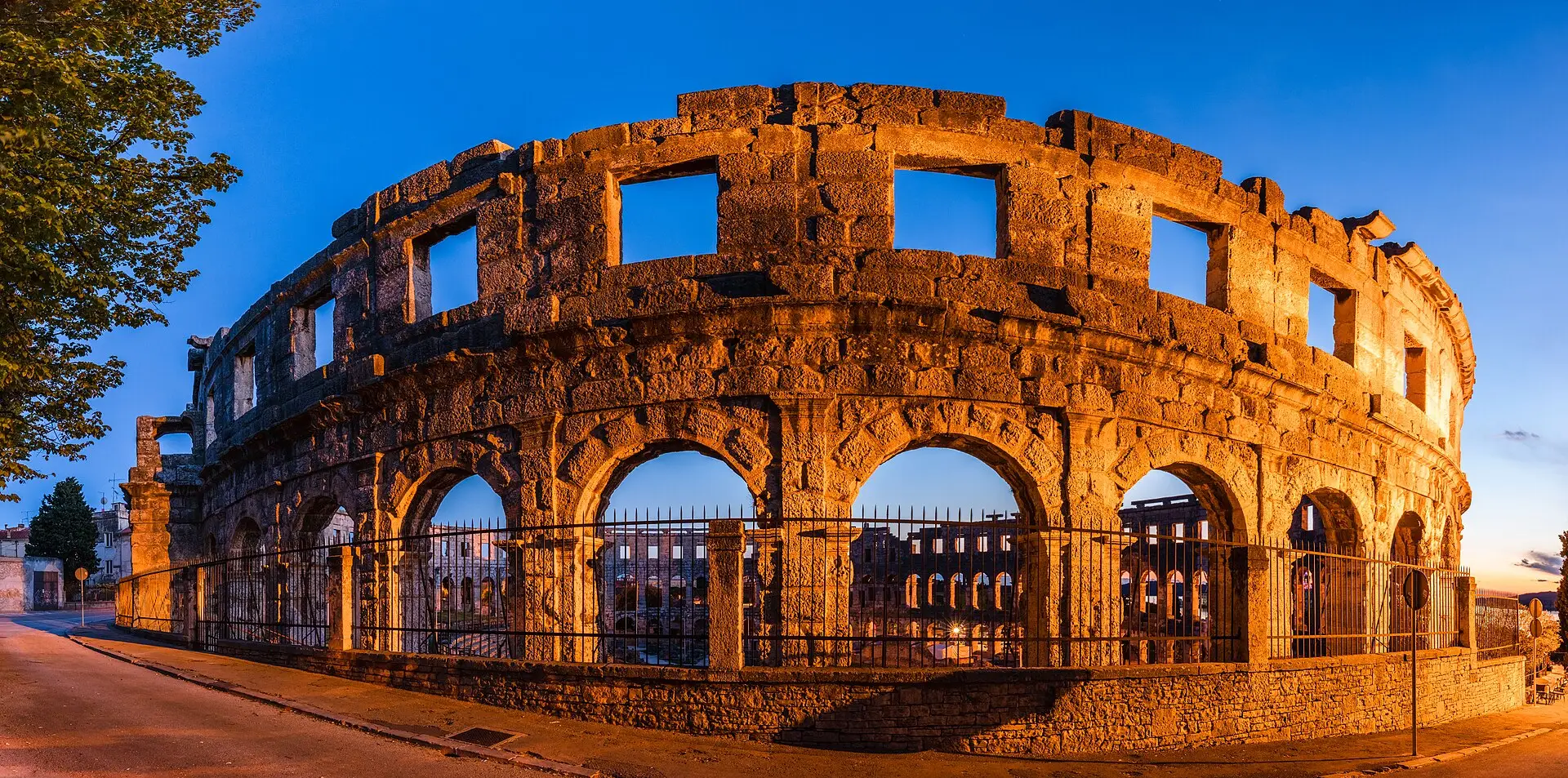 An amphitheater in Pula
Porec and the Western Coast
Porec sits on the mid-western coast and centers around the Euphrasian Basilica. It is a 6th-century Byzantine masterpiece inscribed on the UNESCO World Heritage List in 1997. Our advice is to visit in the morning for the best light on the apse. Outside the basilica, Porec maintains a relaxed Venetian-era old town.
Porec is arguably Istria's most family-friendly base. There are two beaches south of town - Zelena Laguna and Plava Laguna. Both are well-developed, with sun loungers, water sports rentals, and beachside restaurants. There are other beaches as well, and the one that suits you best depends on your preferences. And in the evening, you can enjoy a lively atmosphere without the intensity of Pula's nightlife.
What to expect: Poreč-area villas range from €250 to €600 per night. The area will suit you if you are looking for a culture-oriented vacation, with the coast and countryside within easy reach.
Inland Istria: Medieval Hilltop Towns
If the coast is Istria's face, the interior is its soul. The hills in the north are dotted with medieval villages, truffle-rich forests, and some of the region's most atmospheric villas. This area produces some of the best olive oils. Also, Malvazija wines are increasingly recognized.
Motovun is situated on a hill, overlooking the Mirna River valley. Its medieval walls and Venetian-era bell tower are recognizable from miles around. The surrounding oak forests produce Istria's famous white truffles. In fact, some of the largest ones ever found were from here.
Nearby Groznjan has only 164 permanent residents. In the 1960s, it was nearly abandoned before artists and musicians revived it. Groznjan was declared a "City of Artists" in 1965. Today, it hosts around 40 ateliers, and from May to October, the streets are filled with classical and jazz performances.
Buzet is known as the "City of Truffles". Each November, the annual Subotina truffle festival is held, where a giant truffle omelette is cooked in the town square.
Pazin is the administrative capital of Istria, situated at the peninsula's geographical center. It is famous for its dramatic castle, which inspired Jules Verne's novel Mathias Sandorf (1885). The castle houses an excellent ethnographic museum.
What to expect: Inland villas are often more affordable, €250–€700 per night outside the season. During July and August, prices range from €600 to €800. They usually offer larger grounds with stunning views. The trade-off is a 20-40-minute drive to the coast. But the tranquillity and gastronomy are more than rewarding.
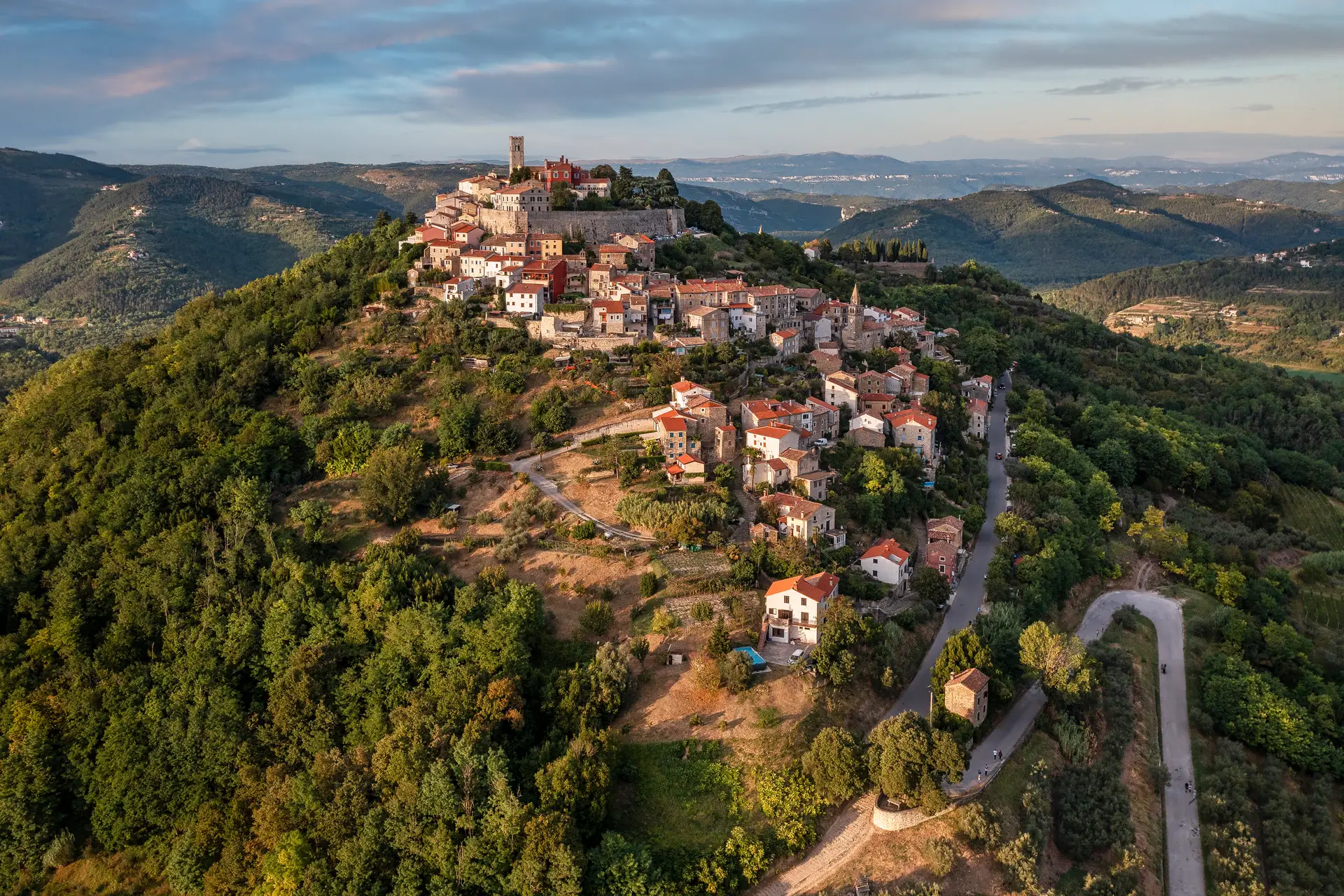 Motovun - charming town on the top of a hill
Novigrad and Umag – Charming Coastal Towns
Istria's northwest feels distinctly different. It is quieter, more local, and influenced by its proximity to Italy and Slovenia.
Novigrad is a port town with pastel-coloured Venetian architecture. The old town is compact and car-free. If you happen to visit it during September, join the annual Fish Festival, a multi-day celebration of Adriatic gastronomy.
Umag is internationally famous for its ATP Croatia Open tennis tournament. It also offers some of the peninsula's best-maintained beaches, like sandy Zambratija. The seafront is well developed with cycling paths, sports facilities, and family-friendly infrastructure. Umag's old town, though small, has Venetian-era streets, a daily market, and good casual dining.
The wine-producing hills near Momjan produce the aromatic Muškat Momjanski. It is a PDO white wine found nowhere else. Several family wineries welcome visitors for tastings, often with local cheese and prosciutto. The Slovenian border is minutes away, while Trieste, Italy, is within an hour's drive. Perfect for a day trip.
What to expect: The quietest part of Istria's coast is ideal for guests who prefer authenticity. Beaches are excellent, and cross-border day trips add an international dimension to your stay. Villas in the Novigrad and Umag area range from €500 to €750 outside the season. Peak season offers higher prices: €800- € 1,200.
Labin, Rabac, and the Eastern Coast
Istria's eastern coast is its least explored quarter and arguably its most rewarding.
Labin is a hilltop town with a rich cultural life. It has numerous galleries, a mining museum, and a lively summer arts program.
Below Labin is the seafront resort of Rabac, often called the "Pearl of Kvarner Bay." Rabac has some of Istria's cleanest swimming waters and a fully developed beach promenade with several pebbly coves. The best, Girandella and Maslinica, offer sun loungers, water sports, and beachside dining.
The hinterland around Barban hosts the annual Ring of Barban (Trka na prstenac). It is a traditional jousting tournament held every August since the 17th century. Riders gallop at full speed to lance a suspended iron ring. The crowd wears costumes from that period. It's one of the most atmospheric folk events in Croatia and well worth timing a visit around.
What to expect: Eastern Istria delivers excellent value and authentic atmosphere. The area is ideal for guests who want genuine Croatian village life combined with easy coastal access. Rabac's beaches are among the best, and the surrounding countryside is perfect for cycling and hiking.
Villas in this area offer a genuine escape from the crowds for €300- €1000 in spring and autumn. Peak-season prices range from €850 to €1200.
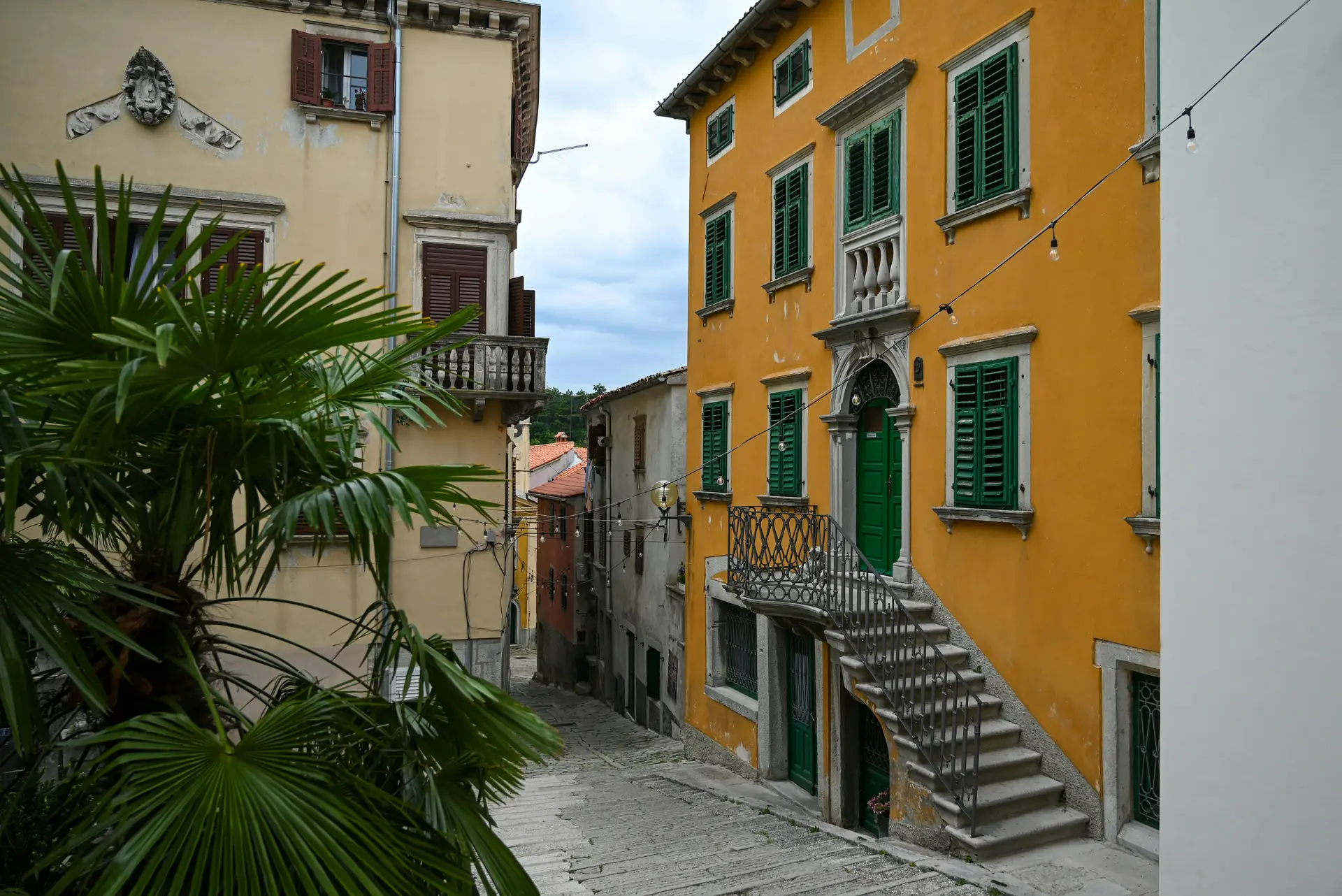 Street of Labin
Coastal vs. Countryside Villas - Which Is Better?
One of the biggest decisions families and couples face when choosing villas in Istria is location: coast or countryside? Each offers a very different holiday experience.
Coastal Villas: Sea Access and Convenience
Coastal villas in Istria put you within walking distance of beaches. So, if beach access is a daily priority, choose a seafront villa. Also, if you prefer walking to restaurants, or if you're traveling with young children who'll want frequent swims.
Restaurants, supermarkets, and boat hire are usually within 500 meters to 2 km. The downside is smaller plots, less privacy, and 20–30% higher prices compared to inland equivalents.
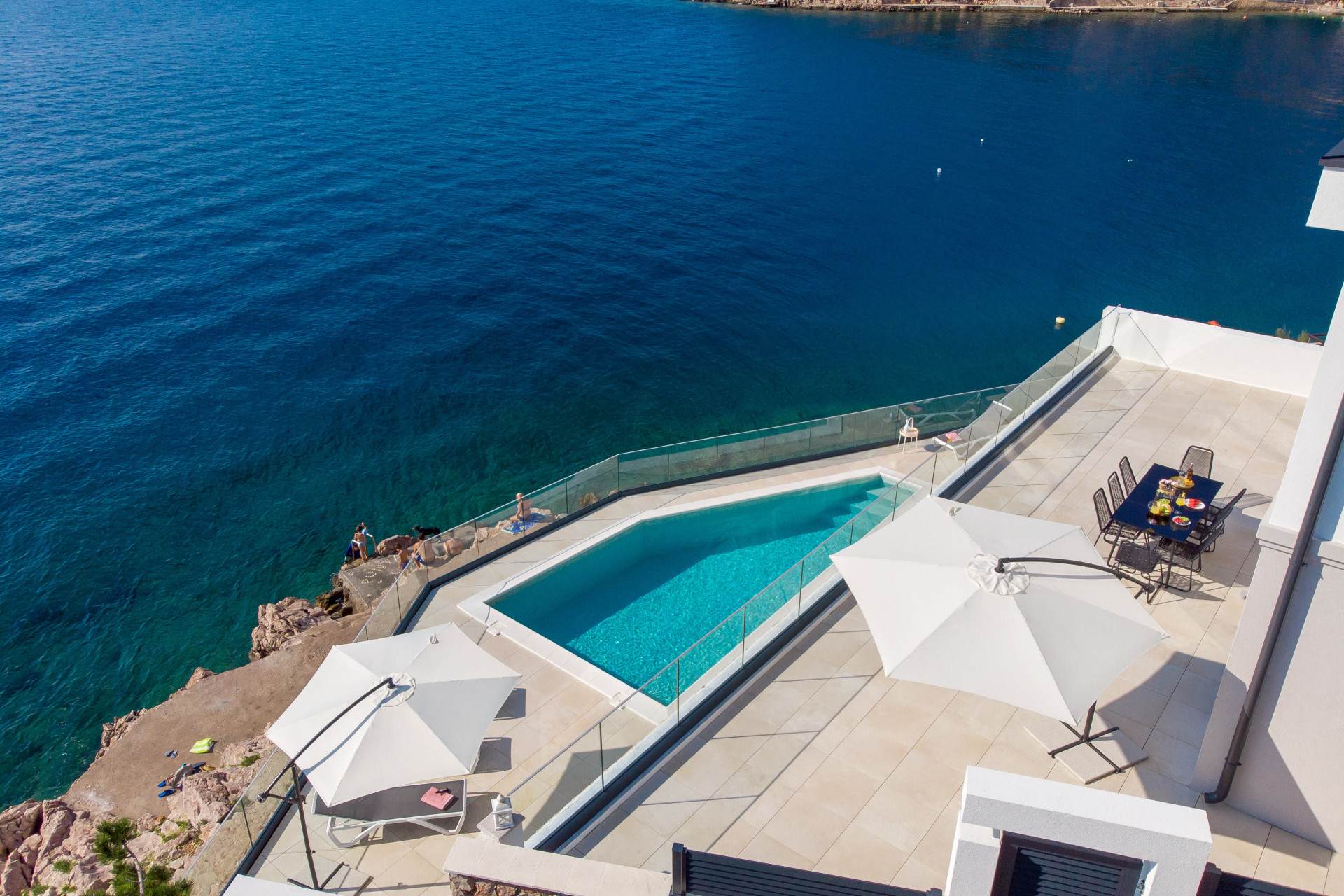 Choose a beachfront villa if beach acces is the most important to you
Istrian Countryside Villas: Space, Privacy, and Character
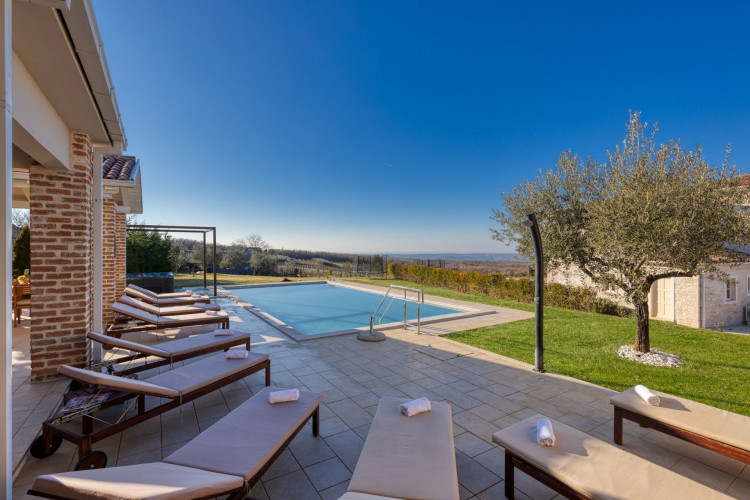
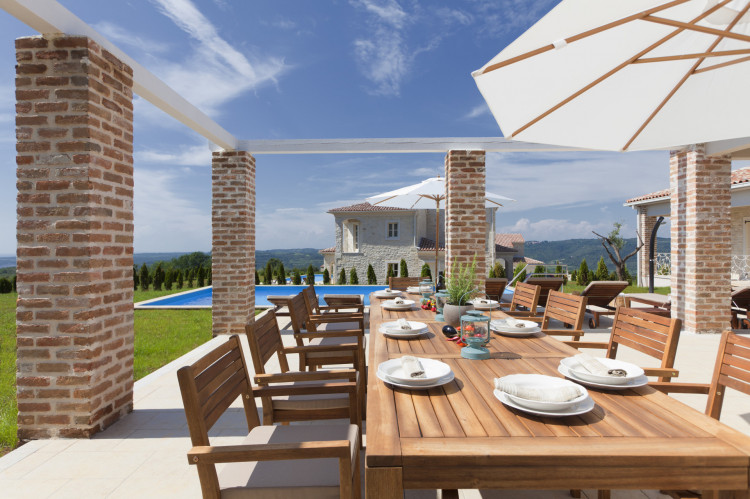
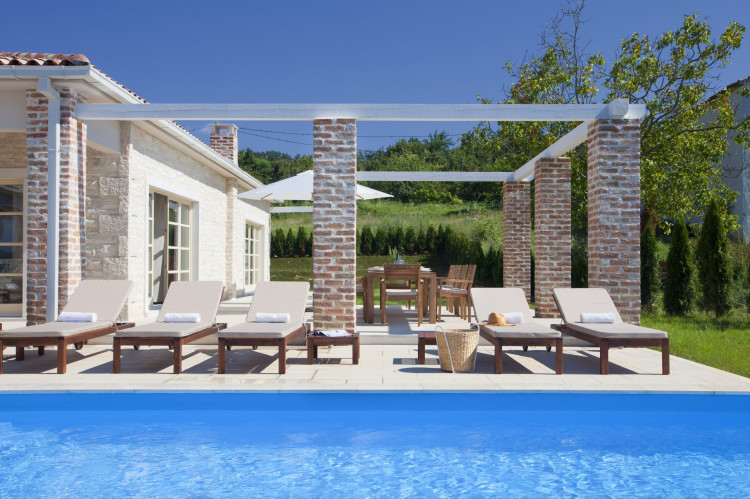
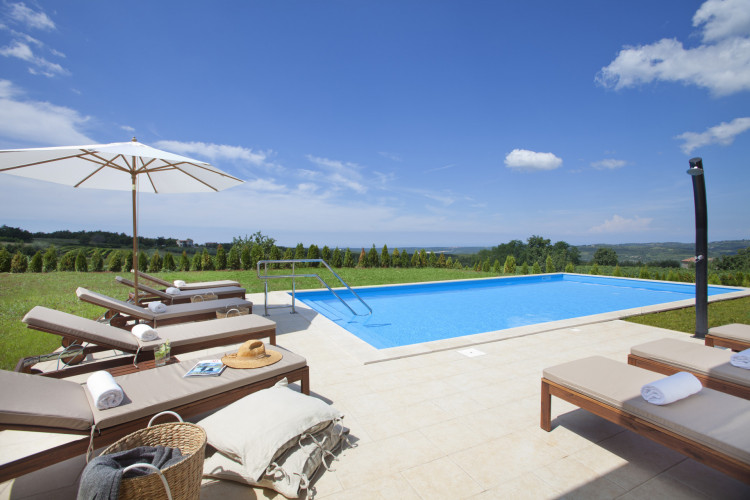
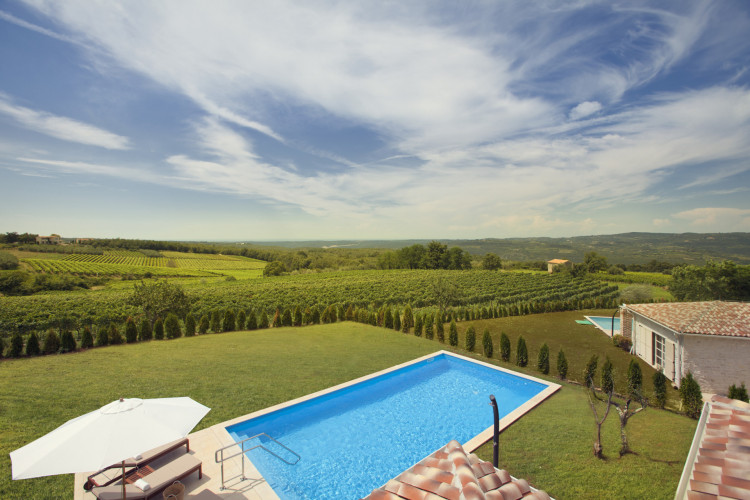
Inland Istria offers a different kind of luxury. Countryside holiday homes offer significantly more space for the price. You'll typically get larger pools, more outdoor dining areas, and complete privacy. But the nearest beach can be 15–40 minutes by car.
If you value space, privacy, and gastronomy, a countryside villa is a great option. There, you can look for truffle-hunting experiences or vineyard dinners. Inland properties deliver better value, with superior facilities at lower prices.
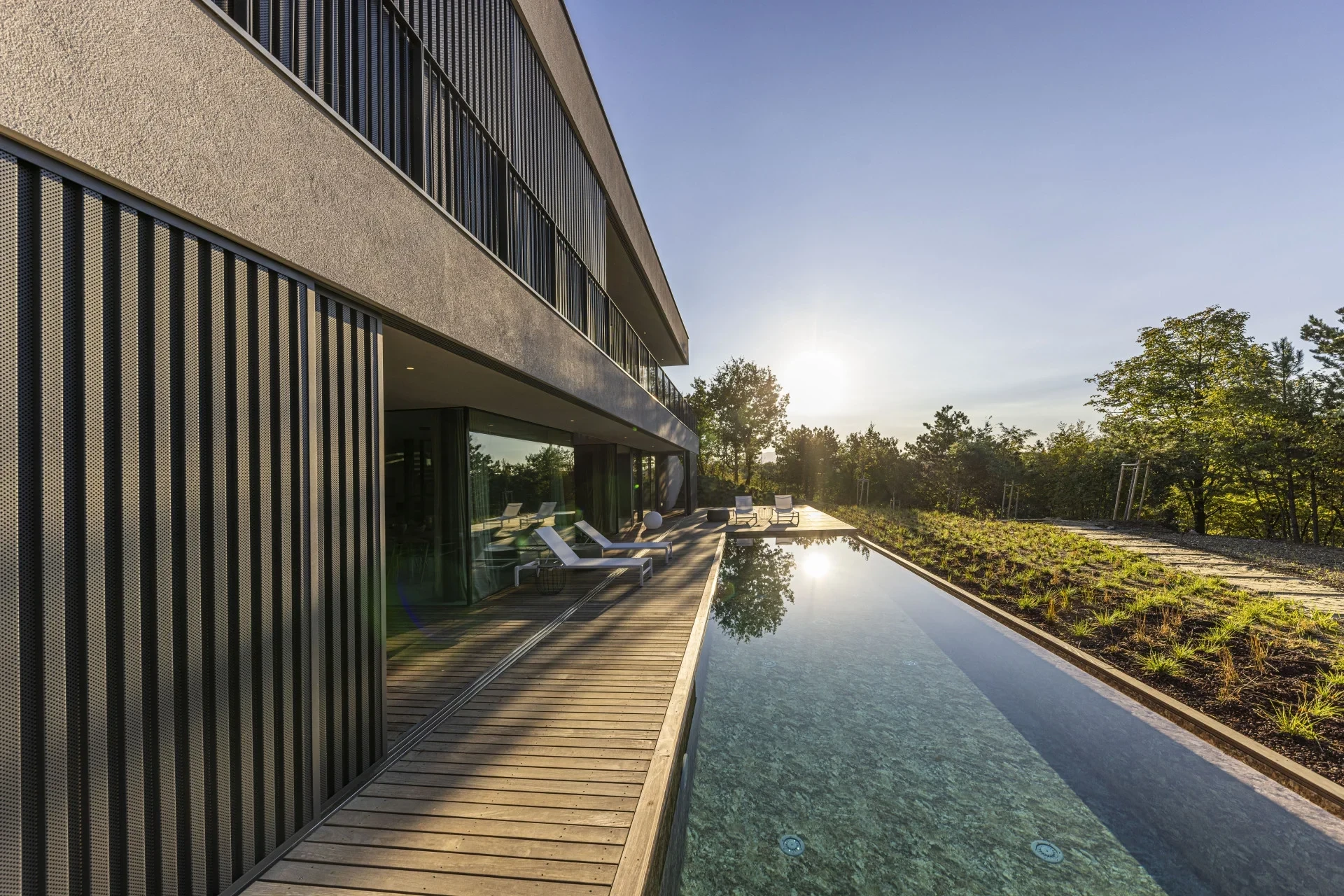 Countryside villas offer privacy
What to Do in Istria – Complete 2026 Guide
Cultural Experiences
Istria's cultural landscape spans over two millennia. Start with the Pula Arena, the 1st-century Roman amphitheater that remains remarkably intact. In summer, it becomes a concert venue. Past concerts featured artists such as Luciano Pavarotti, Lenny Kravitz, Massive Attack, and many more.
Arena hosts the annual Pula Film Festival (73rd edition: July 9–16, 2026), where films are screened under the stars.
In Poreč, visit the Euphrasian Basilica, which houses some of the finest surviving Byzantine mosaics outside Ravenna. The golden apse mosaics depicting the Virgin and Child are extraordinary. Visit in the morning for the best light.
The hilltop towns and villages offer a different cultural texture. Motovun's medieval walls, narrow streets, and panoramic views feel like stepping into a film set. Groznjan hosts around 40 ateliers, classical concerts, jazz performances, and art exhibitions.
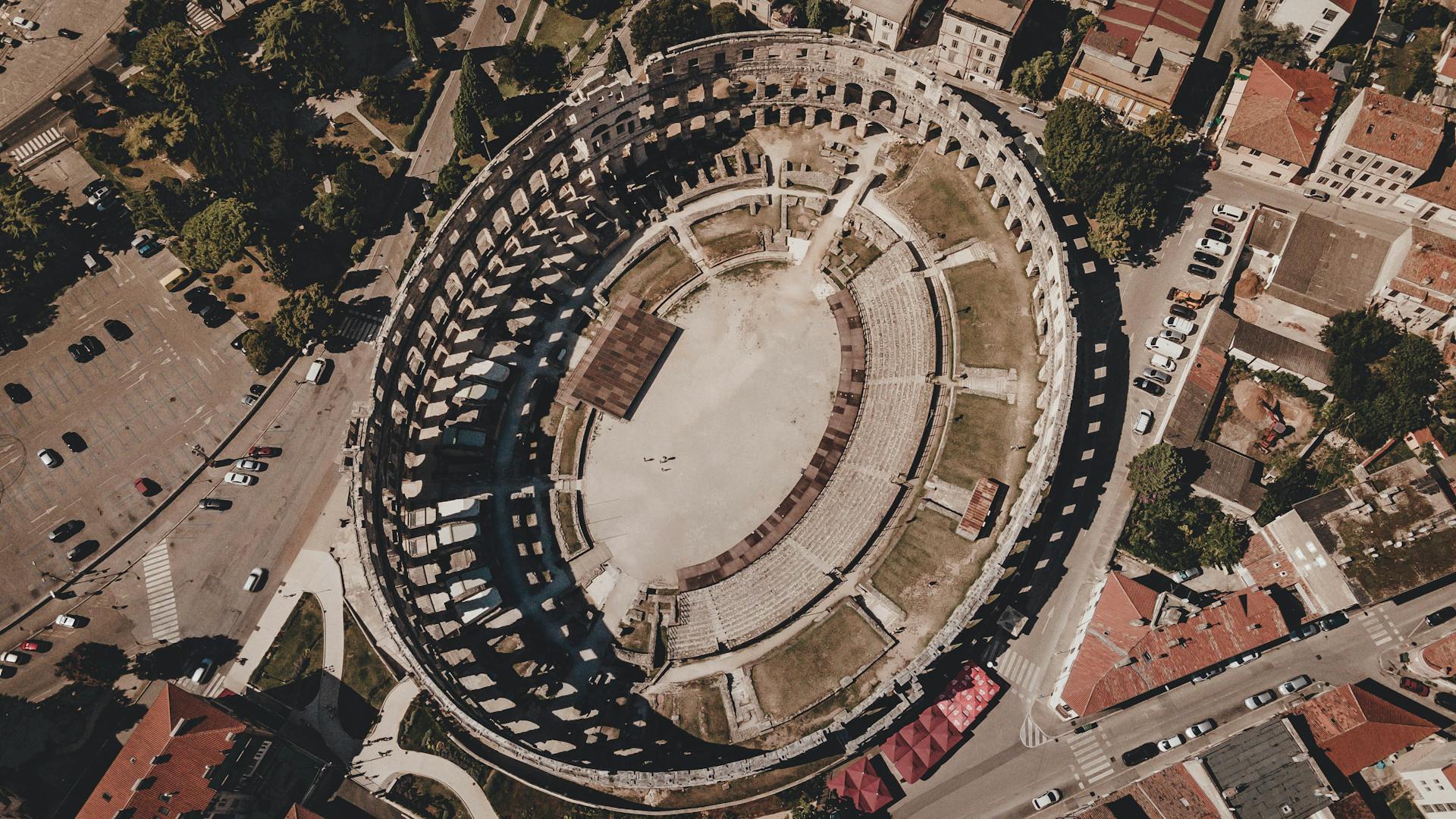 Pula Arena hosts the annual Pula Film Festival
Wine and Gastronomy
This is where Istria truly shines. The peninsula's food and wine scene rivals northern Italy.
Truffles are Istria's culinary crown jewel. The Mirna River Valley forests produce prized white and black ones. On 2 November 1999, Giancarlo Zigante discovered a 1.31 kg white truffle here, which was entered into the Guinness World Records. Today, several operators offer truffle-hunting excursions. You follow trained dogs through oak forests and, afterward, enjoy your finds shaved over fresh fuži pasta. Delicious!
Istrian wines have undergone a quiet revolution. Istrian Malvasia (Malvazija Istarska) is one of the few white varieties whose wines can be aged for more than 10 years. It is increasingly recognized internationally as a serious terroir-driven variety. The red Teran delivers vibrant sour-cherry acidity. It pairs beautifully with local prosciutto and truffled dishes.
The annual Vinistra Festival (in May, in Poreč) gathers over 100 exhibitors of Istrian wines, oils, and spirits.
Olive oil is another Istrian obsession, and the peninsula was named the second-best olive oil region in the world. Award-winning producers like Chiavalon offer tastings and tours.
Traditional Istrian dishes center on handmade pasta: fuzi, a tubular pasta, is served with truffles or rich meat sauces. Pljukanci are spindle-shaped pasta with game ragu. In spring, look for fritaja with wild asparagus.
Michelin Restaurants in Istria
All three of Istria's Michelin-starred restaurants are in Rovinj:
- Agli Amici – Istria's highest culinary accolade. It is set on the seafront promenade within the five-star Grand Park Hotel Rovinj.
- Monte – The restaurant that put Croatian fine dining on the map. Monte was the first restaurant in Croatia to receive a Michelin star and has maintained it for nine consecutive years.
- Cap Aureo – The newest addition to Istria's Michelin constellation, earning its star in the 2025 Guide.
All of them require advance booking in summer. Reserve at least 1 to 2 weeks in advance for July and August.
Beaches and Swimming
Istria is known primarily for its rocky, pebbly coastline. But you can enjoy crystal-clear swimming conditions and excellent snorkeling. Sandy beaches are rare but do exist.
Cape Kamenjak is the standout. This protected nature park offers a wild coastline with dramatic cliffs, hidden coves, sea caves, and crystal-clear water. Come early in summer to secure a spot at the most popular coves.
Zlatni rt (Golden Cape), south of Rovinj, is a stretch of rocky shoreline with pebble coves set within the Punta Corrente nature reserve. Calm waters make it ideal for families. You will find restaurants, changing facilities, and rental services for bikes, boats, and jet skis. Bonus - it is only a short walk from Rovinj's old town.
Lone Bay in Rovinj is a fine pebble beach, shaded by a pine forest. The water quality is excellent, and it is a great place to sunbathe
For a sandy-pebble beach, head to Pješčana Uvala near Medulin. It is one of Istria's few genuine sandy shores with a gentle, child-friendly entrance. Zambratija, near Umag, offers a small sandy beach surrounded by greenery. It is one of the few natural sandy beaches in Istria.
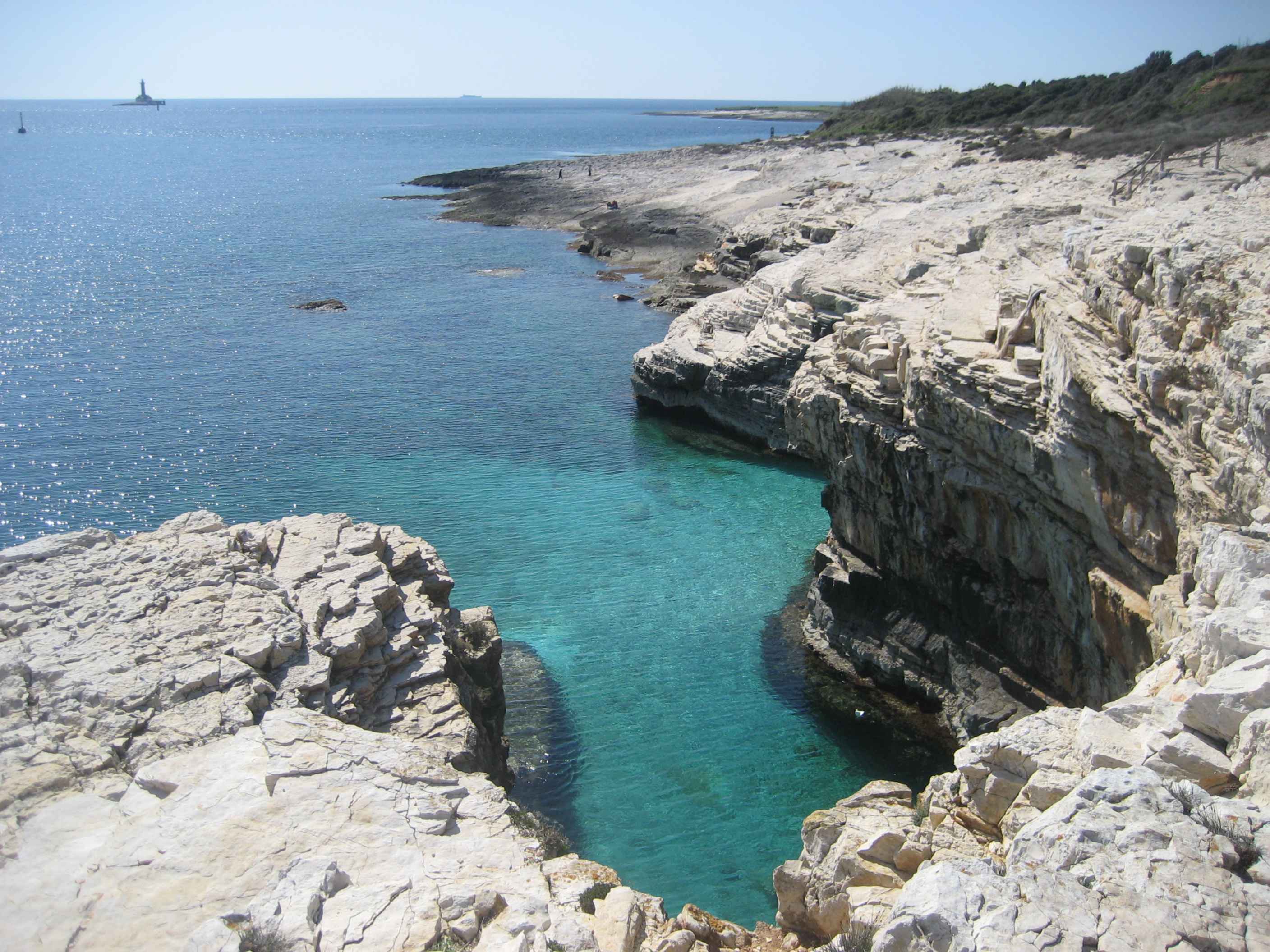 Cape Kamenjak
Adventure and Outdoor Activities
The Parenzana Trail follows a former railway line that connected Trieste, Italy, to Poreč. Today, the 123 km trail passes through 9 tunnels, over 4 viaducts, and hilltop villages before ending on the coast at Poreč. Cyclists can complete the Croatian section (78 km) in a day. Hikers should plan 3–4 days or choose a section.
Diving in Istria is exceptional. The waters hold the second-greatest concentration of wrecks in Croatia, including the Baron Gautsch. It was a 1914 passenger ship sunk by a mine at a depth of 40–45 meters. Cave diving sites at Fraskeric, Reff Stoja, and Valovine offer dramatic underwater landscapes. The diving season starts around Easter and peaks in summer.
Wine and olive oil tours run throughout the season. Many family vineyards welcome visitors for tastings year-round. You can ask your villa's concierge to arrange a private tour.
Brijuni National Park is a 14-island archipelago and a must-visit. It is accessible by a 15-minute ferry from Fazana. In there, you can see Roman ruins and 200-million-year-old dinosaur footprints. The safari park is especially interesting for both children and adults. It houses animals gifted to ex-Yugoslav President Tito by world leaders. The park requires advance booking and is a memorable full-day excursion.
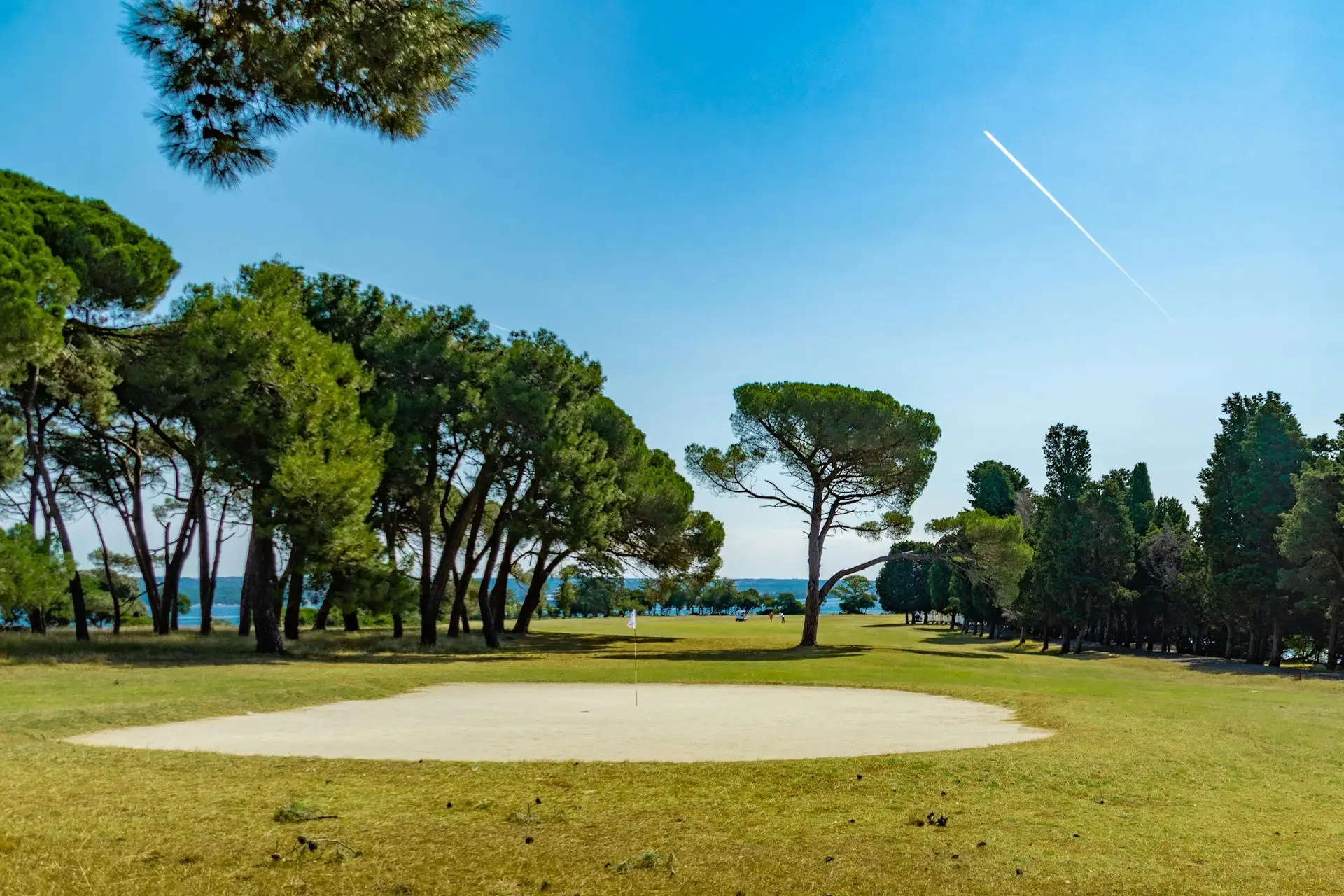 Find dinosaur prints on Brijuni Islands
Nightlife and Entertainment
Istria's evening scene is more about long dinners and sunset cocktails than late-night clubs, which suits a villa holiday perfectly.
Rovinj offers the most polished evening experience. The waterfront bars along the harbor serve excellent cocktails with views of the old town. The summer-long program of outdoor concerts and exhibitions means there is nearly always something on from June to September.
Pula has a more urban nightlife. You can find bars and clubs around the Forum and along the waterfront. The highlight is undoubtedly a summer concert in the Arena. Join the Pula Film Festival (July 9–16, 2026) and open-air performances throughout the summer.
In Poreč, the Lighthouse Festival (June 3–7, 2026) brings electronic music with international DJs. Great for lovers of electronic music.
For the special evening of your villa holiday, you can arrange a private chef. Your chef shops at morning markets, prepares a multi-course Istrian meal with local wines, and handles all the cleanup. It is the finest way to experience Istrian cuisine, with shaved truffle fuzi, fresh seafood, and local Malvazija.
Costs start from €300–500 per day plus ingredients.
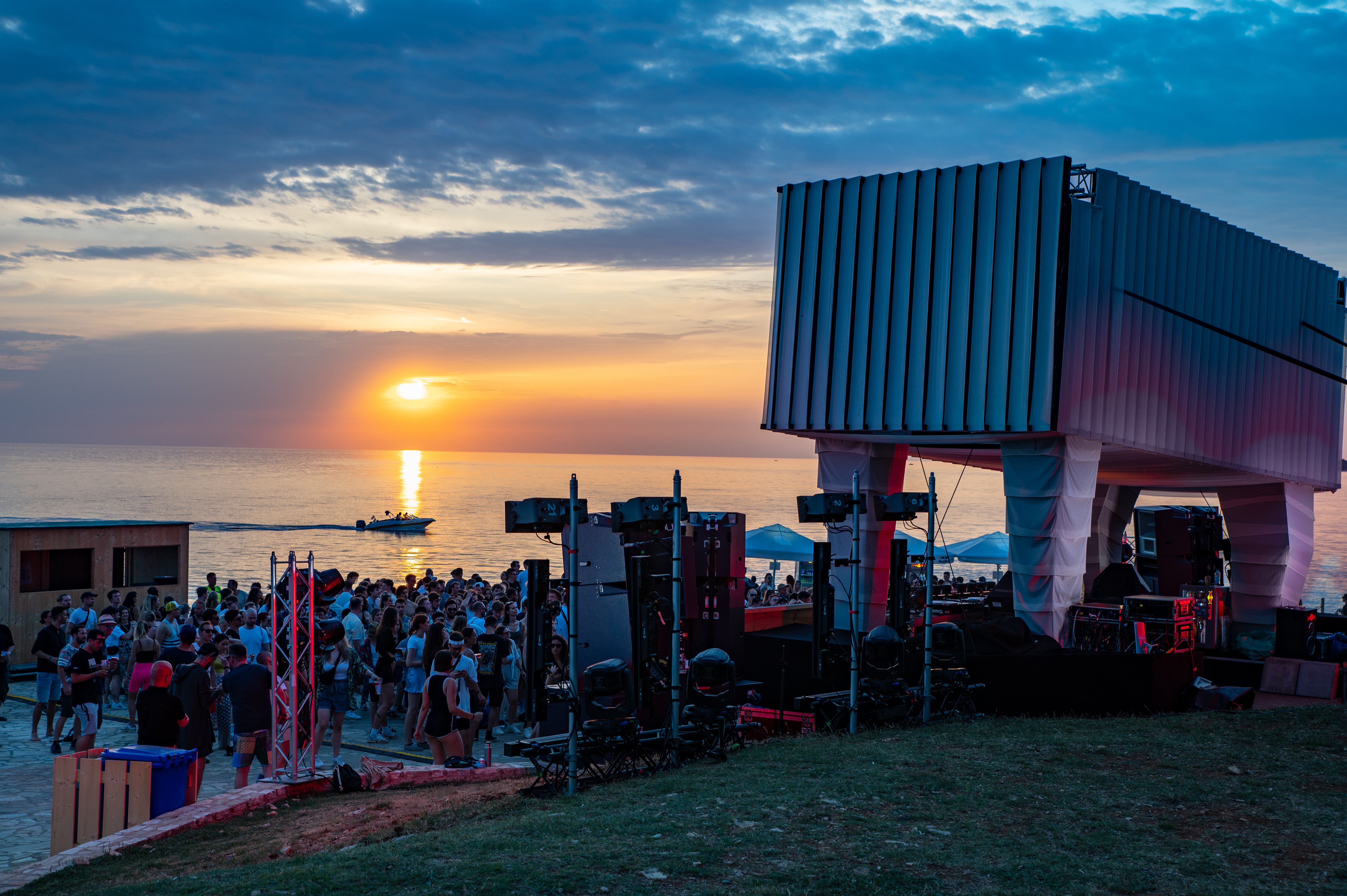 Lighthouse Festival in Porec, source
International Day Trips from Istria
Venice, Italy: A ferry ride of 3–4.5 hours from Poreč, Rovinj, or Pula. Adriatic Lines has an official schedule. Visit this beautiful city by the water.
Ljubljana, Slovenia: The charming capital is just 1.5 hours from Umag. Combine with a stop at the Škocjan Caves, only 45 minutes from the Istrian border.
Trieste, Italy: Under an hour from Umag. A cosmopolitan port city with grand Habsburg architecture, excellent coffee culture, and a literary history tied to James Joyce.
Shopping
Istria is offering everything from open-air markets to family-run farms selling truffles and olive oil. Knowing where to shop can make your trip even better.
Local Markets and Supermarkets
Cooking with extraordinary local ingredients is a must-try. Every town has its own market, with the biggest being in Pula, Poreč, and Rovinj.
Pula's central market is housed in a beautiful iron-and-glass hall near the Forum. The ground floor sells fresh fish - search for seasonal catches. Upstairs and outside, farmers sell seasonal vegetables, Istrian olive oil, local honey, and sheep's cheese from the island of Pag. The market opens early (6–7 am) and closes early in the afternoon. Saturday mornings bring the largest selection.
Rovinj's green market also runs daily. Here, you can buy fresh white and black truffles directly from the hunters. Look also for local lavender products, Istrian brandy (rakija), and the distinctive dark Istrian honey made from forest nectar.
Poreč food market is a compact but well-stocked daily market in the center. You'll find seasonal produce, local olive oil, truffles, and artisan products, along with a covered fish market hall.
Supermarkets are well distributed across Istria. Look for Konzum, Plodine, Studenac, Spar, and Lidl.
Many RLVC villas can arrange pre-arrival grocery stocking. Submit your shopping list 48 hours before check-in, and your kitchen will be fully provisioned when you arrive.
Town Center Boutiques and Artisan Shops
Istrian old towns are filled with small boutiques and artisan workshops occupying historic stone buildings. While souvenir shops predominate, several quality establishments deserve attention:
Rovinj's Grisia Street is lined with galleries, ateliers, and craft shops selling original paintings, ceramics, handmade jewelry, and sculptures. Every August, the street hosts an open-air art exhibition that has been a tradition since 1967.
Grožnjan is home to numerous galleries and craft workshops. You'll find hand-painted ceramics, woodwork, and original art from local and international artists who have settled here.
Aura Distillery in Buzet: This family-run distillery produces award-winning brandies from local fruits and herbs. Our recommendation goes to Terranino. It is a Croatian red-wine-based liqueur produced in Istria. A great souvenir to bring back home for yourself and your friends.
Zigante Tartufi shops are located in several towns in Istria. These shops offer a curated selection of truffle products, Istrian delicacies, olive oils, and wines – all beautifully packaged and ready for gifting.
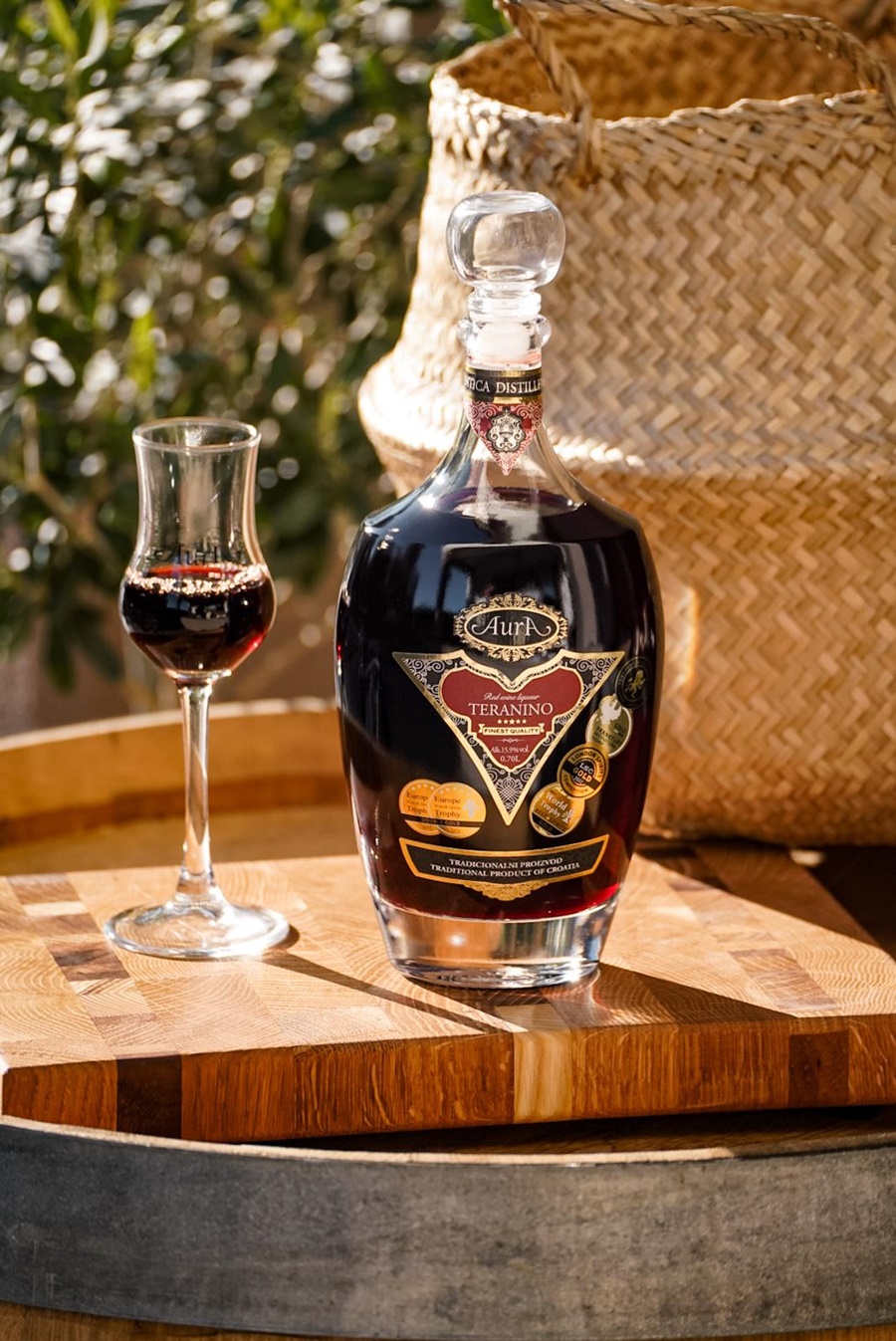 Terranino Aura, a must try Istrian liqueur, source
Shopping Centres
Max City Pula at Stoja 14A is the largest shopping center in Istria. It has more than 60 shops, a large supermarket, a cinema, a food court, and fashion and sports stores. It is easily accessible from Pula's center by car or public bus.
Galerija Porec at Ul. Mate Vlašića 46 is a modern retail park with fashion shops, a large supermarket, home goods stores, and a few cafes. It's practical for stocking up on supplies if you're staying in that area.
Getting Around Istria
Car rental is the most practical option for exploring Istria. You can drive from Pula in the south to Umag in the north in about 1.5 hours. Istrian Y motorway (Istarski ipsilon) connects Pula to the Slovenian border via tunnels. Car hire is available at Pula Airport and in all major towns. Typical summer rates of €35–60 per day for compact cars.
All of the bigger towns have car parks on the edge of their historic centers (€2–4 per hour in summer). Your villa will have its own parking.
Taxis and ride-sharing (Uber and Bolt) are useful, too. Especially for evening dinners in town when you'd rather not drive. Ride-hailing fares are typically 30–40% lower than those of traditional taxis.
Cycling is increasingly popular and well-supported. Many coastal towns have bike hire shops (standard bikes €12–18 per day, e-bikes €25–35 per day). Istria's terrain is gentler than Dalmatia's, making it an excellent cycling county.
Ferries connect Istrian ports to Venice and other Italian/Slovenian destinations seasonally. Local boat services run between Rovinj, the Brijuni Islands, and nearby coves.
Weather and Best Time to Visit Istria
Istria enjoys a Mediterranean climate with warm, dry summers and mild, wet winters. Here's what to expect month by month:
Table No.1: Monthly comparisons of temperatures, conditions, and villa prices
| Month | Air Temp | Sea Temp | Conditions | Villa Prices |
|---|---|---|---|---|
| May | 17–23°C | 16–18°C | Days are warm, evenings are cool. Truffle and wine festivals. | 30–40% below peak |
| June | 22–28°C | 19–22°C | Beaches are uncrowded, and it is warm enough to swim. Long daylight hours. | 20–30% below peak |
| July | 25–32°C | 23–25°C | Peak season with a lively atmosphere. Book well ahead. | Peak pricing |
| August | 26–33°C | 24–26°C | Hottest month and busiest beaches. | Peak pricing |
| September | 20–26°C | 21–23°C | The sea is still warm for swimming. White truffle season begins, and the crowds are fewer. | 25–35% below peak |
| October | 17–22°C | 18–20°C | Still swimmable. Truffle Days festivals. Excellent wine-tasting weather. | 40–50% below peak |